כִּשּׁוּרֵי חַיִּים
יחס לאחר
החיים בחברה אנושית כרוכים במפגש יומיומי עם האחר. ילדים וילדות לומדים כללי התנהגות בחברה מתוך קשרי הגומלין בחייהם, ומתוך צפייה והתבוננות. גם ספרים העוסקים בהתחשבות, באכפתיות וביחס לאחר יכולים לסייע ילדים לפתח את הכישורים החברתיים שלהם, ללמוד להיות מתחשבים ורגישים לצרכי הזולת ולתקשר באופן מיטיב עם הסובבים אותם.

סְּפָרִים
Book-Related Family Activities
Friendship and Self-Image
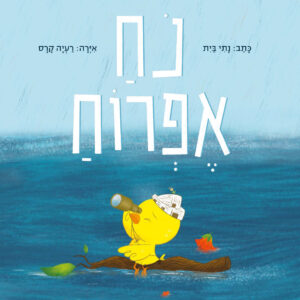
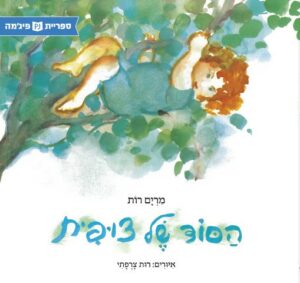
A discussion on Noah’s emotional experience will reveal what evokes empathy and interest in your child. You can ask: In your opinion, how did Noah the Chick feel when his friends told him he would fail? In your opinion, why did he help his friends despite having been offended by them? Did you believe he would succeed?
Illustrations Tell the Story
Raaya Karas’ colorful illustrations are full of expression and action. You can suggest to your child that he/she leaf through the book without reading it. and then look at the illustrations and tell the story in their own words.
Small but Capable
And what can you do? Inspired by Noah the Chick, you can enhance your child’s sense of competence by preparing a family chore chart together in which everyone helps, and the “little ones” do big-boy/girl chores too.
If anyone can do it, it’s Noah the Chick!
Inspired by Noah’s challenging journey to the top of the mountain, you can assemble various “obstacle courses” using pieces of furniture, blankets, and pillows. While attempting to complete them, cheer your children on by shouting: If anyone can do it, it’s Noah the Chick!
Opening a Door
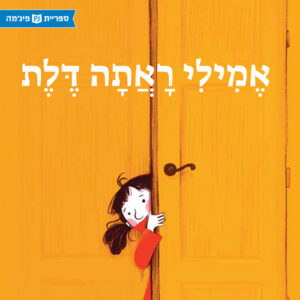
The doors in the book are real, but they are also symbolic. You can look together at the doors that Emily encounters and ask: “What doors appear in the story?” “How does each door react to what Emily says?” “How did Emily feel when a door did not suit her?” “What would you do if you were in her place?” “How can you know which door suits you?”
Knock Knock! What’s Behind the Door?
Ready to play an enjoyable family game? Take turns with every family member inventing a special door and a way to enter it. For example: “Knock knock! What door is this?” – “The frogs door!” “And how do you enter this door?” – “Jumping on all fours and making croaking noises!”
My Door
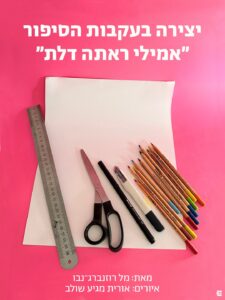
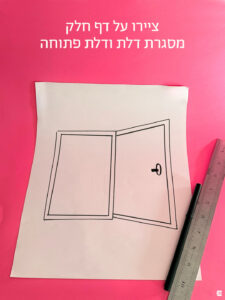
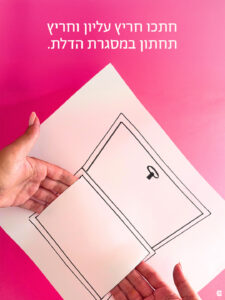
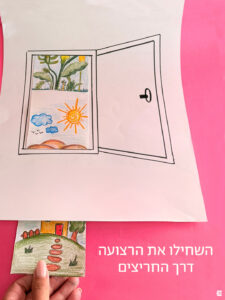
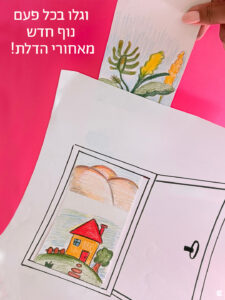
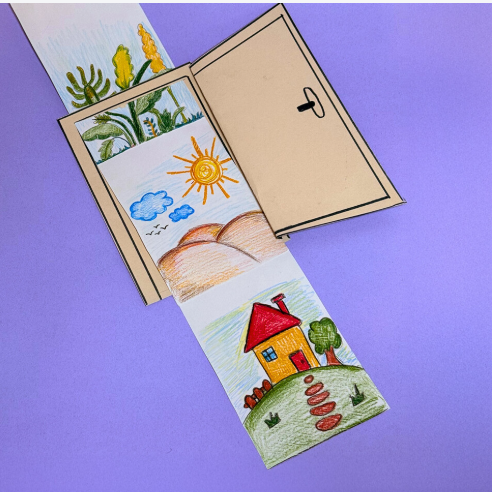
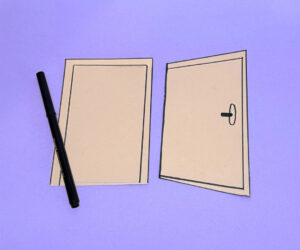
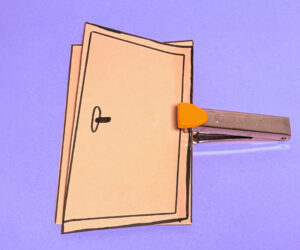
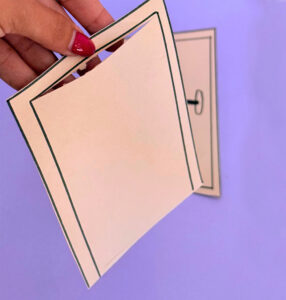
You can invent your own special door, and then draw it along with all the things you would want to be behind it. You can try to imagine what will happen when Emily knocks on this door.
Prepare a Door Sign
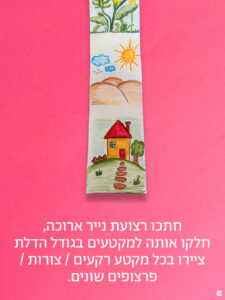
You can prepare a special sign for the front door or any room in the house. Think about things you like and make you happy. You can draw them around the words on the sign, or look for them in magazine pictures and cut and paste them on the sign.
Tip for Family Reading
After reading this book, you should discuss how the characters felt and coped with the situations in the story. You can discuss how you were inspired by them. Children identify with the characters, will be exposed to different perspectives, and will learn from them about emotions and behaviors that are familiar to them from their own lives.
It was a good idea to let him go first
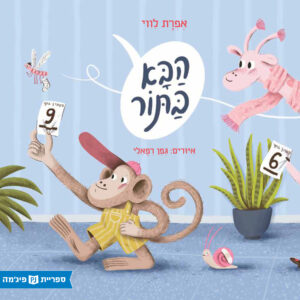
After reading the story, you can discuss, share, and ask: How do we feel when we wait in line? Have we ever felt that our turn was more urgent than the others’? In your opinion, how did Dog feel when the others were considerate toward him? How did Monkey and the others who were waiting in line feel after giving up their turn? Try to recall an incident together in which you were considerate toward others, or others were considerate toward you.
Who is next in line?
Monkey, Giraffe, Elephant, and Alligator try to establish a principle that would determine the order among those waiting in line. They can inspire you to play an amusing game with your whole family, during which you can form a line while following a different order each time. For instance, you can stand according to your age from youngest to oldest, or by the color of your shirts from the lightest to the darkest, or by how much you love ice cream. You can come up with different, amusing characteristics together and find out who is next in line this time?
Waiting around and having fun
How does Monkey end up passing the time while waiting in line? He chats with those who are waiting alongside him, coming up with ideas on how to determine the order, and meeting new friends. You can also think together and raise ideas that would help you pass the time while you are waiting for something. You can come up with a funny song to sing while you wait, or a game involving moving your fingers, or even prepare aids that will help you pass the time – a storybook, coloring book, puzzle, or squishy ball, or any other amusing idea with which you can come up.
QR Code
Would you like to find out what Monkey sounds like? Or what Dr. Tzviya sounds like? Scan the code and listen to the story.
Family reading advice
After reading, you should go back and spend time looking at the illustrations. Notice the small details that are not directly related to the text, and share your discoveries with one another.
Being considerate
At home, we also need to get along in the same “railroad car”. You can discuss and think together with your child: Which home situations require us to be considerate? Why is it important to speak up and discuss things that make us uncomfortable or that we find inconsiderate? How should we go about it?
Animals and attributes
The tortoise is slow, the owl is wise, and the rabbit is fast. You can go back to the book and check – what other animals appear in it? What are their special attributes and characteristics? Do they have the same characteristics in real life too?
Roleplay
You can dramatize this book – sit together on a “train” – parents can be the crocodile, taking up the entire railroad car, and children can be chicks. How will you go about asking the crocodile to make some room for you? Will you end up messing around and having some friendly fun together? Now, you can switch roles.
Family reading advice
While you read, you can use different voices and invite the children to do the same: What does a person sound like when s/he bursts out crying? What does a hole being drilled into the wall sound like? Even if you’re not professional actors or actresses, your active participation in the story will enhance your shared experience and delight.
Children’s wisdom
The judge learns from the girl how to resolve the case brought before him. Following this book, you can discuss your children’s knowledge and strengths with them: It can be a hobby, insight or shared memory from an incident in which they contributed their experience and wisdom. You, parents, should also share: What have you learned from your child?
What floats in water?
Do oil droplets indeed float in water? You can see for yourselves by adding a few drops of oil into a bowl filled with water. You can later check what else floats: What happens to a piece of paper in water? Or a paper boat? A fork? Or a leaf? And how about a small plastic toy?
Resolving disputes
Just as they do in this book, you too can try to resolve a disagreement on some issue: Each party presents their case, everyone listens, and suggests how to resolve the dispute.
You can also swap roles and explore together – is only one of you right? Or can you, perhaps, reach some other kind of understanding?
More arts & crafts and activities can be found on the Sifriyat Pijama Pinterest page
Family reading advice
Books help children recognize feelings, name them, identify and empathize with the characters, and, subsequently, do the same with friends and people in general. While reading, you can look at the characters’ facial expressions and discuss: How do you think they feel? Are they angry? Sad? Perhaps happy and relaxed?
Fighting and making up
Sometimes we fight with friends, and sometimes with our siblings. You can discuss and share an argument you had: What caused it? How did you feel? Who helped you to calm down? Did you make up, and how?
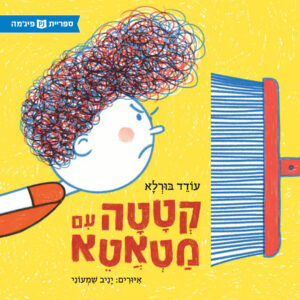
A play with a broom
The child in the story fights with everyone, but how can you fight a broom or a faucet? Try picking an inanimate object and acting out an amusing interaction with it – how about a game for two with a stuffed animal, a conversation with a toy car, or an argument with a coat?
Singing with a broom – QR code
Would you like to sing and dance with a broom and perhaps clean the room while you’re at it? Scan the code and join Oded Burla’s song about a broom.
Moving like…
You can open the book to a random page and move like the things described on it: You can fly like the wind, drip like a faucet, open and close like a door, or soar like an airplane.
A tip for family reading
You can find something to like in every book: The drama, the characters, or maybe the illustrations or interesting words. After reading the book, try asking the children what they liked about the story, and share what you, the parents, enjoyed. You can even tell each other which books you especially like and why.
Friends and us
Peetz and Morchella are spending time together. She’s growing vegetables and he’s nurturing them. In the meantime, they are chatting, singing, and simply enjoying their time together. You can ask the children what they like doing with friends. What do they do together? As parents, this is a good opportunity to reminisce with your children and share your experiences and memories with childhood friends.
Vegetables and drawings
Cabbage? Kohlrabi? – Thirteen types of edible vegetables appear in the book. Can you find them all? You may want to eat your favorite vegetables or try new vegetables.
Nice to meet you: the morchella
So, who are you, Morchella? If you scan the code, you’ll learn about the morchellas that sprout up in Israel each winter. Do you want to learn more? Go to the library together or surf the internet and look for information on morchellas and other mushrooms.
Growing vegetables
You can grow vegetables, even if you don’t have a plot of land. Try taking a cut carrot top, cloves of garlic, or the bottoms of lettuce or celery, and soak them in a transparent container with water. Wait patiently, add more water if needed, and little by little, you will see leaves and roots sprout. You can cut them off and eat them, or plant them in a flowerpot, and wait for new vegetables to grow. Don’t forget to water them!
Family reading advice
Children identify with the characters in the book, and acquire a better understanding of others who are different from them, thereby developing empathy and adaptability to new situations. While reading, you can focus on the characters’ facial expressions and ask: How do you think they feel? And why?
Discussion
You can discuss and ask: With whom and what do you like to play? In your opinion, what should we do when we each want to play a different game? What solutions can we suggest?
Annoying but also fun
Libby wants to join Pupik on his visit to the fire station, but he is annoyed – can a solution be found? Watch the video to find out!
Moving with the illustrations
Sitting, jumping, or perhaps bending down? Take turns choosing a page in the book, and showing the others a movement or posture similar to that of the characters depicted in the book. The other players can then imitate the movement, and look for it in the right page in the book. Did you find it? Then it is now time for the next player to choose a page.
The game of games
On separate notes, write down the games you like to play together: Hide-and-seek or maybe catch? Put all the notes in a box and choose one at random each day. What does it say? Would you like to play this game together? If not, you can always take another note out of the box or add a new note suggesting a new game.
A game of “Find me!”
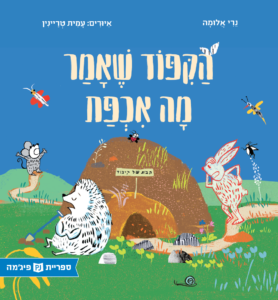
The main characters in this book are a hedgehog, rabbit and mouse. But other animals also appear in the illustrations –
Can you find them?
How many animals have you found?
“Did you find me in the illustrations?”
Discussion
Unpleasant things happen to all of us – but do they only ever happen to us? You may want to discuss the feelings that emerge when something unpleasant happens, and help each other think of people who can help, as well as how to cheer each other and ourselves up.
Illustrations tell a story
The illustrations in this book tell us what happened to Winston’s friends without using words. Only Winston doesn’t notice. Pick one illustration, look closely at Winston’s friend, and tell their story as if you were them: What are they feeling? What are they thinking? What about this particular illustration caught your attention?
Lucky it happened to me!
You may want to try looking on the bright side! At the end of each day, share something good that’s happened to you with your family – make sure that both parents and children share news about their day.
Who amuses me? And who surprises me?
Look at the illustrations together and search for details that amuse you – what did each of you find amusing? Did any of the details surprise you?
Discussion
Have you ever wanted to do something and had someone interrupt you? how did it make you feel? What did you do and say? This book offers the opportunity to discuss these kinds of situations, as well as some good-spirited solutions.
A home response die
Someone snatched something from me, took something I wanted, interrupted me, bothered me – what do I do? You could think of positive responses together, like using the word “please”, or explaining what bothered you. How about making a paper die and writing all kinds of positive responses on each side, perhaps adding an illustration that depicts the written text? That way, whenever you come up against a problem, you could always throw the die and see what it suggests that you do in response.
A game – Which animal?
Various animals appear in this book: Which one meows? Which one lays eggs? And which one lives in the shed? Let’s find out! One of the players picks an animal, and the rest of the family has to guess which animal they picked by posing questions, and getting hints, such as “the animal I picked meows”, “the animal I picked lives in a pen”. Keep adding more clues until your family has guessed which animal was chosen.
Ladies and Gentlemen – The show!
You could act the story out using clothes, hats, accessories, or stuffed animals. You could make the sounds made by the animals, show how each one responds upon encountering the elephant, or be the elephant sleeping on the path.
Discussion
Who are your friends? What do you like doing together? You can have a conversation about this and look into these questions: Do you like sitting together with other people quietly, like the penguin? Perhaps you like running, like the tortoise? How about thinking together about how you can bring some joy to friends who need you.
What story do the pictures tell?
Through the unique drawings in the book, you can read the story together even on the pages that have no words. Look, together, at the pages with the drawings, and tell each other what those drawings are expressing. Is there an illustration that you liked in particular?
Hello, Red Balloon
Which drawings does the red balloon appear in? When does it disappear? You can look for it in the book, and play some games with balloons, too, like hitting a balloon between your hands, tossing it into the air and trying to prevent it from touching the floor, or inflating it , releasing the air, and seeing where it ends up.
Visiting the sick
Amos McGee takes care of his friends, and they take care of him when he’s sick. Think along with your children about how you can make a sick friend or relative happy (through a phone call, a hand-drawn card, a small gift, and more).
Pinterest – Arts and crafts suggestions on the book’s page in PJLibrary’s Pinterest account
Discussing – Friendship
Children yearn for friends and a sense of belonging, and the story about Arfy introduces this subject with all the complexities and heartaches that are sometimes associated with it. Yet Arfy has inner strength, and he chooses his own fate: his story allows us to hold a sensitive discussion about friendship, and the roads leading to it. You could, perhaps, ask your child what, in their opinion, is the reason for Arfy’s letters to different people. Would you have wanted to be Arfy’s frieds? Why? What would you have done in Arfy’s place?
Story-telling illustrations
Many pages in this book contain text-less illustrations demonstrating Arfy’s feelings. What do these illustrations tell us? Which of them make you smile, and why? What is Arfy feeling? What is he thinking?
Letter writing
You may be inspired by the letters in this book to write notes to one another. You could hide letters with encouraging or amusing messages under your pillow, in your bag, or anywhere else, and enjoy surprising your family members with them.
Treating animals well
Each of us can open our eyes and hearts to the animals around us – providing them with water on a hot day, setting up shelters, or anything else that would contribute to their wellbeing, and have a positive impact on the world in which we all live.
Discussing
“But Robin doesn’t care, she likes sitting on her own like that”: Do you think Robin is really alone? What do you do when you’re on your own? Where do you like to spend your alone time? You may enjoy taking a stroll through the book, and discussing the experiences Robin undergoes when she’s in the tree’s company. Which of Robin’s experiences did you like best?
Illustrations, color, and creativity
This book is rich in color and details that change with each season. You may want to suggest that your child look through the pages, and search for various items: leaves, clouds, fruit, or animals. Perhaps your child can look for the main colors in each page – a red or green page – and draw pictures that are inspired by the book’s illustrations: a green drawing, a yellow one, or a rainbow-colored one.
A game called "What's my Secret?"
How good are you at guessing secrets? You may enjoy playing the following guessing game: Each player in turn picks a “secret” according to a pre-determined topic, such as animals, books, or something found in nature. The other participants must guess what the “secret” is by asking “yes or no” questions.
Environment – Adopting a tree
How about going outside and looking for a tree close to home? What does it look like? What color are its leaves? Perhaps the tree is bare, and has none? Is it bearing fruit? If so, careful! Not all fruit are edible. You could stroke the tree trunk, and notice the birds and other animals nearby. You may want to visit it from time to time to see whether and how it changes throughout the year. With Robin as your inspiration – can you think of a gift that you would want to give your adopted tree?
Proposed Family Activities:
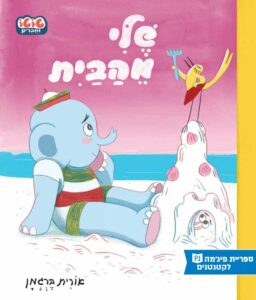
- You may want to snuggle up and leaf through the illustrations together. You could ask your child to show you what Toto and La La are doing on each page. What kind of expression does Toto have on his face when La La refuses to share her bucket and spade with him? When are both friends smiling?
- Perhaps you could take some stuffed animals or puppets and act the story out together.
- At the end of the book, Toto and La La “party”. You may want to think of things that make you want to party, and how you enjoy partying with friends.
- Perhaps you would like to discuss the difference between personal items and those that belong to your entire family with your child. You could walk through the various rooms in your house, and identify those items that are “only mine”, such as a toothbrush, versus those who belong to the entire family, like the living room couch.
- Does your child enjoy playing with sand? You could do so at the beach, or even in your own garden or backyard. Use items found in every home along with your bucket and space: plastic boxes, sieves and strainers, spoons, funnels, etc.
- When friends come over, it is sometimes hard to share our toys with them. Perhaps you could decide in advance which toys to offer them, and which to keep aside. You may want to encourage your child to be kind to their friends when they come and visit, and share their games with them. You can later discuss the warm feeling you get when you make friends happy by sharing with them.
Proposed Family Activities:
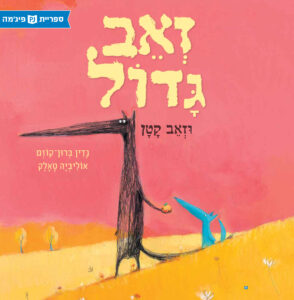
- You may want to snuggle up to each other and look at the illustrations together. What does Big Wolf do before Little Wolf comes along? Perhaps you could suggest that your child leaf through the book, and tell the story in their own words. You could also try to tell the story from Little Wolf’s perspective.
- You may want to ask your child to look for the illustrations in which Big Wolf helps Little Wolf. What does he do for his friend throughout the book? You could think of your friends together, and remember the little things you do for one another.
- You may enjoy tying two inner toilet paper rolls with some string to make binoculars. You could climb up a hill, and try to locate various objects using the binoculars you made. What is the furthest thing each of you was able to spot?
- When Big Wolf first sees Little Wolf, the latter is no more than a dot on the horizon. You may want to take a blank sheet of paper, and draw together – start off by making a small dot, then ask your child to add some detail to the picture, and keep on taking turns as you go along. What has your dot turned into?
- Big Wolf misses Little Wolf, and awaits his return. You may want to remind your child of a friend with whom they have not spent time recently, and suggest inviting them over.
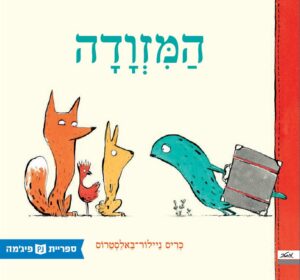
Proposed Family Activities:
- You may want to act out the story using puppets, and invite each character to explain how they ended up being friends.
- There are two illustrations of the house in the final pages of the book. You may want to ask your child if they can spot the difference between them. What’s been added to the second illustration?
- Is there a teacup, piece of furniture, or photograph that’s been in your family for a long time? Perhaps there is an interesting story associated with this item. If so, you may enjoy sharing it with your child.
- Your child may like to draw your home and loved ones. Together, you can make a frame for their drawing, and hang it up on the wall.
- Have new neighbors come to your neighborhood recently? Perhaps you know new Olim who have arrived in Israel not too long ago? You may want to make a greeting card for them in the spirit of this book, and print the word “welcome!” on it.
- Where does your family originate from? Perhaps you could open an atlas, and show your child the journey made by your family on their way to Israel. You may want to tell your child about your own childhood home, and show them photographs of homes in which you have lived over the years.
Proposed Family Activities
- You may want to pause as you read and ask your child: Where do you think the cat is rushing off to? Why is Mr. Goat blocking the way? Will the vixen eat all the raspberries that she has picked herself?
- Perhaps you would enjoy taking a look at the illustrations in this book together: Have you noticed Duck’s and Porcupine’s special eyebrows? Can you discern who is angry and upset, and who is happy and relaxed judging by their eyebrows alone? You may want to sit one opposite the other and take turns to cover your face, leaving nothing but your eyebrows visible. Now, pull a face – happy, surprised, angry, or sad – and ask the other to guess which emotion you were trying to express by your eyebrows alone.
- You could make a finger theater using eyeliners and lipsticks: draw needles on the back of your finger, and a nose and mouth on the front – and you have got yourself a porcupine; paint the thumb and forefinger of your other hand red with some lipstick, so that their tips form a bill – and you have got yourself a duck. Use both hands to perform a show based on this book. Which hand is quick to judge? Which hand gives others the benefit of the doubt?
- Perhaps you could share a story with your child about a time when, like the duck in this book, you were quick to jump to conclusions about others’ actions. When something unpleasant happens, we can try to adopt the “porcupine” approach, and repeat the phrase “maybe, possibly, perhaps” together.
Proposed Family Activities:
- You may enjoy looking at the special illustrations together while reading the book. You may want to discuss whether letters can indeed have feelings, and whether you recognized the boy who received the letter at the end of the book.
- What is known and unknown in the book? Perhaps you can guess: What did Nitay’s mother, Lily, whisper in his ear at night? What did the letter say? Why was the man on the bus angry? And why were the old man and his daughter sad? Remember, there are no wrong answers – that’s the magic of the story!
- The illustrations combine photographs with drawings. You may want to print out a family photo or a picture of your child on a black and white printer, and then color in the printout using color pencils, enriching it with color and a creative imagination.
- Sometimes we keep special letters for a long time – official letters, love letters, or letters we received from friends. Have you also kept any special letter? Perhaps you could share such a letter with your child, and tell them who wrote it to you, and what it is about. Inspired by this book, you could start writing letters to one another, and keeping them in a special place.
- A letter need not be long, and does not necessarily require an envelope. You could surprise your child by sticking notes on their lunchbox or bathroom mirror, or placing them under their pillow. Whichever way you choose – spreading a good word wherever you go is the best!
- Who would love to receive a “magical letter” from you? Perhaps a member of your family, a neighbor or classmate? You can go ahead and write one together, put it into an envelope, and mail it. You would not believe how much happiness a letter can bring.
- How about writing a letter in invisible ink? Squeeze a lemon, dip a cotton swab into the lemon juice, and use it to write a note on a white sheet of paper. Your hidden message will only be seen by those who shine a flashlight under your letter.
Proposed Family Activities:
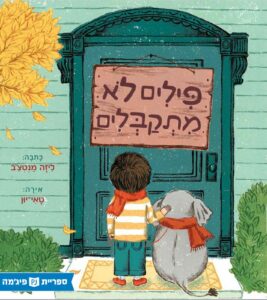
- You may want to snuggle up and look through the book together. Ask your child some of the following questions: did any of the illustrations make you smile or sad? Are you familiar with all the animals in the book? Do you think they all make suitable pets? Try to imagine being able to have an unusual pet: which one would you choose?
- We suggest taking a moment at the page on which the boy and his tiny elephant reach the pet club, and reading the sign out loud. You could discuss what, in your opinion, is the reason why elephants are not allowed into the club. How does that make the boy and his tiny elephant feel? Before you go on reading, you could perhaps hazard a guess as to what the boy would do next.
- How about making a model pet club from a shoebox, and acting the story out together using some puppets. You could enhance the story by making up conversations between characters.
- “Because that’s what friends do” – you may want to share a special friendship you had during your childhood with your child. What did you enjoy doing together? Which games did you play? Who are your child’s friends, and how do they like to spend their time together? Is there a boy or girl from kindergarten who has never been round to your house? Perhaps you could have a gathering of friends of all ages – because all are welcome to the family club!
- You may enjoy making a sign for your child’s bedroom together, and writing a welcoming greeting on it, such as “all are welcome here”, or “welcome, one and all”.
Enjoy reading and discussing the book together!
Proposed Family Activities:
- You may want to leaf through the book together, and look for all the animals: the hedgehog, rabbit, squirrel, and mouse. Have you discovered any other animals hiding in the woods?
- It may be advisable to read the story several times to allow your child to remember the sequence of events, and join you as you read the recurring lines: “רעבים ביער לא חסר, כדאי מאוד להסתתר” [“Many in the woods are hungry, it is best to hide”], and “התפוח גדול, אפשר גם לכבד” [“It’s a big apple, we can share it”].
- You may enjoy discussing moments in which we share with or give to others together. Remind your child how we host friends, share toys in kindergarten, or offer others some of our yummy snack.
- Each animal has a unique way of walking: the hedgehog takes small steps, the rabbit hops, the squirrel skips, and the mouse pitter patters. You could play charades together, imitating the various characters in the book: one of you does the imitation, while the other guesses which of the characters they are pretending to be.
- You may enjoy acting the story out using stuffed animals you have at home. You could also make animal costumes using old fabrics: cut various shaped ears, attach them to hair bands, and become hedgehogs, rabbits, squirrels, and mice.
- The friends in the book enjoy a meal together in which each of them gives and gets from the others. You may enjoy organizing a picnic with some friends or neighbors, in which each of you brings something from home, and shares it with the others.
- You could make a pinecone hedgehog with your child, and ask them to paint it with some paints and a paintbrush. Who will be the happy recipient of this colorful gift?
Proposed Family Activities:
- Have you noticed how the illustrator chose to depict the cat and rabbit as children in disguise? Does your child also like to play dress-up? You may want to put on some ears and tails and take a trip together.
- You may enjoy looking for the pages on which the cat and rabbit eat. What sounds do they make while eating? Try to listen to the sounds we make when we drink from a straw, have an ice-cream, or eat a crunchy apple.
- Perhaps you could act this story out using rabbit and cat puppets. You can use leftover fabrics or old socks to make your own.
- Do all of your family members like eating the same food? Which of you drink from a bottle, and which of you have hot coffee in a mug? You may want to suggest that your child try out new dishes every once in a while. Did they like them? Remember, there is no accounting for taste.
- You may enjoy inviting a new friend home, and finding an activity to do together that will make both friends happy: taking a walk, drawing, building something, or reading this book.
Proposed Family Activities:
- You may enjoy looking at the amusing illustrations together: does the cat really seem not to be nice? Is something bothering it? When is it happy and content? Look through the book and make up new stories about the illustrated cats.
- Which pets do you prefer, cats or dogs? Perhaps you like both. Do you think the author of this book likes cats? Now that he has shared his positive judgement of them with his readers, do you think he likes them more?
- Perhaps you could go for a cat walk in the neighborhood together. Every time you come across a cat, try to guess how it feels, and make up a story about it. When you return, you could ask your child to make an illustrated book entitled Why our Neighborhood Cats are Nice.
- You may enjoy playing the “kind eye” game together: take turns throwing a ball of yarn to each other. Whoever catches the ball has to say something kind – a good quality or kind gesture – about the one who threw it. Try passing the ball around as many times as possible, until the room is filled with positive judgment, compliments, and love.
- How can we be nice to cats? Perhaps you could take an empty crate, line it with old fabric, and create a shelter from the sun and rain for stray cats.
Sitting close and reading together
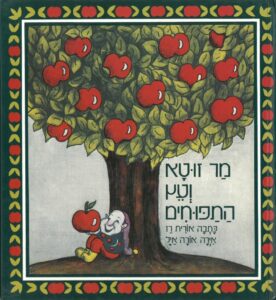
Sitting close and reading together – You may want to look for the illustration of the wilted tree, stop reading, and ask your child for their opinion as to why the tree is not blooming, and what it is missing. At the end of the story, you may want to discuss what caused the tree to bloom once again, and whether that was Mr. Zuta’s intention when he planted the flower patches.
Do trees have feelings?
Do trees have feelings? Perhaps you would enjoy looking for the page on which Mr. Zuta’s friends suggest that he get rid of the tree. You could imagine a dialogue taking place. If the tree could speak, what would it say to Mr. Zuta and his friends?
I want a garden too!
I want a garden too! – Mr. Zuta is jealous of his friends’ gardens. You may want to share a memory with your child of having wanted something that another person had. How did you feel? What did you do? If you would like to have a garden too, you could plant flowers, herbs, or vegetables in your yard or window-box. Look after your plants, and watch them grow.
Planting a community garden together
Planting a community garden together – You may want to take a walk in the area surrounding your home. Are there any open spaces, or abandoned courtyards? You could clean up the area together with some friends, and make it more beautiful. You could even plant a community garden in collaboration with your neighbors.
Right under one's nose
Right under one’s nose – Mr. Zuta did not notice the change in his apple tree until his friends remarked on it. Have you ever failed to notice something good that was happening around you? You may enjoy walking through your house and backyard, looking for all the beautiful things that have grown or changed there lately.
A recipe for apple crumble
Ingredients
For the crumbs:
100g of sugar
80g of butter, cubed
100g of flour
For the apples:
5–6 apples
20g of butter
3 tablespoons of sugar (you could add a tablespoon of cinnamon or lemon juice, depending on your preference).
Method:
- Mix the sugar, butter, and flour together until you get medium-sized crumbs. Store in fridge for one hour.
- Peel the apples, and cut them into wedges.
- Melt the butter in a frying pan, and cook the apples in it for 10–15 minutes while stirring, until the apples are soft, but retain their shape.
- Place the apples in a baking pan, sprinkle the crumbs on top, and bake in medium–high heat for approximately 20 minutes, until golden.
- Serve hot or at room temperature. Bon Appetit!
Proposed Family Activities:
- You may want to read the book over together several times. You could stop on each page and ask your child: “What will George do?”. Your child could repeat the phrase “Oh no, George!” out loud.
- Perhaps you may enjoy using a stuffed animal or making a simple puppet with which to act the story out together. You could walk around the house with it, looking for various “temptations”. What will your stuffed animal or puppet do in each room? How will it behave? Will it manage to restrain itself?
- You may like to leaf through the book together, looking for various items in the illustrations, such as the cake, cat, or flowers. How many times does each of them appear in the story?
- This story describes George’s contention with the things he is not allowed to do. But surely George does some things he is allowed to do as well! You may want to think together of some of the good things George likes to do, and invent your own story, entitled Oh yes, George!
- The book ends with the question: “What will George do?”. Perhaps you might like to tack on a different ending to the story together.
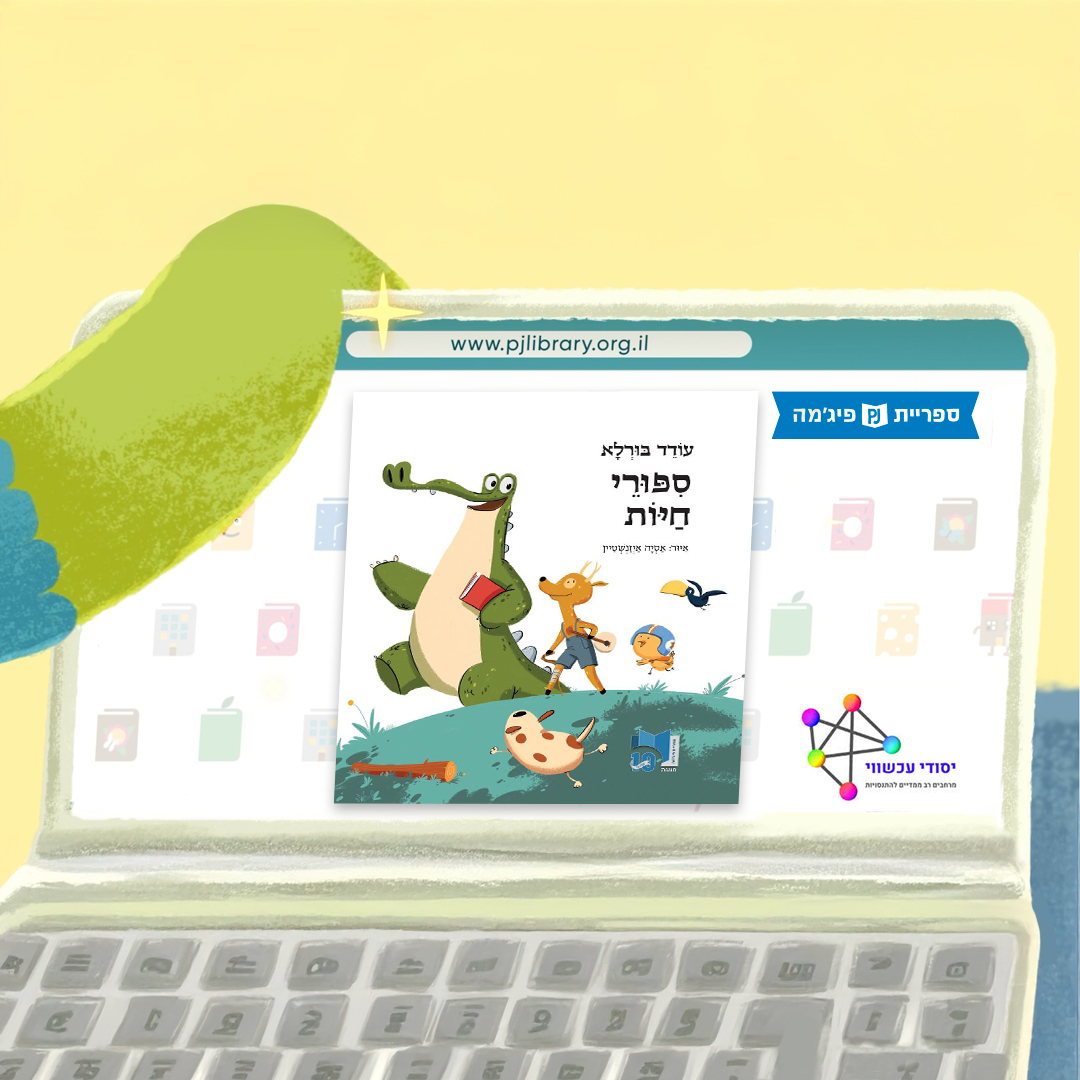
האזינו לסיפור "העופר המסכן" מהספר "סיפורי חיות"
הקשיבו, הקשיבו!!! 🎧 ילדות וילדים, הורים וצוותים חינוכיים ❤️ הימים האלו עכשיו הם ימים לא רגילים, ובימים כאלה סיפורים יכולים לשמח, לרגש, אפילו להצחיק. אנו מזמינים אתכם/ן להאזין להקלטה הקסומה של הסיפור “העופר המסכן”, מתוך “סיפורי חיות”, מאת: עודד בורלא | איורים: אסיה אייזנשטיין | הוצאת: ידיעות ספרים.
יוצרים ומגישים – ירדן בר כוכבא – הלפרין ודידי שחר מוזיקה ונגינה – טל בלכרוביץ’ פתיח ההסכת ולחן השיר בסיפור “החוצה” – דידי שחר.
מוכנים/ות? מת – חי – לים! ▶️
האזינו לסיפור "ההמצאות של קרפד"
הקשיבו, הקשיבו!!! 🎧 ילדות וילדים, הורים וצוותים חינוכיים ❤️ הימים האלו עכשיו הם ימים לא רגילים, ובימים כאלה סיפורים יכולים לשמח, לרגש, אפילו להצחיק. אנו מזמינים אתכם/ן להאזין להקלטה הקסומה של הסיפור “ההמצאות של קרפד” מתוך הספר “סיפורי חיות” מאת: עודד בורלא, איורים: אסיה אייזנשטיין.
יוצרים ומגישים: ירדן בר כוכבא – הלפרין ודידי שחר
מוזיקה ונגינה: טל בלכרוביץ’
פתיח: דידי שחר
Oded Burla (1915–2009)
Author, poet and painter Oded Burla was born in Jerusalem Sephardi family that had lived in this country for over thirteen generations. He published his first book at the age of 45, and went on to write and illustrate more than 70 children’s books, in which, he once claimed, 346 different animals were mentioned! Burla is considered the founding father of nonsense in Hebrew children’s literature; his books are filled with sophisticated humor and a use of language that is both surprising and amusing. For his work, Oded Burla has been awarded the Zeev Prize, ACUM Award, and Bialik Prize.
Proposed Family Activities:
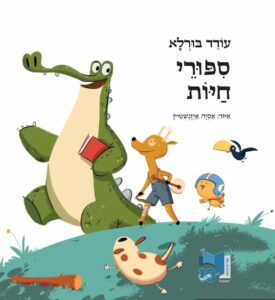
- Animal stories have morals from which people can learn. You may enjoy reading the stories together, and trying to discover the subtle messages conveyed by them. What makes someone pitiful? Why did the tiger help the warbler? Is kindness contagious? And what can a squirrel teach us about independence?
- What about the stories did your child find amusing? The animals and their behavior? The surprising endings the author chose for his stories? Or perhaps the illustrations?
- The toad is an inventor with a great imagination. But are all his inventions necessary or useful? Perhaps you could also let your imaginations run wild, and invent new things together. Are your inventions useful?
- In the poem entitled “Noah’s chick” (HaEfroah shel Noach), almost every line rhymes with “Noah”. You may also choose a word or sound, and try to write a poem in which every line rhymes with that sound. How long was your poem?
- The story about Sakiki the Saki contains a plethora of idioms and phrases containing the Hebrew word for “eye” – ayin. You may want to make an amusing, illustrated dictionary together containing all the expressions found in this story in picture form.
- Do you also like animals and stories? Then how about going to the zoo with a notebook and pen, and drawing all the animals that remind you of certain people? Together, you can make up stories with morals about them, and write them down, to create your very own animal stories.
You are welcome to leaf through the book
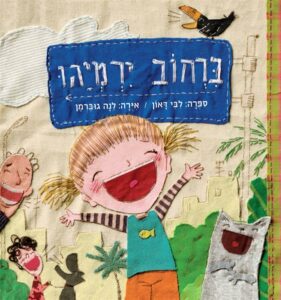
You are welcome to leaf through the book, and look at Lena Guberman’s unique illustrations closely. Make sure you read the words and signs in the illustrations too! Has anything about the illustrations made you laugh? They are all made of colorful fabrics, thread, and wool. Perhaps you would also like to look for a piece of cloth or an old sock, cut it up, glue or sew it together, to make your own special artwork.
You may want to discuss the Haruvis' demand for quiet, and their neighbors' responses with your child
You may want to discuss the Haruvis’ demand for quiet, and their neighbors’ responses with your child. Have you ever been asked to change your habits in order to be more considerate of others, such as family members or neighbors? Did that request seem reasonable or over the top? Having read the story together, you may be reminded of your own neighbors. Who have you not seen in a while, and would like to invite over to your house?
Perhaps you would like to take a walk around the neighborhood
Perhaps you would like to take a walk around the neighborhood. What does it look like? Who are your neighbors, and do you know them all? Do you spend time together, or help each other out? You may want to draw or make a model of your neighborhood together, and add those who live in each apartment or house.
Would you like to play "silence"?
Would you like to play “silence”? You’re welcome to whisper to one another, play in silence, walk on tiptoes, eat quietly, and even try to laugh without making a sound. Would you have passed the Haruvis’ “quiet neighbor test”?
You may enjoy discussing the following with your family or sharing it with your neighbors:
You may enjoy discussing the following with your family or sharing it with your neighbors: Does anything require improvement or repair in your shared space? You could initiate some neighborhood activities, such as decorating the shared stairwell, planting a community garden, or helping one another in your community. Put together an action plan, and get started.
Laughter is an easy and fun way of coping, it makes you happy, and can even be contagious
Laughter is an easy and fun way of coping, it makes you happy, and can even be contagious. Perhaps you would like to try laughing while making every possible sound: Hoo hoo hoo, Ho ho ho, Ha ha ha, He he he, Hee hee hee. Start laughing and change sounds each time. Did your laughter “roll and tickle”? Did it lift your mood?
Family Activities
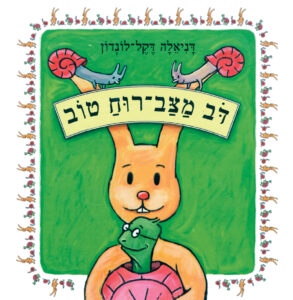
- Perhaps you would like to look at Daniella Dekel London’s amusing illustrations, and use them to follow the plot. What do the animals like doing together? Did you find the three ants running away? Have you managed to identify the various animals concealed in Good Mood Bear?
- You may enjoy acting this story out together. Who can be the bear, and how will you disguise yourselves? And who will play the part of the other animals? At the end of the show, you could make some sandwiches and eat them together in a special friendly picnic.
- Many things can put you in a good mood: playing with friends, singing and dancing, or hugging. Perhaps you would like to discuss the various things that make you happy, and choose one that fills your heart with delight – like singing and dancing together, going for a walk in the neighborhood, or reading your favorite books together!
- The bear in the book makes new friends, and the group has a great time together. Following this story, you may want to invite a new friend home, and try out new things together. Have you made a new friend? Did spending time together put you in a good mood?
- “I’m bored and have no one to play with!” Just like the bear, we have all felt sad or bored at times, and do not always have friends around. You may enjoy preparing a “good mood kit” together: decorate a shoebox, and put little prizes in it, such as stickers, crayons, or small games. Keep the box hidden, and take it out when you’re lonely or bored.
- Perhaps you could make little bears from various items. What could you use for round ears? And how will you give it a chubby belly?
- You and your child can also dress up as bears, other animals, and even various family members. You may want to create a costume and prop basket, filled with various materials, hats, glasses, and household items. Dress up, guess each other’s costumes, and get in a good mood!
האזינו לסיפור המדינה של ילדי הגן
אנו מזמינים אתכם/ן להאזין לסיפור “המדינה של ילדי הגן”, מאת: אמונה אלון | איורים: מנחם הלברשטט | הוצאת: ידיעות ספרים (גנים)
יוצרים ומגישים – ירדן בר כוכבא – הלפרין ודידי שחר
מוזיקה ונגינה – טל בלכרוביץ’
פתיח – דידי שחר
מגישים – יובל סגל, אפרת אביב ותומר שרון.
אקורדיון וחלילים – סלעית להב
מוכנים/ות? מת – חי – לים!
Family Activities
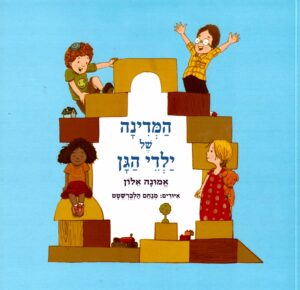
Menachem Halberstadt’s wonderful illustrations speak to the adults reading the story as well as the children, and hint at well-known historical personae and experiences. Even the teddy bear is wearing a hat from the days of the Palmach! Look closely at the illustrations together with your child and share the country’s history with them. See if you can find pictures depicting Theodore Herzl, David Ben Gurion, and dancing the hora in the streets of Tel Aviv.
Adi points to some pictures of famous photographs depicting stories of immigrants. Ask your child to show you these pictures and try to guess from which countries the different immigrants came. You can take out an atlas or map of the world, and look for the places where your family lived throughout the generations and where you have relatives outside Israel today.
The children in the story act out an imaginary version of “building the country”, which initiated in the make-believe corner of the kindergarten. Your child can also dress up in costume and choose a task in building the country.
You too can “build a country”. Let your imagination run wild: How will you call your country? Who will live in it? Which buildings are needed? Will it have a flag? You are invited to send us a photograph of the country you created, and we’ll post the picture on the Sifriyat Pijama website pj.crunchcart.com .
It is not always easy to join in to an existing group and find your role in it. The story can provide an opportunity for you and your child to discuss the emotions of the characters in the book, and for you to share with them your own life experiences – in your personal life, and on the national level.
The building of the State of Israel is a process that has not come to an end, and more new immigrants are likely to join the country in the future. David, the new oleh in the story, brings a toy plane with him to the game. What would you propose new immigrants bring with them to continue building and improving the state?
A number of well-known songs greet new olim as they arrive in Israel. You can organize a sing-along one evening in your home and sing such favorites as “Heveinu shalom aleichem”, “Am Yisrael Chai”, and “Hineh ma tov u ma na’im”.
Suggested Family Activities
- It all began with a misunderstanding and hurt feelings, and then “Now you’ll see what’s going to happen!” After reading the story together you may discuss intentions and misunderstandings among friends, and share experiences with one another.
- Like Kramer the cat, we all feel big at times and small at other times. You can ask your children when they feel big and when they feel small, and talk about the advantages and disadvantages of each.
- “Scratches, bites, jumps and somersaults” – that’s how the author Meir Shalev describes cat games. You can flip through the book, select one of the animals and act out that animal’s movements.
- Kramer is very fearful of the large animals he meets in the forest. This can be an opportunity to discuss with your children caution and safety rules, fears, and ways to overcome fear.
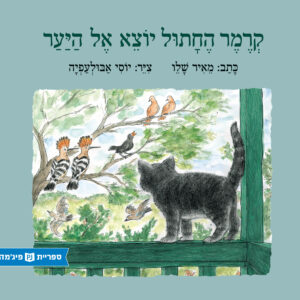
- Kramer’s friends teach him an important lesson in friendship: A good friend is one who knows how to forgive and to apologize. You can look for the illustration where Kramer’s friends meet him in the forest, and note the expressions on their faces.
- Yossi Abulafia’s rich illustrations depict an array of animals – some domestic, others wild. You can look at the illustrations with your child and see how many of the animals you recognize. Does your child know all the animals’ names? Which of them can be found near your house? You can go for a hike. Which animals, large and small, do you meet on the way?
- You can act out the story using stuffed animals and toys. Allow your children to select the dolls to represent Kramer, his friends from the garden and the forest animals. The animals can be happy, be afraid, play together and quarrel – and, in the end, make amends and apologize.
- After reading the book together you can look at the picture of Kramer sleeping in his bed, choose a doll or stuffed animal and guide it to sleep by reading a “Sifriyat Pijama”
bedtime story.
Activities You Can Do at Home:
- “Who is respected? Those who respect their fellow creatures” (Pirkei Avot 4:1).The wedding guests learn an important lesson from Marco about treating people with respect. In keeping with the saying “Don’t judge a book by its cover,” you could talk with your children about external and internal qualities. Together, you might discuss traits and characteristics of the different members of your family, emphasizing the importance of treating every person with respect regardless of how he or she looks or is dressed.
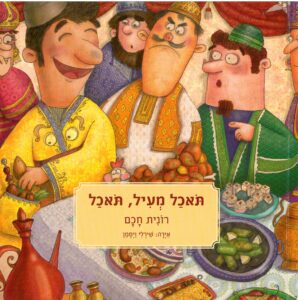
- You might flip through the book together and compare the illustrations where Marco is simply dressed to those where he is wearing his elegant silk coat. Does “Marco remain Marco”?
- While reading the story, you could linger over the page where Marco “feeds” his coat food from the wedding feast. Does this illustration make your children laugh? Do you find it funny? You could ask your children why they think Marco decided to put food in his coat pockets.
- The story describes how the Jews of North Africa used to celebrate joyful life cycle occasions. You could talk with your children about weddings and other celebrations in your community today. How do you dress for them? What foods do you eat? Are there any special songs and dances associated with these events? Have your children ever taken part in a wedding or other life cycle celebration? See if you can find photographs from past happy occasions, and recall details from a wedding or other celebration in which you took part.
- You could dramatize the tale using puppets or stuffed animals, or put on a skit based on the story. Make sure to find appropriate costumes: some ragged outfits, dark make-up, fancy wedding clothes, an elegant coat, and so on.
- “When you eat the labor of your hands, you will be happy and it will be well with you” (Psalm 128:2). Marco works as a coal-seller—a job that barely paid enough to eat, and one that no longer exists. You could tell your children about coal, how people used to heat their homes with it, and how the job of coal-seller was regarded in society. Then you can ask your children what jobs or professions they know. If you like, you could tell them about the work that you do. What do you love about your work? What gives you satisfaction?
Family Activities
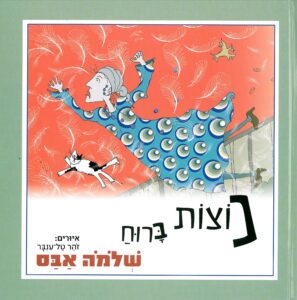
- Feathers in the Wind is an ancient story passed from one generation to the next. Do you know any stories that are passed down in your family? You may want to remind each other of one or two such stories.
- Things told “by word of mouth” can sometimes get distorted. “Chinese Whispers”, or “Telephone”, is a game that demonstrates this possibility in a humorous way: players form a circle, and the first player whispers a word in the second player’s ear. The second then whispers what they heard to the third, and so on, until the final player is reached, and asked to repeat the word out loud. Is it the same as the one whispered by the first player?
- The woman in the story learned that it is not easy to mend her ways and take back the words she had said. You may like to discuss the following with your child: In your opinion, why did the woman gossip and spread rumors about the people of her town? Have you ever regretted anything you’d said, even as a joke? Perhaps you would like to discuss such incidents, and the steps you took following them.
- What is the connection between words and feathers? You may want to ask your child: What do you think of the rabbi’s unusual suggestion, given without any direct preaching? Are there any life lessons in your family that are passed on in a creative, humorous fashion?
- The verse “Guard your tongue from evil, and your lips from speaking guile” has a wonderful tune composed by Baruch Hayyat. If you know it, you may enjoy singing it together.
- Shlomo Abbas has written and retold numerous stories. You may want to look for more of his books at home or the local library, and read them together. Which stories did you like?
Enjoy reading and discussing the book together!
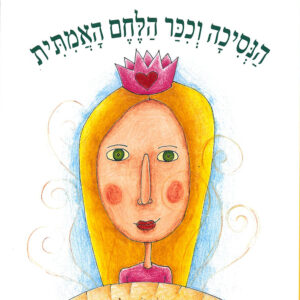
Every loaf starts with a single grain
“Every loaf starts with a single grain”: You may want to ask your child how “bread is brought out of the ground”, which forces of nature helped the wheat and other ingredients grow, and what one needs in order to turn wheat into bread.
ask your child to think of five things they like to eat
You could ask your child to think of five things they like to eat. Do they know what they are made of, and how they are prepared? You may want to make a “true meal” together, one that you make on your own from start to finish, including serving and clearing the table. Did you also feel satisfied with your effort and the entire process?
The princess did not want to disappoint her father
The princess did not want to disappoint her father, but hoped she could please him without making much of an effort. She ultimately overcame the difficulties she had encountered, and completed the task well. You may want to discuss the following with your child: Why do you think the king was unhappy with the ready-made loaves of bread brought to him by the princess? What is so special about the “true” loaf of bread? Have you ever been in a situation where you achieved something that was important to you after working hard, making a tremendous effort, or repeated attempts? You may want to share this experience and subsequent feelings with your child.
King Baguette looked at his princess'
King Baguette looked at his princess’ hands to determine whether she had brought him the true loaf of bread. You could also look at your child’s hands, and try to guess what they had done today. Children’s hands resemble their parents’, but are also different. You may want to compare your hands, and notice the lines “drawn” on them. Do you have the same lines?
At the end of the story
At the end of the story, the princess learned to appreciate the farmers’ hard work, and their contribution to her life, and even learned to thank them. Together with your child, you could think of the people around you who work hard to make everyone’s lives easier. You may want to try and count all the people who have helped us throughout the day (such as the people who clean the streets, security officers, bus drivers, those in building maintenance, etc.).
playing the "thank you game
You might enjoy playing the “thank you game”. A family member starts by saying “I’d like to thank…” and tells of a good thing another has done for them. It could be anything, great or small, whether ongoing or a single incident. The next begins their sentence the same way, and ends it as they wish, and so on. You could have a thank you round at the dinner table, or before bedtime.
During the journey
During the journey, the princess makes a loaf of bread, as well as a new friend! You may want to discuss the friendship between Fire and the princess together with your child, and compare it to the princess’ relationships with other characters in the book. Perhaps you’d enjoy telling your child about your friends, and share experiences with each other.
A Ciabatta Rolls Recipe
Ingredients
4 cups of flour
40g of yeast
1 tsp of sugar
1.5 tsp of salt
1.5 cups of lukewarm water
0.25 cup of olive oil
Method
- Stir the yeast in the lukewarm water until it dissolves, add the sugar, and let the mixture rise.
- Place the flour and fermented yeast in a bowl, add the salt and olive oil, and knead into dough.
- Cover and let the dough rise for approximately two hours.
- Form rolls and place on an oven tray covered with parchment paper or corn flour (to keep them from sticking). Let them rise for another thirty minutes.
- Bake in the oven for 25 to 30 minutes, at 220 degrees.
Bon Appétit!
Classroom discussion and activity ideas:
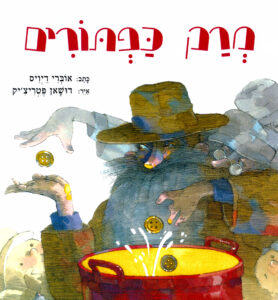
- “Strange, what is happening here?” the beggar asks. You might want to stop the reading mid-way and allow the children to express their thoughts and opinions: What is happening in the town? Why does no one invite the beggar into their home? The children can take turns pretending to knock on the doors of the townspeople and ask them, “How are you? Why aren’t you opening the door to the beggar?” The children can invent different responses that the townspeople may give.
- Young children should not open the door to a beggar, or to any stranger. In today’s world, we need to warn children against opening the door to strangers. What is the best way to help others? Discuss the ways in which we can help others without inviting them into our homes. Think together how and whom children can help.
- After eating the soup, the townspeople sing, laugh, and dance. They even invite the beggar to sleep in their homes. Re-read the description of the townspeople together. What did the townspeople gain from their contribution to the soup that made them so happy? Try to think of a case when something new and better is created as a result of every person giving up something.
- Draw or paint a community center (real or imaginary) on cardboard. Cut the picture to create a jigsaw puzzle, which can then be put together. Show the children how each piece of the puzzle helps complete the picture.
- Prepare Bone Button Borscht with friends (but without the buttons!): You might want to divide the kindergarten children into groups of three or four, each of which would prepare soup at the home of a different child. Ask each group to write and illustrate their soup’s recipe, and compile a classroom soup cookbook.
- Prepare soup in the classroom: Ask each child to bring in a vegetable or a spice, to ensure that everyone takes part in contributing to the group effort of preparing the soup. The recipe of the soup prepared in kindergarten can be the first one to appear in the kindergarten’s cookbook described in the previous activity suggestion!
- In order to bring the abstract concept of a “community” closer to the children, start with the joys of being a part of our kindergarten community:Who is a part of it? What do we like to do together? What do we do together that we can’t do alone? What special or added value do we achieve by being a community as opposed to each person being alone in his or her home? What other thoughts do you have on the topic?
- One idea for solidifying the feeling of community is to sing with the children the song “HinehMah Tov U’MahNa’im, ShevetAchim Gam Yachad” (How goodly and pleasant it is for brothers/friends to sit together).
- Community institutions: Suggest to the parents that they take a walk with their children in the neighborhood in order to take specific note of the community institutions in it (community center, library, school, synagogue, etc.), and afterwards to draw these buildings. Ask the children to bring their drawings to the kindergarten. By hanging the children’s pictures on the wall, you can create a model of the actual community and its institutions, or even an imaginary community. Or, you may want to build a model of such a community by using blocks, Lego or some other construction material.
- What can five buttons achieve? Divide the children into two groups. One group draws a collective picture of the darkened town (houses, inhabitants) as it was when the beggar arrived in the beginning of the story, while the other group draws pictures of the town after the people ate the soup together. You can hang the two pictures on a bulletin board on the wall in order to emphasize the change.
- “Receive everyone with a kindly countenance” [Haveimikabel et kul ha-adamb’severpanimyafot(Avot, 1)]: At an in-service-training workshop, “Tali” kindergarten teachers discussed the difference between “Bone Button Borscht”, and Jewish tales that deal with the importance of receiving people with a kindly countenance and the mitzvot of welcoming guests (hachnasatorchim). The behavior of the townspeople in Bone Button Borscht demonstrates the exact opposite of welcoming guests and of “receiving everyone with a kindly countenance”.
Receiving guests is one of the most important and beloved mitzvot of the Jewish tradition. In the Book of Genesis (ch. 18), it is told how Abraham welcomes three strangers, feeds them, and invites them to stay as guests in his tent. Abraham’s behavior teaches us how we should behave in our homes.
- During the holiday of Sukkot it is customary to invite guests (“Ushpezin”), and for people to visit one another in their sukkot. And each year on Passover we invite guests to a meal and read: “Koldichfin yeti v’yachol, kolditzrich yeti v’yifsach” (Every hungry person may come and eat, every one who is in need may come and observe). We invite others to come and eat with us, in order that no one remains outside, hungry and alone on the Seder night.
- You can share with the children the tale relating that in the tents of Abraham, our forefather, the first Jew, there were four openings. Each opening opened out to a different direction in order that every guest, no matter where he came from, would feel comfortable to enter.
- How do we host a friend? What is the duty of the host or hostess, and what is the duty of the guest? Accepting guests is part of the everyday life of children, but sometimes it’s difficult for them to host because they don’t know what to do with the guest, or because it is difficult for them to share their possessions. You can take such an opportunity for discussing the ways in which to make the guest feel comfortable.
- The mitzvah of welcoming guests is most meaningful when inviting one who is needy. You can carry out a “campaign” in the kindergarten in which every child invites a new friend, someone who has not yet visited him or her at their home. This is an excellent opportunity for creating new connections between children, and to help children who have difficulties with social skills.
- “Bone Button Borscht” is distributed in the month of Adar. Purim is approaching, and with it, mitzvot that are directly connected to community action and to helping the needy – mishloachmanot and gifts for the needy. As a class you can prepare mishloachmanot for all members who serve the community (security guards, the kindergarten staff that works in the after-school/afternoon program, etc.). You might also organize gifts for the needy. Your classroom community can collect and organize food, games or any other useful items that come to your mind that could gladden the hearts of those who in need.
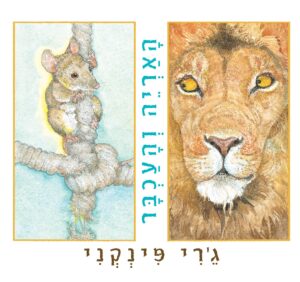
How do we read a book that has no words?
Slowly, and with great pleasure! You can look at each page and enjoy the beautiful illustrations. You may want to tell the story in your own words, taking turns, each of you “reading” one page. Perhaps you would like to look for the picture depicting the lion letting the mouse go and think together: why did the lion choose to let it go? Did it know that one day the mouse would come back and help it?
Acting the story out
You may want to act out the story using puppets: use words one time, and another time, use only pantomime.
Continuing the story
After the mouse releases the lion from the net, the mouse returns to its friends. What do you think it will tell them? You may like to make up a conversation between the mouse and its friends, in which the mouse shares its experiences with them. Do you think they’d be surprised? Will they believe it?
"Every man has his hour…"
The story demonstrates the advantage the mouse has, being small and having sharp teeth. Sometimes the larger creature has the advantage, but other times, the smaller does. You may want to think together of things your child can do that you can’t (like crawl under the sofa to retrieve a fallen object, get into narrow spaces etc.)
Drawing a story
The special illustrations in the book combine pencil, colored pencils and water color techniques. You may want to choose a page that you like and draw the picture using the same techniques. You may also like to look for another book you own and draw the story.
Comparing similar stories
This fable reminds us of the tale of King Solomon and the bee. You may wish to compare the two stories.
Do you know any other fables about animals (for example, The Tortoise and the Hare, or The Fox and the Vineyard)? You may find more Jewish tales and fables on the following website: http://agadastories.org.il/. You’re invited to log on and enjoy the different tales together.
Who would have thought that a lion and a mouse could become friends? Following the book, you may want to discuss friendship, compassion and helping others, returning favors and keeping promises.
Family Activities
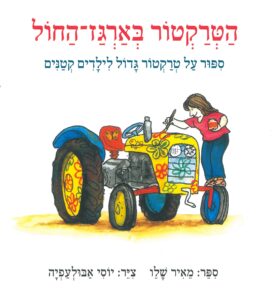
- Uncle Aaron and the tractor work the land together: they pull, mow, plow, harrow, fertilize, reap, and tug. There are so many words by which to describe working in the field! You may want to look at the book’s illustrations together, and try to identify which type of work is being carried out in each one.
- You may like to look at Uncle Aaron’s face. Does he seem to be enjoying his work? What do you think he finds enjoyable? Had Uncle Aaron invited you to join him, which type of work would you have wanted to perform with him, and why?
- You could ask Grandpa, Grandma or an older friend to do something with your child that requires life experience and knowledge. For instance: cooking, creating or building something together, learning a song or a few words in a foreign language, or planting some flowers.
- The red tractor went through several “phases”: it worked the soil; served as a children’s toy; and finally drove the kids to fieldtrips. Do you have an item or object that is no longer useful? You may enjoy finding a new use for it together (a cracked bowl can serve as a flowerpot, old clothes can form a costume, etc.).
- Perhaps you would like to build a tractor together using materials you have at home: cardboard tubes, bottle caps, old boxes, etc. You could paint it the most suitable color for a tractor, and get to work!
Enjoy reading and discussing the book together!
Family Activities:
“A time to embrace, and a time to refrain from embracing” (Ecclesiastes, 3:5)
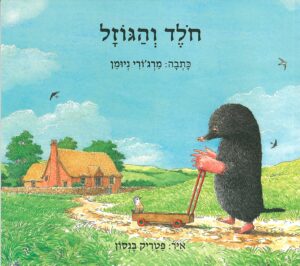
- Perhaps you would enjoy looking at the illustrations together and finding examples of the help Mole had given to the baby bird. When did Mole’s care meet the baby bird’s needs, and when did it not? What changed with the baby bird, requiring a subsequent change in care, and why was it so difficult for Mole to let it go?
- Young children develop their sense of independence but still need our protection as parents. As it says in the Book of Ecclesiastes, at certain times and situations it is appropriate to be nearby and “embrace”, and at others, free trial and error is best. It may be interesting to ask your child which areas they felt they had become stronger and experienced growth in over the last 12 months, and whether there are any new things they would like to do on their own, and have us, as parents, allow them to do.
- This story describes a parting process. How do you say goodbye in the morning? Do you have a “hug & goodbye” ritual? You may enjoy some role-play – you can be the kindergarten child, and your child can say goodbye to you and “go to work”. After some activity in your “kindergarten”, and when your child’s “workday” is over, you can meet again… and hug!
“Greetings upon your return, lovely bird” (H.N. Bialik)
- Birds “speak” using whistles and tweets. You may enjoy stepping outside and listening to the birds. You could try mimicking different tweets, and “speaking” the language of the birds.
- The baby bird in the story stands in its cage and says nothing. If we were able to understand bird language, what would it have told us?
- You could also care for birds! To do so, make a bird-feeder. Take a large, empty bottle, and wash it well. Cut a large opening into one end of it. Hang it in the balcony or on a tree near your home, and place pieces of fruit, seeds, and breadcrumbs in it. Watch from afar as birds come and eat from it.
Family Activities
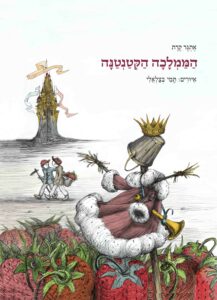
- This story is a fairytale, a work of fiction that comes to life through magical illustrations. The illustrator chose to place the kingdom inside a book, and have the characters be children playing “pretend” – making up the story about the imaginary kingdom. You may enjoy making a paper crown, cardboard scepter, and glamorous cape using a tablecloth or large scarf, and act out the story together.
- Perhaps you’d like to invent your own imaginary kingdom: What would it contain? What would it be made of? Would it have a king or queen? Would it also be teeny-tiny? You could write a story about your kingdom, or draw it.
- My own private palace: Using a simple, large cardboard box, you could create your own teeny-tiny kingdom. You could cut out doors and windows, and add (by drawing or using other accessories) towers and drawbridges to nyour heart’s content. Small toys can serve as king, advisors, and subjects. Who would you like to invite into your palace?
- The king chose to “change the rules of the game”: he stepped down, and left the comfort of palace life to win a friend. You may want to discuss your child’s friends with them. What sort of effort does your child put into their friendships? What do they like to do with their friends? Have they ever given anything up in order to stay friends with someone? You could share your own friendship experiences with your child.
- A kind deed for a friend: This story is full of longing. The subject misses his friend, the advisor misses the king… and the king misses his advisor… Do you also have a friend of the family or distant relative whom you miss? Perhaps you would like to send them a letter, e-mail, or picture by phone, or anything else that might make them happy. It could be a reminder of your true friendship, one that can overcome the physical distance between you.
- Do you know any other tales of kings and queens, princes and princesses? Perhaps you would enjoy inviting a friend over and reading those stories together.
Family Activities
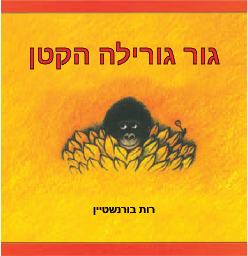
- You may want to look through the book for Little Gorilla and discover where he is hiding in each illustration. Try to imagine what his fur feels like, what he eats, and how big he is. Do you also like Little Gorilla?
- You may enjoy reading the story once more, and replacing the words Little Gorilla with your child’s name. Instead of jungle animals, say the names of your friends and relatives, who all loved your child when s/he was born, and love them still.
- Perhaps you would like to look at family photographs together, and remember what your child looked like when s/he was born. You could tell your child how happy and excited the whole family was when they were born, and share stories of the help extended by friends and relatives, as well as the joy surrounding the new addition to the family.
- It’s great to be big! You may enjoy recalling all the things your child can do today that they could not do when they were “little”, such as walking, talking, reading together, feeding themselves, putting their toys away, etc. When your child helps to clear the table or tidy up the room after playtime, you may want to commend them and say: “It’s great that you’re so big!”.
- Little Gorilla celebrated his birthday in the jungle. You may want to imagine what the animals’ party was like and discuss your thoughts. Did they make him a special cake? Or sing songs? Perhaps you could act out Little Gorilla’s birthday party using stuffed animals.
- It’s nice to liken our love for our children to a plant that always grows. Before bedtime, you could kiss your child and tell them you can’t wait for tomorrow to come, so that they’re a little bigger, and your love for them will grow some more too.
Proposed Family Activities
- You may enjoy looking at the illustrations together. Which toys do Noam and Elad play with? What does your child enjoy playing with – be it with their siblings, friends, or on their own?
- “Noam didn’t mean to fight with Elad, Noam didn’t mean to slap his hand”: You may want to ask your child how it is that Noam did not mean to fight and slap? Have you ever had a similar experience?
- We all make mistakes sometimes. You may want to share an incident with your child in which you felt the need to say you’re sorry. Was it difficult for you to do? How did you feel after apologizing?
- You may enjoy looking at the final illustration, and reflect together about the final lines of the story. Why are both brothers happy? Who, in your opinion, is happier?
- Noam and Elad are brothers, but they’re also best friends. Who is friends with your child? What do they enjoy doing together? After reading this story, you may want to invite a friend of your child’s over to play.
Noah the Chick
Emily Saw a Door
Next in Line
A Crocodile Gets on a Train
A Good Name
A Fight with A Broom
Morchella in the Garden
The Two of Us
The Hedgehog Who Said: Who Cares?
Winston was Worried
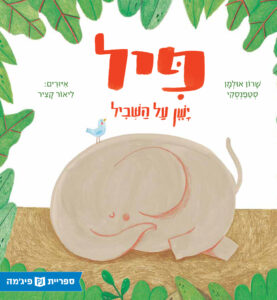
Elephant on the Path
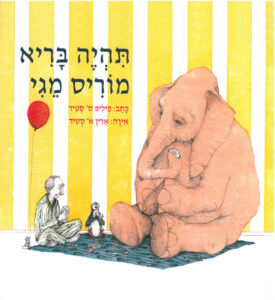
A Sick Day for Amos McGee
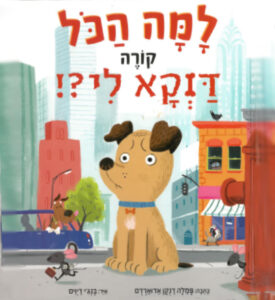
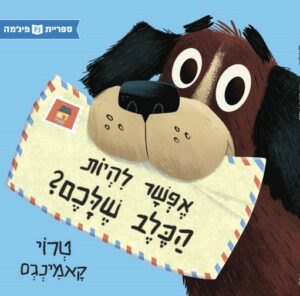
Can I Be your Dog?
Robin’s Secret
Toto & Friends: Mine!
Big Wolf and Little Wolf
The Suitcase
Maybe, Possibly, Perhaps
The Magical Letter
Strictly No Elephants
Little Hedgehog
A Rabbit and a Cat are going on a Trip
Why aren’t Cats Nice?
Mr. Zuta and the Apple Tree
Oh No, George!
Animal Stories
Yirmiyahu Street
Good Mood Bear
Land of Preschool Children
Kramer the Cat Goes into the Forest
Eat, Coat, Eat!
Feathers in the wind
The Princess and the True Loaf of Bread
Bone Button Borscht
The Lion and the Mouse
The Tractor in the Sandbox
Mole and the Baby Bird
The Teeny-Tiny Kingdom
Little Gorilla
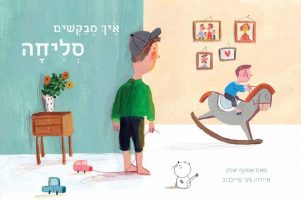
How do you say “I’m sorry”?