אֲנִי וְעַצְמִי
דמיון וחלום
היכולת לדמיין היא יכולת אנושית חשובה המפתחת יצירתיות, הבנה רגשית וחברתית, גמישות מחשבתית ועוד. בעזרת ספרים שעוסקים בדמיון וביכולת לדמיין, תוכלו להפליג לעולם חלומי, עשיר ומלא אפשרויות חדשות.

סְּפָרִים
Book-Related Family Activities
טיפ לקריאה
לכל אחד מהשירים מנגינה מוכּרת ואהובה. אנו ממליצים לקרוא אותם כמה פעמים ללא הלחן, בקצב המתאים ובהגייה ברורה. בהמשך לשיר אותם יחד, ולבסוף להאזין להם. כך יוכלו הפעוטות להתרכז תחילה במילים ובמשמעותן, ולאחר מכן לחבר את המילים המוכּרות למוזיקה.
לאה גולדברג
לאה גולדברג (1970-1911) הייתה משוררת, סופרת, מתרגמת, מרצה ועורכת. בשנת 1935 עלתה ארצה מליטא והתחילה לפרסם את כתביה. יצירותיה, ובהן גם הסיפורים והשירים שכתבה לילדים (“דירה להשכיר”, “המפוזר מכפר אז”ר” ורבים אחרים), היו לנכסי צאן ברזל של הספרות העברית.
נפרדים מהיום
לפני השינה תוכלו להיזכר יחד בדברים שקרו ובמי שפגשתם ולאחל להם לילה טוב (“היום ראינו כלב גדול בדרך למעון, לילה טוב לכלב!”). אפשר לשאול את הפעוטות על מה הם היו רוצים לחלום בלילה, ולומר, למשל – “אני רוצה לחלום על… גשם ועננים”.
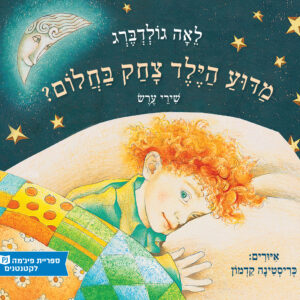
מדוע הילד צחק בחלום?
אחרי כמה קריאות אפשר להתעכב על כל בית בשיר בנפרד ולדמיין: מה קרה בהמשך המשחק של הפיל והילד? מה יש בתוך המתנה שמצא הדובון־אהרון?
פזמון ליקינתון
תוכלו לעקוב יחד אחר האיורים בשיר ולראות את היקינתון הופך מניצן לפרח. אפשר להצביע ולומר: “הנה הלבנה מסתכלת”, “תראה, הענן בא”, “הענן מוריד גשם”, “הנה היקינתון פורח”.
מה עושות האיילות בלילות?
כיצד האיילות שבשיר הולכות לישון? ואנחנו? אפשר לקחת בובה ולהשכיב אותה לישון במיטה, לכסות אותה ולתת לה נשיקת לילה טוב.
האזינו לשיר
האזינו לשיר “מה עושות האיילות” בקולו הנעים של אריק איינשטיין מתוך האלבום “לקט לילדים”.
Family Reading Advice
Getting ready for Purim: Toddlers are introduced to holidays and traditions early on in life. This book touches on the custom of dressing up for Purim which can make various feelings surface. With the help of this story, we can familiarize ourselves with this custom, visualize the Purim party at daycare, and discuss it. Doing so in advance may evoke curiosity and excitement, lessen concerns, and help toddlers be better prepared.
Discussion – Family Costumes
You can look at photographs together – pictures of your toddlers and other family members from previous Purim celebrations – to be reminded of and share childhood stories. You can ask questions such as: What makes costumes special? What sets them apart from our regular clothes? How do we feel when we dress up?
Who is at the Party?
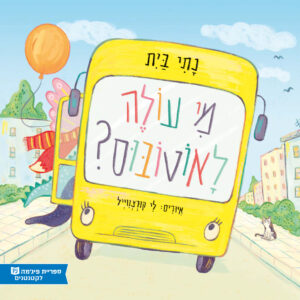
Look at the party illustration together in which all the children are dancing around in a circle. You can point at the various characters (“Here’s a strawberry”) and describe them, while noting at which station they had boarded the bus. During re-readings, you can notice whether the costumes have any special accessories and look for other interesting details.
Family Bus
You can play together – taking turns being the driver and picking up “passengers”, whether they be family members, stuffed animals and dolls, and other items from various “stations” around your home. And what should you do once you get to your final destination? You can disembark and throw a dance party!
QR Code
You’re welcome to dress up and dance to Levin Kipnis’s well-loved song (Music by Nahum Nardi, performed by Dudu Zakai)
טיפ לקריאה משפחתית
ספר הוא כמו חבר מוכר ואהוב. ההכרות עם הסיפור באמצעות קריאה חוזרת מעצימה את הפעוטות ומעניקה להם תחושת בטחון והתלהבות. כדאי לחשוף את הפעוטות לספרים חדשים, ויחד עם זאת לחזור ולהקריא שוב את הסיפור המוכר והאהוב.
איורים והכרת מילים
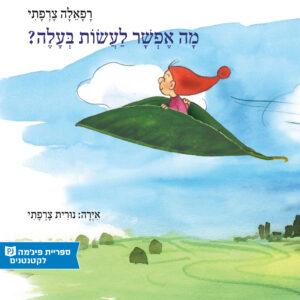
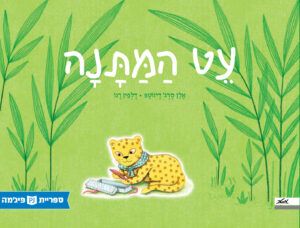
האיורים הצבעוניים בספר מציגים את הרעיונות של אלדד הגמד באופן ממוקד ובלי פרטים נוספים סביב. כך יכולים הפעוטות להבין טוב יותר מושגים כמו “לפרוס מפה” או “לצנוח במצנח”. תוכלו להשתהות בכל עמוד, להצביע יחד על האיורים ולשוחח – מה עושה הגמד עם העלה עכשיו?
חקר עלים
תוכלו לחפש עלים שונים בדרך למעון או לגינה ולבחון יחד: באיזה צבע העלים? מי מהם הכי גדול? ומי הכי קטן? איזה מרקם יש להם? אִספו כמה עלים ובִדקו אותם לאחר מספר ימים – האם הם נראים אותו הדבר? מה השתנה?
מעודדים יצירתיות
גם אתם יכולים להמציא רעיונות חדשים ויצירתיים, להפליג יחד בדמיון ולהשתעשע; כך למשל תוכלו להניח עלה על הראש ולומר – “העלה יכול להיות כובע!” תוכלו להמשיך את המשחק עם חפצים נוספים בכל זמן ובכל מקום.
על הספר
אלדד הגמד מוצא עלה, מסתקרן, וחוקר אילו שימושים יכולים להיות לו. בעבור פעוטות כל דבר בסביבה יכול להיות חדש ומרגש, אפילו עלה קטן. הם נהנים להתבונן, לגעת וללמוד דרך החושים וההתנסות.
קריאת הספר במעון
לפני ההקראה
תוכלו להציג לפעוטות את כריכת הספר, לומר את שמו ולשאול: “מה אתם רואים כאן? מעניין על מה הסיפור”.
ההקראה
בכל עמוד שתקראו אפשר לעצור, להציג את האיור ולהגיד: “בואו נסתכל – מה אלדד עושה עם העלה עכשיו?”
אחרי ההקראה
תוכלו להביא עלה אמיתי ולנסות לשחזר בעזרת האיורים את השימושים השונים שאלדד הגמד מצא לו: “בואו ננסה להפוך את העלה למטרייה, נשים אותו על הראש כמו שאלדד עושה”.
נסו להדגיש למה העלה משמש: “תראו, יורד גשם! העלה שומר על אלדד של יירטב, ממש כמו מטרייה”.
אוספים עלים
– הזמינו את ההורים לאסוף עם הפעוטות עלים בדרך למעון. את העלים תוכלו להראות במפגש ולהשתמש בהם לפעילויות.
– אחרי שהספר יגיע הביתה תוכלו לבקש מההורים לשלוח תמונות של שימושים שונים שמצאו לעלה בבית.
ומה עוד אפשר לעשות עם עלה?
תוכלו לחפש יחד עלים בחצר, ולדמיין – מה עוד אפשר לעשות בעלה? אולי להניח על האף ולהפוך אותו לחדק של פיל? ואולי להניח על האוזן ו”לדבר בטלפון”? הזמינו את הפעוטות לסובב ולהניח את העלים באופנים שונים, ולהמציא כל שימוש העולה בדעתם.
חוקרים עלים שונים
אפשר לאסוף עלים מסוגים שונים להתבונן, למשש ולהרגיש בידיים.
בחנו יחד: איזה מרקם יש להם? איזה צבע? איזו צורה? האם הם משמיעים צליל פצפוץ? האם יש להם ריח? איך הם נראים אחרי כמה ימים בתוך מים? ואיך הם נראים אחרי כמה ימים בשמש?
טועמים עלים
תוכלו להכיר ולטעום עלה חסה, פטרוזיליה, גפן ועוד. אפשר גם לשתות חליטת עלים חמימה ומשמחת.
שילוב הספר בחיי היום-יום במעון
מה אפשר לעשות בכף? ומה בדלי? או בקופסה? אפשר להזכיר את הספר כשרוצים לעודד חשיבה יצירתית, משחק בדמיון וביטוי אישי, ולשאול בנוגע לחפצים שונים בכיתת המעון או בחצר.
גם בשיר!
בסריקת הקוד תמצאו גרסה מולחנת של הספר. כדאי להשמיע אותה לפעוטות לאחר כמה קריאות.
Family reading advice
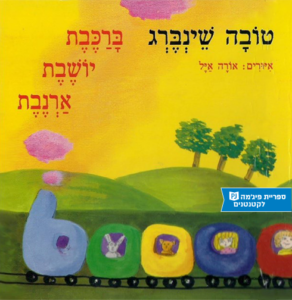
Simple rhyming stories can convey a value-based, meaningful message too. We recommend using the story as a basis for discussion, allowing for opinions to be expressed and questions asked, such as “How would you have felt if you had been in a similar situation?”
“… And happiness shall be yours!”
Grandpa is happy to return home with his stars, calling them his treasure, and valuing them more than money. Following this story, you can discuss with your child and ask: “What makes you happy that money cannot buy?” Drawing? Bedtime stories? Perhaps a good-morning hug? Parents can also share – what is their treasures?
Our tree
If you were to have your very own imaginary tree – what would it grow? Hearts? Balloons? Perhaps stars too? You can draw and cut out the shape you have imagined, decorate it, and even write wishes or shared memories on it. The finished product can then be hung on a plant, branch, or tree near you.
Starwatching
We may not find a real star tree, but we can always take an evening stroll and enjoy the sight of the stars twinkling in the sky. You can take this book along with you and read it together by starlight.
QR code
Poet Leyb Morgentoy, 1905–1979, was born in Pinsk, Poland. He wrote this poem in Yiddish in 1938. Yoram Taharlev translated it, Nurit Hirsh composed music to it, and, in 1969, Chava Alberstein performed and recorded it.
Scan the QR code to listen to the song:
Family reading advice
Books containing very few words allow us to tell an emotional and experiential story as we follow the main character in the book: What is he feeling? What is he thinking about? When is he sad and when does he get a new idea? You can look at the illustrations, get to know the main character and his experiences, link them to your own lives and, most of all, add something of yours to this experience that is being described in so few words and in heartwarming illustrations.
A gift of something
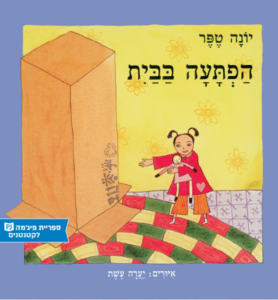
Did Mooch only give Earl an empty box for a gift? You can discuss gifts that cannot be put into boxes: Which free gifts can you give one another? A hug? A drawing? How about warm loving words?
A box of nothing
You can also have your own box of nothing. Take a box or paper bag, decorate it with paper, drawings, stickers and decorations. Whenever you are bored, open the box and use your imagination to decide what is in it: Maybe it contains an imaginary ball that you can pretend to toss between you, or an imaginary story that you have made up together, or any other invention with which you can come up.
Our books
Have you tried reading a book using a bird’s voice? Perhaps you happen to own a red book? Scan the code and you can play a game that encourages reading using the books you have at home. You can even get a certificate at the end of it!
Doing nothing
What happens when we do nothing? You should take a few minutes to sit quietly and listen. What can you hear? What can you see? What can you feel with your body? You can share your experience with your family and think together: Does nothing really happen when we do nothing?
Family reading advice
A book can convey an idea in just a few words. In such a book, the illustrations are a window enabling observations and discussions about the world of children. Through them, we can discover how imagination and creative thinking can turn seemingly worthless things into valuable ones. You should take a close look at the illustrations and what they tell us and ask: Is a bottle cap that does not fit any bottle qualify as garbage? What else can pipes be used for?
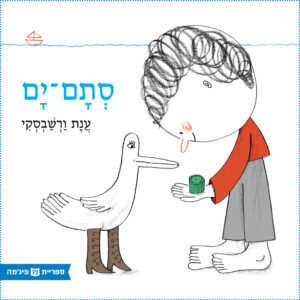
What does stam (“just” or “nothing much”) mean?
You can discuss and ask: What do we do at home that qualifies as stam (nothing much)? What does stam (“just” or “nothing much”) even mean? Do we enjoy things that we do stam? How about we do something stam together right now?
How does a hoop turn into a hot air balloon?
And how can we encourage creative thinking? Scan the code and watch some creative ideas.
Stam (“just”) objects
Just like in the video, you too can look for an item and invent a new use for it: What can you do with “just” a bottle? And how can you play with “just” a paper roll?
Shapes in the sand
Following the arts & crafts in this book, you too can go outside and check: What do you see when you make a shoe imprint in the sand? Or an imprint of your hand? Or a leaf? And what can you draw in the sand using a stick?
More arts & crafts and other activities can be found on the Sifriyat Pijama Pinterest page
Family reading advice – Books everywhere
Like many toddlers, Berale also asks Grandma – “What are we going to do now?”. Among the surprises Grandma keeps in her basket is a book that they can read whenever they want. A book is a world unto itself that can be taken anywhere quite easily. You can also keep a book in your bag, and enjoy it while waiting for a doctor’s appointment, relaxing in the park, or taking a long car ride.
Discussion – Special times with loved ones
You can discuss your toddler’s relationship with Grandpa, Grandma, or other significant family members and ask – What do you enjoy doing together? Are there any special activities that you only do with your grandparents or uncles and aunts? Are there any special items that only they have at home?
A made-up story
Grandma’s stories make Berale laugh because they are made-up, and unusual things can happen in our imaginations. Try making up your own story, like “The Hippo that Fell into a Soup Bowl”, “The Lion Who Was Afraid of Being Left Alone at Night”, or any other idea that comes to mind. You can start with an object you see around you, and take it from there.
Grandma baked a cake…
Do you know the fingerplay that accompanies the nursery rhyme “Round and Round the Garden”? Or the Israeli version “Savta Bishla Dasya” (“Grandma made some porridge”)? You can play a similar game by bending your fingers inwards and leaving your thumb out to create a ‘snail’. Your toddler’s upturned palm can be the bowl. Now say: “Grandma and Berale baked a cake. They added flour, they added sugar, they added eggs…” while touching your toddler’s upturned palm with your thumb as you name each ingredient. You can take turns being Berale and the mixing bowl.
Reading-assisting touch
Toddlers need physical contact. That is why you should sit close to one another while reading, hug, touch, and look into each other’s eyes every once in a while. That way your toddlers will experience story time as a warm and relaxing activity that makes them feel loved and safe.
Tickles and games
You can ask your toddlers – do you like tickling games? Which of the games that we play together do you enjoy? What would you have liked us to play? In relation to the mother’s telephone call in this book, you can also ask – how did Gan-Yah feel when her mother went to answer her phone? How do you feel when you have to wait?
There’s a hill in this house
You can play the same game they play in the book: Your toddler or another family member can hide under a blanket and become a hill. You can tickle the hill, feel it and search – where’s the hill’s foot? Where is its head?
*Some children are hypersensitive to touch or tickles, and therefore, it is important to remind players before the game that one can say “stop” at any point, just like they do in the book.
Moving together
There are many body movements in this book. You too can jump, dance, roll or lift your legs up in the air just like the hill does. You can look at the illustrations and copy Gan-Yah’s movements too.
For more ideas for activities, check out our Instagram page and discover more surprises.
Identifying and indicating
Here’s the sea! Here’s a mountain! And a butterfly too! As toddlers grow, they enjoy pointing at everything they recognize in the illustrations. You could pause on each page, take a look together, and discover what your toddlers already know. You could ask them to indicate where the rabbit is, and, if they struggle, look for it together.
From the book to the outside world
You could continue the journey that began in the book with a game at home, played while kneeling, saying “choo choo” and adding the hand gesture, or on the rug with some toys. You may enjoy looking out of the window together, seeing what is going on outside, and saying: “There’s a traffic light! Here’s a tree! And what else can you see?”
Some reading advice: How do voices and facial expressions help when reading?
Toddlers are fascinated by the tone of voice, facial expressions, sounds and gestures of the person who is reading to them: All of these help them follow the story, enjoy and understand it. Allow yourselves to be actors for a few minutes. You have won the best audience, who is sure to appreciate and enjoy your unique reading style.
A little advice for family reading
To make family reading enjoyable, and encourage children to read, we should choose books to which children relate and explore topics in which they are interested. Some prefer a piece of fiction, while others would want to read a story that “once was”. Whatever their favorite book may be, it would encourage them to enjoy books, while helping them to develop their imagination and creativity.
A discussion on belongings and memories
You too could look for items that remind you of past experiences: A family photo, gift you have received, or item associated with an experience you have had. Take turns introducing the object of your choice and sharing a memory relating to it.
Listening to the story
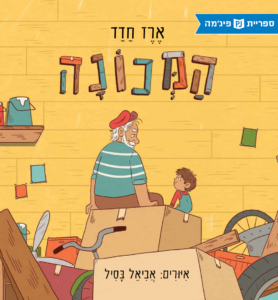
What does Grandpa sound like? Does the machine make sounds? By scanning the QR code you too can listen to the story together or separately.
Building something
Are you interested in making a machine of your own? You can gather some boxes, fabrics, crates and old toys to build your very own machine. You can plan what it would do and look like together, or simply build it and discover its attributes as you go along.
Illustrations – Where are the machines?
Many of the illustrations in this book depict machines. Perhaps you would enjoy leafing through them and finding illustrations of machines and machine parts – Can you tell what each of them does? Perhaps you could be inspired by the part you found to invent a new machine, and imagine what it is capable of doing.
Pinterest
Arts & crafts, songs and other activities are available on the Sifriyat Pijama Pinterest page
A little advice for family reading
Children “read” illustrations, and notice details that do not appear in the text. You could join them while reading by looking at the illustrations too, and discovering how they add interesting, surprising details to the written story, perhaps even telling another one in lines and color.
A discussion on travel through photographs
Where have you traveled to, and where would you like to go? You may enjoy looking at family photos together, and reminding one another of trips you have taken, and your favorite spots to visit. Have you found a place to which you have yet to travel, and would like to go to in future?
Singing to the Sea of Galilee
In Hebrew, the Sea of Galilee is called Kinneret, and it is featured in a well-known song by the name of Shiri Li Kinneret [Sing to Me, Sea of Galilee]. Would you also like to sing the Sea of Galilee a song? Scan the QR code and sing along!
Who or what is in the illustrations?
Is it a buffalo? A fox? A sea turtle? Look closely at the illustrations and get to know animals that live in various parts of Israel. You, parents, can say the name of the creature, and help your children find it in the book. You could also suggest that your child look for more information in additional resources, and increase their knowledge on the various animals.
A game of “Land, Sea (of Galilee)”
Place a piece of rope on the ground and decide which side of it is the Sea of Galilee and which is the land. One player will call out “Sea of Galilee” or “Land”, and the others will jump to the correct side. You can even add names of animals, for instance, “Sea of Galilee Duck”, and then jump to the Sea of Galilee side while quacking.
A Discussion on problem-solving
What can we do when we encounter a problem? You may want to share incidents with your children in which you, parents, have encountered a problem. Try to think back to how you felt, think of possible solutions together, and then tell them how you solved the problem.
What can we do with…?
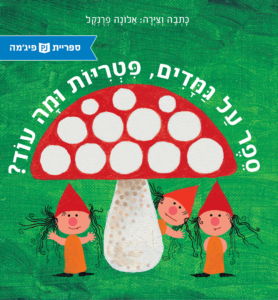
A hoop can be a steering wheel, a plate or… Scan the QR code and watch a video about creativity? Later, you can continue to think about – What can we do with a paper roll? A kerchief? A dwarf puppet?
Singing together
The dwarves planted mushrooms and sang “all the songs they knew”. You too can sing your favorite songs together. Perhaps you’ll sing about dwarves, or rain, or songs that cheer you up and make you smile.
A Game of “Which Dwarf am I?”
Take turns pretending to be one of the dwarves that appear in this book: The one with the umbrella, the one planting a mushroom, or the one jumping into puddles. The other players will try to guess what the dwarf is doing and find it in the book.
Pleased to meet you, I’m Hyla!
I’m similar to a frog but smaller. I can be found in Israel, mostly on trees, eating insects and laying eggs in water. I am a protected species and therefore cannot be kept in a jar – only in nature.
Reading together
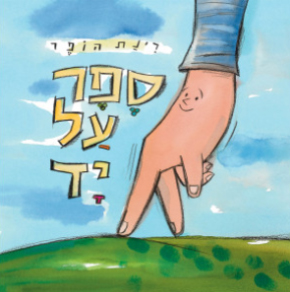
While reading, it is useful to include the hands on each page, follow their path and imitating their movements. Parents and toddlers can do this together: “walk” the hand on fingertips, make the hand jump, knock on the door in the picture, and be active readers throughout the entire book.
Hand Games
It’s so much fun to play with hands! Each and every one in turn makes a certain movement, and the rest of the participants imitate it. You can clap your hands, wave hello or goodbye, signal for “quiet” or fly!
A Family of Hands
Who has a small hand? Who has a large hand? Each family member is invited to place their hand on a sheet of paper. You, the parent, will draw the contours of the hands, and the toddlers will decorate and paint. The picture of all the hands can be kept as a memento, and you can also repeat the activity year after year and see what has changed.
Singing Hands
You can sing songs accompanied by hand movements, such as “I have ten fingers” or “My hat has three corners.” It’s a good idea to add hand gestures to your singing, and you can add finger movements to other favorite songs. Have fun!
“עשר אצבעות לי יש” מאת רבקה דוידית
מחרוזת שירי ידיים מאת דתיה בן דור
Pinterest – Crafts, songs, and activities in the Sifriyat Pijama’s Pinterest page.
Discussion
Parents may want to share the stories they liked while growing up: Was there a particular story you enjoyed hearing over and over again? Who was your favorite protagonist? You could ask your child which stories they like. Are they fictional or true stories?
Dual role illustrations
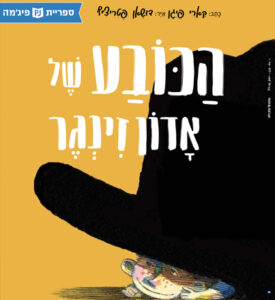
When do the illustrations tell the story of Leo and Mr. Zinger, and when do they complement the story the two of them made up? You may enjoy taking a look at the illustrations together, noticing the various styles, and thinking of ways of discerning what the illustrations refer to, and what they are telling us.
The story in the hat
Which stories are hidden in the hats you own? how about choosing one of your favorite hats and telling the story that is hiding in it: one player looks into the hat and starts inventing a story. After one or two sentences, they pause, and the next player picks up the story, and so on, until all players have added their part to it. Bashevis Singer could serve as a source of inspiration for telling a family story that has been passed down in your family.
A game – Who am I?
Would you like to play a game? Perhaps you would enjoy writing the names of your favorite characters from books on pieces of paper, and taking turns wearing a hat bearing the name of the character. Whoever wears the hat does not see the name written on the piece of paper attached to it, and must guess who it is using questions, such as: Is it a fictional character? Is it an animal?
Reading poetry books
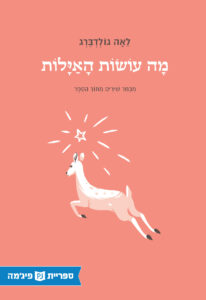
What do the gazelles do at night? And how does one go about reading a poetry book? Lea Goldberg’s book is filled to the brim with poems, and each of them is a small world unto itself. You could leaf through them, pick one by its illustration, prior acquaintance or personal preference, or even, an eye-catching title. You may enjoy reading it together, and then discussing it: Did you like the poem? What about it did you like? We recommend returning to favorite poems from time to time, and enjoying these works together.
Singing together
Some of the poems in this book have been put to music. You could find them on the various media channels and listen to their song rendition. You could also sing them together, play actual or makeshift musical instruments as you do, and accompany the song and music with a dance or simple suitable hand gestures. How about trying to sing one of your favorite poems to a much-loved tune?
Painting in three colors
The illustrations in this book were made by five different illustrators, whose names are listed on the final page of this book. You may want to leaf through the pages and look for the illustrations while attempting to guess what each illustration adds to or emphasizes in the poem. All the illustrations in this book have been colored green, white and pink. You could also try painting in two colors on a white sheet of paper, and create a shared drawing in two colors. How about mixing them together, creating squares and lines, and being inspired by the illustrations in the book?
A poem and a photo
A puddle? Light and shade? Perhaps a moon and bird? You may enjoy using a camera to take photographs inspired by the poems in this book. You can then print the photos out and add them to the book, or hold a family exhibition by sending photos and poems to your extended family.
Discussion
Perhaps you could discuss and share with one another the experiences you recall of moments in which you had discovered a new ability: Writing your first name, a special drawing you had made, and what else? What other new abilities would you like to discover?
Illustrations tell their own story
The illustrations in The Gift invite readers to immerse themselves in the book, and be part of Leo’s world: Which animal accompanies Leo? Which animals appear in the illustrations? Which details are taken from the world of children, and which from that of animals? Would you like to make your own drawing following Leo’s?
What's penned up in your pen?
Which incredible things await you in your pen? You may enjoy dedicating a notebook to drawings, copying words out, or writing down your favorite ones. You could make it a family notebook, in which each member adds their own illustrations and words.
A joint painting
What sort of world is hiding in your pen? Grab a pen and paper to find out! You and your family can take turns adding detail to a shared drawing – a line, circle, character, or item – to create a joint work of art that has come out of a single pen!
Discussion
Matan piles the sand up and makes his pile more sophisticated all on his own. having read this book, you may want to discuss actions with your child that they take without needing any help, and compare them with actions they had taken in the past. We recommend that you, parents, share your own similar experiences with them, from your own childhood: What is it that you wanted to accomplish, and indeed did? What does your child want to build and do? Do they need materials or help? You may want to decide on a family initiative to build, make or fix something together. Good luck!
The sands of time
What can we do with sand? We could make an imprint of our feet in it, and observe our family members’ different footprints. How about using twigs to draw in the sand, or piling it up, or going outside to look at different prints left in it there?
Perspective
The illustrations in this book were made from various perspectives: from above or below, from high up or far away. Looking at the world from different perspectives – high or low – allow us to discover surprising things: try looking at your room from an ant’s height; through binoculars made from toilet paper rolls; using a magnifying glass, or when standing on a chair: What can you see from that perspective that you couldn’t see from your regular angle?
Imagining and building
Matan and his sandcastle could inspire you to imagine, plan, and create too: close your eyes and imagine, then share your idea with your family, look for suitable materials, and start to build together. It could be a machine made out of boxes, a car made out of sand, a flying castle made of pillows, or perhaps something else entirely.
Just before bedtime...
How do you get ready for bed? What helps you fall asleep? You can talk about it together and think about creating a set ritual that will engender calm, and let you share the day’s experiences and thoughts that come to mind.
My notebook of thoughts
Isn’t it lucky that there’s a way we can remember our thoughts and stop them from getting away? How do we do that? Keep a notebook and pencil by your bed, and just before falling asleep, before your thoughts scatter away, draw them. You can color in your drawing in the morning, because now… is time for bed.
It's lucky that... It's good that...
“It’s lucky that a pot has two handles, and not five… if it did, how would we hold it?”, “It’s good that the windshield is made out of glass, not cardboard”. What do you imagine? Which things make you happy just as they are? Each member of the family can bring a certain object and talk about it: “It’s lucky that…”, “It’s good that…”.
Melodies, sounds and colors
The world is filled with melodies and sounds. Which melody do you like? Try singing a favorite melody together wile clapping your hands, moving parts of your bodies, singing, or playing instruments.
The world is also filled with diverse colors and shapes. You can draw as you listen to the music. Which shapes and colors will you choose for your drawing?
Illustrations tell a story
The illustrations in this book demonstrate how Itamar and the rabbit imagined one another versus what they really look like. You may want to check and compare: Do the monsters resemble the real child and rabbit? Are there any similarities between the monsters both Itamar and the rabbit had imagined?
Discussion
Were you, parents, also afraid when you were younger? Perhaps you could tell your children what you were afraid of, and how you grappled with your fear. You could also listen to your children as they tell you what scares them, and together, think of ways to overcome the fear.
Pleased to meet you: Monster
What does a scary monster look like? How about drawing one together, and then trying to imagine: What is the monster’s name? Who are its friends? What does it enjoy doing, and what is it afraid of? Now that you’ve gotten to know the monster, it may be worth asking yourselves whether it is still as scary as it was before.
A family magic word
“Jimalaya Jim! Zuzu buzu Yam Pam Puzu!” Each of the characters in this book has a magic word it uses when something scary happens. What is your magic word? You’re welcome to chose a family magic word together, and think of times when it would be appropriate to use it.
Discussion
You may want to discuss and share what you enjoy doing with grandma, grandpa, or other family members, and have the parents talk about their own childhood experiences. You could even do stuff remotely and still feel close: some suggestions for activities that bring you closer while being carried out from afar can found in the “granny’s stories” section on the PJLibrary website.
What do we see in the illustration?
You could check out the drawings on the aprons at the end of the book, and even create your own “family doodle”, with each member of your family adding to the artwork. When you’re done, you can look together to find out whether any shapes of objects or characters are hiding in the doodle you made.
Illustrations – look for me
Look at the illustrations together and find out what the cat does on each page or where there are strawberries. You could search for certain items, or choose a color and look for details painted in that particular color in all the illustrations.
What did you do today?
Paint stains on palms, sand in shoes, or food stains on clothes are all indications of what your child did in kindergarten today. Together, you could look at the traces left by their action-packed day. Can you, parents, use the signs to try and guess what your child has done today, and discuss their experiences with them?
Pinterest – Suggestions for arts & crafts, games, doodles and strawberry growing are available on the Ronnie’s Stories: Ronnie’s Apron page on the PJLibrary Pinterest.
Discussion – If I had a magic hat
If you had such a wondrous hat – where would you want it to take you? And what would you ask of it? You may enjoy looking at the illustrations and telling each other which place you would have liked to visit, who you would have wanted to meet, and which memento you would have liked to bring back with you.
Being creative – Following the magic hat
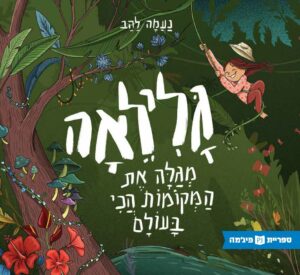
This book is an homage to the poem Magic Hat and the poetess who wrote it, Leah Goldberg: Gali-Lea. Leah Goldberg was one of the first and most important Hebrew children’s literature writers. You could also be creative by using this poem as an inspiration: sing the song entitled Magic Hat, dance along, wear hats, and act out both poem and story about Galilea. You could even make your own magic hat, and decorate it; who knows where it might take you?…
Being explorers
Which beautiful places have you visited or would you like to visit? You may want to make a photo album or scrapbook filled with places close to home or far away, realistic or imaginary. You could even invite friends and family over, and ask them to tell you about where they born or the places they’d visited: Where are these places? Have you ever visited them in your dreams? What was it like there – was it hot or cold? Quiet or noisy? And… what was coming home like?
Playing the movement game: Cold – Hot, Wet – Dry
Make a large paper circle and divide it up into eight equal parts. Write the following in them: cold, hot, wet, dry, up, down, quiet, noisy. Take turns playing by rotating a pencil at the center of the circle and announcing the word it points to. The rest of the participants repeat the word out loud, and add its antonym (opposite): “wet” – “dry”. At each turn, go around the house looking for something cold, noisy or hot, and so on. During the next round, you could look for something that has two or more of these attributes.
Discussing
“But Robin doesn’t care, she likes sitting on her own like that”: Do you think Robin is really alone? What do you do when you’re on your own? Where do you like to spend your alone time? You may enjoy taking a stroll through the book, and discussing the experiences Robin undergoes when she’s in the tree’s company. Which of Robin’s experiences did you like best?
Illustrations, color, and creativity
This book is rich in color and details that change with each season. You may want to suggest that your child look through the pages, and search for various items: leaves, clouds, fruit, or animals. Perhaps your child can look for the main colors in each page – a red or green page – and draw pictures that are inspired by the book’s illustrations: a green drawing, a yellow one, or a rainbow-colored one.
A game called "What's my Secret?"
How good are you at guessing secrets? You may enjoy playing the following guessing game: Each player in turn picks a “secret” according to a pre-determined topic, such as animals, books, or something found in nature. The other participants must guess what the “secret” is by asking “yes or no” questions.
Environment – Adopting a tree
How about going outside and looking for a tree close to home? What does it look like? What color are its leaves? Perhaps the tree is bare, and has none? Is it bearing fruit? If so, careful! Not all fruit are edible. You could stroke the tree trunk, and notice the birds and other animals nearby. You may want to visit it from time to time to see whether and how it changes throughout the year. With Robin as your inspiration – can you think of a gift that you would want to give your adopted tree?
Proposed Family Activities:
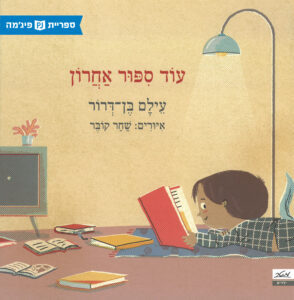
- What is a yak? Have you ever seen a badger? One Last Story is filled with various different animals. You may want to look at the illustrations and get to know new ones. Perhaps you would enjoy taking this book with you on a visit to the zoo or safari, so you could look for all the animals that appear in it while you are there.
- Does your family have fixed actions that accompany the transition from daytime to bedtime, such as brushing teeth, a bedtime story, prayer or lullaby? Do you like to read Sifriyat Pajama books at bedtime? If you like, you could start a new family habit or ritual that will help your child fall asleep easily and happily.
- How about playing “guess who?”: Take turns picking one of the animals in the book, moving like it and making the sounds it produces. Can the rest of your family guess which animal you are?
- What’s your story? You may enjoy making a story up together, based on real facts or entirely fictitious. You could make some illustrations to go along with it, and create a book out of it.
One Last Story is the last book you will be getting from PJ Library this year. We wish you many hours of fun reading books and telling stories, whether at bedtime, Shabbat afternoon, on vacation, or whenever you feel like it!
Proposed Family Activities:
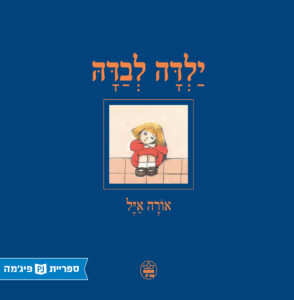
- Shulamit’s facial expressions change throughout the book. Perhaps you can look at the illustrations together, and pay close attention to those changes. When does her smile disappear? And when does it reappear?
- In the illustrations depicting the story that Shulamit tells herself, she seems very small compared to the tall buildings and her surroundings. You may want to ask your child for their opinion as to why Ora Ayal chose to draw Shulamit so small, inquire whether they ever feel small, or alternatively, when, if ever, they feel big.
- Perhaps your child could “read” the story to you, even if they cannot yet read the text. You could also act the story out together. Try switching roles: you can play Shulamit, who goes from room to room, asking members of her household to read her a book; while your child can play the other characters, explaining that they are currently unavailable.
- Many children find it difficult to keep themselves busy while waiting for their parents to spend time with them. You may want to use an alarm clock or hourglass to mark the end of your child’s “alone time”, and plan which book you will read together when it is over.
- Perhaps you could invent your own story, taking turns. One of you begins with “Many years ago in a faraway land…”, and you go on taking turns, adding characters and plotline, until you reach the end of the story. You could even write up and illustrate the story, and make a small book out of it.
- A Girl all be Herself is about experiencing both loneliness and togetherness. Having read the book, you may want to discuss feeling lonely with your child. You could tell them that we all feel that way sometimes, and think of coping methods together.
- Do you know any other books written or illustrated by Ora Ayal? You may want to look for more of her books at home or in the public library, and read them alone or together.
- Shulamit asks her household members to read her a story in the afternoon, “just like she always does”. Do you also have a certain time for reading books and storytelling? Is it the right time for everyone? Having read this book, you may want to schedule a “family story time”, starting a new family tradition.
Ora Ayal
Ora Ayal 1946–2011
Ora Ayal wrote and illustrated more than 70 children’s books. She illustrated many books written by top Israeli children’s authors, such as Miriam Roth (Tale of Five Balloons [Maʹase Ba-Chamisha Balonim], Hot Corn [Tiras Ham], and Yael’s House [HaBayit Shel Yael]), David Grossman (the book series on Itamar), and Ronit Haham (Five Witches Went for a Walk [Hamesh Mekhashefot Halkhu Letayel]). Among the books Ora Ayal both wrote and illustrated are: One Tuesday Morning [Boker Bahir Ehad]; Ugbu; and The Great War [HaMilhama HaAdira]. Her illustration style is simple and easily identified, and her well-loved books have been a source of delight for thousands of Israeli children. Ora Ayal has won many awards, among them the Andersen Children’s Literature Award, and the Ben-Yitzhak Award.
The illustrated story
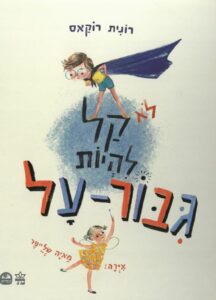
You may have noticed that the illustrations tell a slightly different story than the text in this book. You may enjoy looking at the illustrations together, comparing the text and image on each page, and asking: what is happening in kindergarten while the boy tries to fly? Who is the fairy eating with, and who is the knight? Perhaps you could make up a new story based only on the illustrations. What are the differences between your story and the one you read in the book?
Dressing up as superheroes
Dressing up as superheroes: You may enjoy making a cape, wand or wings, just like the ones the boy and girl have in the book. You could act the story out, and head off on your own adventures. Perhaps a cat in the backyard, a crying infant, or someone in your family needs help? If you join forces with one another, you just might be able to “save” them.
Who saved whom?
Who saved whom? You may want to read the end of the story again. Who, in your opinion, saves whom? Have you ever helped a friend in need? Has anyone ever “saved” you? Maybe you would like to imagine the little girl meeting her parents at the end of the school day, and the conversation they might have. You, the little girl’s parents, might ask: “How was your day in kindergarten?”. Later you may enjoy thinking up a similar conversation between the boy and his parents.
Make-believe
Make-believe: Many children enjoy playing with superhero action figures, and imagining they too have super-powers. You could join them as they play, express an interest in the super-powers of your child’s favorite character, and let your imaginations run wild. If you also pretended to be superheroes when you were a child, you could share those memories with your child, and compare your childhood superheroes to today’s characters.
Sometimes alone, other times together
Sometimes alone, other times together: You may want to look through the book and find the times when the boy and girl prefer to be on their own, and the times when they enjoy playing with others. Perhaps you could share with one another: what sort of things do we enjoy doing on our own, and which do we prefer to do together? Following your talk, you may want to think of a new fried and invite them over to play at your house.
We are all superheroes
We are all superheroes: You may enjoy using your imagination together. You could think of various situations in which our imagination would help us in our everyday lives, and ask questions such as: “If I were as tall as a giraffe…”, “If I could fly high up in the sky…”, “If I could be in two places at once…”. You may want to draw these imaginary situations, and make a scrapbook entitled If I were a Superhero.
Proposed Family Activities
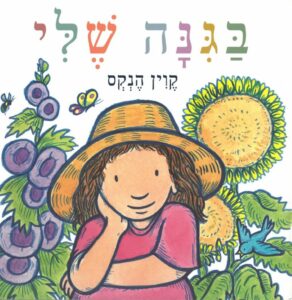
- You may want to sit close to one another, and read the book together. You could take a good look at the colorful illustrations that accompany the story. How do we illustrate dreams? What colors has the illustrator used? What can we see in the illustrations that does not appear in the text itself? Try to imagine what your dream garden would look like. What would you have liked to grow in it?
- The girl in the story helps her mother take care of her garden. Do you have a garden, or some houseplants? How does your child help you around the house? You may want to remind one another of times and cases in which they were able to lend a helping hand.
- The girl in the story dreams of flowers that never wilt. You too can make such flowers together. You could use tissue paper, pieces of fabric, or even an empty carton of eggs. Perhaps you could tape the flowers to a straw or bamboo skewer, and “plant” them in the garden, or a window box, or even inside an empty water bottle.
- Following this story, you may enjoy discussing dreams and aspirations. Let your imaginations run wild: which of your dreams can come true, and which cannot? What is required in order to make the dream come true?
- It is easy to make chocolate shells, bunnies, and hearts: melt some chocolate with a little oil in the microwave oven, and pour the liquid into small silicone baking molds, or ice-cube trays. It only takes a few minutes in the freezer for the chocolate to harden, and assume the form of the mold!
Proposed Family Activities:
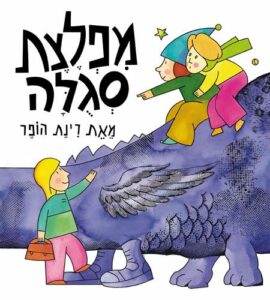
- You may enjoy sitting and looking at the illustrations together. What do you see on each page? The purple monster appears several times in the book. Have you noticed any differences in its depictions throughout the story? What is it wearing on its feet each time?
- Purple Monster is a cyclical book. You may want to ask your child to choose one of the characters, look for it together, and begin the story on the page on which it appears.
- Has your child managed to complete the next word using the illustrations and rhymes the first time you read the book together? You may enjoy reading it several times. In time, your child will become more familiar with the story, and be able to “read” it on their own.
- Did your child find the illustrations amusing? What is real and unreal about each of them? Perhaps you would like to ask your child to choose one page in the book, and have them describe what is happening in it to you in their own words.
- You could invent a new game called “guess what’s in the picture”: show your child images or photographs out of books or newspapers, cover part of them, and see if your child can guess what is under the cover.
- You could also make up a chain of events. You may want to imagine what might have happened had the purple monster tickled you – what would you have done? And what would have happened next?
- You could create a human chain, and take a “silly walk” together: hold your child’s hand, let others join you, and take a walk hand in hand through the house or outside. Each time a different person in the chain can take the lead, and the rest will follow – walking, stopping, hopping, crawling… you could then change places within the chain and keep on walking, until you’re back at the beginning again.
Elisheva's friends come to her aid
Elisheva’s friends come to her aid – they travel, endanger themselves, and are even willing to make an effort and take risks to help her get well. Perhaps you would enjoy remembering a time of need when you were helped by a family member or friend, or else share a memory of a time when you helped a fried in need.
Following the story, you may want to discuss
Following the story, you may want to discuss reality and make-believe, friendship and compassion, breaking and fixing.
Do you have any dolls or toys that need fixing
Do you have any dolls or toys that need fixing? You could look for “injured” games together, and try to fix them.
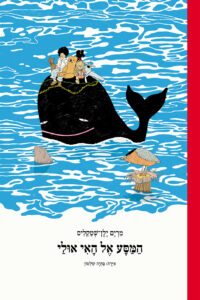
This book was first published in 1944, and the language used in it is in keeping with the times.
This book was first published in 1944, and the language used in it is in keeping with the times. Did you come across any words or phrases with which your child was not familiar? You may want to ask them who is telling the story, in their opinion – who is the feminine voice that expresses an opinion every once in a while – and what they think of this character.
You may enjoy leafing through the book and looking at the beautiful illustrations
You may enjoy leafing through the book and looking at the beautiful illustrations by illustrator Batia Kolton. You could pick your favorite excerpt of the story, and draw it.
Miriam Yalan Shtekelis wrote many other poems and stories
Miriam Yalan Shtekelis wrote many other poems and stories: Flower for Nurit, The Running Dwarves, Brave Little Danny, and more. You may want to look for them at home or the library.
This is the last PJ Library book you will be receiving. We hope you have enjoyed the books throughout your time at kindergarten and school, and may you read a whole lot more!
Miriam Yalan Shtekelis
Miriam Yalan Shtekelis (1900–1984)
Poet and author Miriam Yalan Shtekelis was born in the Ukraine in 1900. Her father, Dr. Yehuda Leib Wilensky, was a Zionist leader (her last name, Yalan, consists of his initials). Miriam was given a Jewish Zionist education, and immigrated to Israel at the age of 20. She settled in Jerusalem and worked at the Jewish National and University Library (JNUL) for many years. She wrote and translated dozens of children’s poems and stories, and some of her poetry was put to music. Among her well-loved songs are Flower for Nurit, The Soap Cried, Zehava the Doll, and The Rabbit has made a Home. Miriam Yalan Shtekelis was greatly appreciated in life for her writing for children, and was an Israel Prize laureate for children’s literature.
Proposed Family Activities:
- Unlike stories, a collection of poetry can be read in any order. Which poems were your favorite? And your child’s? Feel free to read the book over and over again, asking your child to pick just one or two poems at a time, and returning to your favorites time after time. After a while, your child will know the poems, and join in on your reading, completing the rhyming lines.
- Each of the poems in the book can be acted out using items found in every home. You may want to select one of your favorite poems and act it out together. You could also put it to music, or a certain rhythm, using a musical instrument. You may also enjoy putting together a small dance to go with your favorite poem.
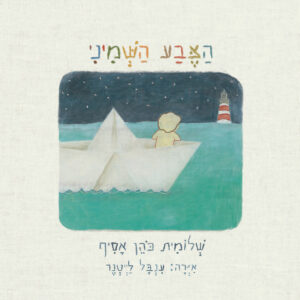
- You may like to ask your child to place their head on your lap and close their eyes. As you read, ask your child to imagine the poem, and try to think how they might have illustrated it. When your child opens their eyes again, show them Inbal Leitner’s illustration, and ask them whether they had imagined the poem as Inbal had. Perhaps you would then like to draw the illustration as you imagined it would be.
- If you look at the illustrations, you will notice the embroidery by Elina Zashkevich-Chipiga. Perhaps you could also take out colorful thread, and embroider your child’s name onto their backpack, or decorate a pillow cover.
- Shlomit Cohen Asif’s poems provides us with insight into a child’s inner world, as well as a wonderful opportunity to hold an open discussion on feelings. In the poem Fear sat on the blue chair, even Fear is scared of being alone. You may want to share your fears with one another, and try to find ways to overcome them together.
- White sheet, what will you become? Let your imagination run wild with a white sheet of paper. You could write, paint, or doodle on it, roll it into a ball, make a tiara out of it, or perhaps a kite, or pirate ship, being creative and drawing inspiration from the poems in the book.
- Shlomit Cohen Asif has written over 70 books. Do you know any other work by her? You may want to look for more stories and poems by her at home, in your kindergarten library, or the public one, and enjoy reading them together.
Enjoy reading and discussing the book together!
Shlomit Cohen Asif was born in Iraq in 1949, and immigrated to Israel with her family at the age of 18 months. She wrote dozens of children’s books containing tales, stories, and poems. Among her well-loved works are Mamushi the Rabbit, Three Nice Mice Birthdays, and When the Star fell into a Puddle. Shlomit Cohen Asif is a well-loved and respected writer, and many of her poems have been put to music, translated into foreign languages, and adapted to stage productions. Over the years Cohen Asif has won many awards for her work, among them the Ze’ev Prize for Children’s Literature, the Bialik Prize, and the ACUM Prize for Lifetime Achievement in Children’s Literature.
להציב באמצע החדר חפצים שונים ולדמיין שימושים שונים
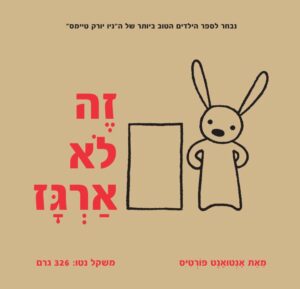
In this special book, the illustrations tell most of the story, and were it not for them, the plot would have been incomprehensible. You may want to leaf through the book together, and have your child describe what the box turns into on each page. You could have a discussion on imagination and reality, and share your opinion with your child. Do you think the rabbit really thinks the box is a spaceship, robot, or mountaintop?
Reality vs. Imagination
In this special book, the illustrations tell most of the story, and were it not for them, the plot would have been incomprehensible. You may want to leaf through the book together, and have your child describe what the box turns into on each page. You could have a discussion on imagination and reality, and share your opinion with your child. Do you think the rabbit really thinks the box is a spaceship, robot, or mountaintop?
Black or White?
You may enjoy looking at the illustrations, and noticing the colors used in each one. Which ones are used when the rabbit is spoken to? And which when the rabbit appears? You may want to ask your child for the reason why the author and illustrator chose to use colors this way.
Drawing Together
You could draw a rectangle on a sheet of paper and ask your child to continue the drawing, and turn it into something else. Can you guess what your child drew? You may enjoy changing roles, so that each time one of you will draw a shape for the other to turn into something else.
The Imagination Game
You may enjoy sitting across from one another on the rug and make believe together. Take turns pretending to hold something (a hammer, bug, phone, cat, baby…), and let the other guess what it is. Next, pretend to pass the object on to the next player, and go on making believe and guessing.
Family Activities
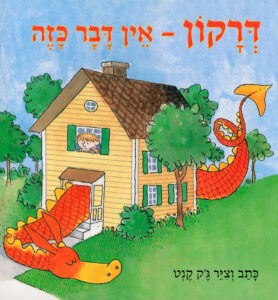
- Jack Kent wrote and illustrated this story. If you pay attention you’ll notice that the illustrations don’t always match the text of the story. When reading the words, “There’s no such thing as a dragon”, ask your children to check to see if “There’s no such thing as a dragon” also appears in the drawings. You may want to discuss with the children: What describes the reality better – the words of the story or the pictures?
- The pictures in the story present details beyond the plot that is described in the text. It would be fun to go over the illustrations with your children and point out the dragon’s actions in each
- Billy sees something that his parents don’t see. Is it possible to see something that nobody else sees? You may want to play “What’s Hiding in the Scribble?”: Each person in turn draws an abstract picture and the next person tries to identify in it a familiar image or object, add missing details to it and color
- Take this opportunity to discuss the feelings of the various characters in the story with your children. You may consider together: Why didn’t the mother want to relate seriously to what Billy had to say? How, in your opinion, did Billy feel when his mother didn’t believe him? You can expand the discussion to include something that happened to you or your children. Did any of you ever experience an incident in which someone didn’t believe you?
- You are invited to invent your own “dragon” or scary creature. Billy’s dragon mostly likes to eat and to sleep, and he calms down whenever someone pats him. What does your creature like?
- How is it possible to cope with scary dragons? Many tales have been written about heroes who fight with dragons and overcome them. Do you know any other stories about dragons? Following the reading and activities with this story you can tell them to your
- Concerns in a person’s heart – should we ignore them, or deal with them directly? How do you tend to cope with things that concern you? Use this opportunity to share something that worried you when you were a child, and tell your children how you overcame your
האם הילדים מכירים קומיקס?
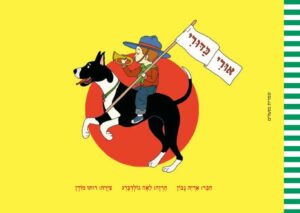
האם הילדים מכירים קומיקס? סיפור קומיקס, או “עלילון”, הוא בעצם סיפור כפול: הרפתקאותיו של אורי כדורי כפי שמתוארות במילים, ועלילת הציורים. לא צריך לדעת לקרוא כדי לפענח טורי קומיקס! ילדי הגן יוכלו “לקרוא” את הציורים ולספר את הסיפור במילים שלהם.
להסב את תשומת לב הילדים לכלב הגדול שלמלווה את אורי ברוב הרפתקאותיו
כדאי להסב את תשומת לב הילדים לכלב הגדול שלמלווה את אורי ברוב הרפתקאותיו. הכלב לא מוזכר בסיפורים, והוא פרי דמיונה של המאיירת רותו מודן. אפשר לשוחח עם הילדים, מה עושה הכלב בסיפורים?
לצייר טור קומיקס
ילדי הגן יכולים גם לצייר טור קומיקס. ניתן לבקש מהם לבחור סיפור מוכּר ולהכין ממנו קומיקס.
משחק: כל אחד בוחר חפץ בחדר ועושה בו שימוש מצחיק ובלתי-שגרתי
אחד הדברים המצחיקים ב”אורי כדורי” הוא השימוש הבלתי-שגרתי בחפצים מוכּרים. אפשר לשחק משחק: כל אחד בוחר חפץ בחדר ועושה בו שימוש מצחיק ובלתי-שגרתי. על השני לנחש לְמה הפך החפץ המוכּר.
לשאול את הילדים מה הם ממציאים ולבקש שיתבוננו בתמונות ויגלו מה החליט אורי לעשות.
אורי כדורי ממציא פתרונות מגוחכים לבעיות שונות (כיצד להתייבש לאחר הגשם, מה לעשות בקליפת בננה כשאין בסביבה פח, איך להתאים את גובהו של כסא לשולחן…). אפשר לקרוא את סיפורונים יחד ולעצור לפני הפתרון, לשאול את הילדים מה הם ממציאים ולבקש שיתבוננו בתמונות ויגלו מה החליט אורי לעשות.
לשוחח בקבוצות קטנות
האם עלילותיו של אורי כדורי הצחיקו את הילדים? איזה סיפור אהבו במיוחד? אפשר לשוחח בקבוצות קטנות, לבחון את הפרטים הקטנים שבאיורים ולאפשר לילדים להביע את העדפותיהם.
מפגש בדיחות וצחוק
בעקבות הקומיקס ולקראת חג פורים אפשר לערוך יחד עם ההורים “מפגש בדיחות וצחוק”, עם סדנאות לכתיבת קומיקס, שעשועים וחידות, ושירים היתוליים.
יצירות נוספות שכתבה לאה גולדברג
האם ילדי הגן מכירים יצירות נוספות שכתבה לאה גולדברג (למשל, “איה פלוטו?”, “דירה להשכיר”, “הילד הרע” ועוד)? אפשר להכיר לילדים את דמות היוצרת ולערוך תצוגה בגן. כדאי לבקש מהילדים לחפש בבית ספרים ושירים פרי עטה ולצרף אותם לתצוגה.
לספר את העלילה במילים
לא צריך לדעת לקרוא כדי לפענח טורי קומיקס! ילדיכם יוכלו “לקרוא” את הציורים ולספר את העלילה במילים שלהם.
להכין קומיקס
גם ילדים צעירים יכולים לצייר טור קומיקס. ניתן לבקש מילדיכם לבחור סיפור מוכּר ולהכין ממנו קומיקס.
לשחק משחק: כל אחד בוחר חפץ בחדר ועושה בו שימוש מצחיק ובלתי-שגרתי
אחד הדברים המצחיקים ב”אורי כדורי” הוא השימוש הבלתי-שגרתי בחפצים מוכּרים – למשל, כאשר אורי כדורי תולה את עצמו על חבל הכביסה, או מושיט חכה כדי לדוג דג זהב מתוך אקווריום. אפשר לשחק משחק: כל אחד בוחר חפץ בחדר ועושה בו שימוש מצחיק ובלתי-שגרתי. על השני לנחש לְמה הפך החפץ המוכּר.
לקרוא שוב את הקומיקס ולשאול את ילדיכם, מה הבעיה ומה הפתרון בכל סיפור?
כל אחת מעלילותיו של אורי כדורי עוסקת בפתרון מגוחך לבעיה שעומדת בפני הגיבור. אפשר לקרוא שוב את הקומיקס ולשאול את ילדיכם, מה הבעיה ומה הפתרון בכל סיפור? יחד תוכלו להמציא עוד פתרונות מצחיקים לבעיות.
מה מצחיק אתכם?
מה מצחיק אתכם? בעקבות הקומיקס ולקראת חג פורים אפשר לערוך “ערב בדיחות וצחוק” במשפחה.
יצירות נוספות שכתבה לאה גולדברג
האם אתם מכירים יצירות נוספות שכתבה לאה גולדברג? אפשר לחפש בבית, בספריית הגן או בספרייה המקומית ספרים ושירים פרי עטה וליהנות יחד גם מהם.
Suggested Family Activities
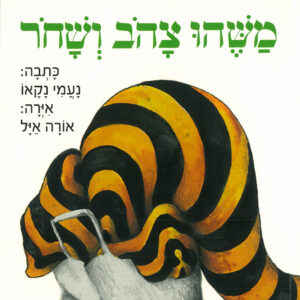
- Ora Ayal has illustrated many famous Israeli children’s books. Her style is simple and easy to identify, and her books have put smiles on the faces of thousands of children around the country. You can set off on a journey through the story’s charming illustrations, and follow Tali as she turns the “yellow-and-black something” into an imaginary lion.
- Take a look at the front and back covers of the book. What is portrayed on the front, what is on the back, and how are they connected?
- You can look for the illustration of Tali and the lion swinging from a branch. Notice the expressions on their faces. Now who is afraid?
- Can you discover the faces hiding in the colored illustrations? Who are they?
- What are Tali’s daddy and the other people in the waiting room doing while Tali and the lion set off on their adventure?
- The imaginary lion transforms as Tali approaches him, takes control, and eventually befriends him. You can stand together in front of a mirror and imitate the lion’s facial expressions on each page.
- Things we fear often seem large and forceful at first. As we overcome our fear they become lighter and we sense relief. After her visit to the dentist Tali was no longer afraid, and the lion returned to his bag and once again became a “yellow-and-black something”. You can look for a colorful shawl, piece of material or blanket that can be contained inside a handbag. Your children can remove the shawl or material from the bag, don it on their shoulders and pretend they are a lion.
- What did you fear when you were young? Sharing your life experiences with your children and telling them how you overcame your fears can help them expand their “tool box” for overcoming their own fears.
- “Something Yellow and Black” is the last book distributed this year through Sifriyat Pijama. The school year is coming to an end and soon your children will set off on new experiences – whether they move to a different kindergarten or start elementary school, or join the group of older children in the same setting. We hope that this story and the ensuing family discussion will help your children in their adjustment to the new circumstances. Wishing you a wonderful vacation from Sifriyat Pijama!
להציג לילדים את כריכת הספר
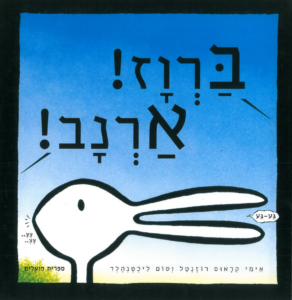
כדאי להציג לילדים את כריכת הספר ולשאול אותם: איזו חיה רואים בתמונה – ברווז או ארנב? האם כולם ראו אותה חיה? אפשר לבקש מהילדים לנסות להסביר לחבריהם כיצד לזהות את הברווז או הארנב. האם הצליחו לשכנע את חבריהם? אילו הייתם צריכים להכריע כקבוצה, מה הייתם קובעים: האם זה ברווז או ארנב? האם ההכרעה הקבוצתית חשובה או משמעותית?
אפשר לילדים לקרוא את הספר יחד בזוגות
כדאי לאפשר לילדים לקרוא את הספר יחד בזוגות, ללא התיווך שלך, ולהשתעשע בו. האם הספר הצחיק את הילדים? האם הוא הצחיק אותך?
מה מסתתר בקשקוש
האם אפשר לראות משהו שאחרים אינם רואים, או שאינם מפרשים כמוך? אפשר לשחק “מה מסתתר בקשקוש”: הילדים מתחלקים לזוגות. כל אחד בתורו משרבט ציור מופשט, ועל המשתתף השני לזהות בתוך התמונה דמות או עצם מוּכּרים, להוסיף פרטים חסרים ולצבוע אותם בצבע.
שיעור באיור - ברוז וארנב!
ברוז? ארנב? למדו לצייר גם ברוז וגם ארנב – יחד עם נעם נדב!
איך לצייר ברוז:
איך לצייר ארנב:
מגוון שיעורים באיור עם נעם נדב בעמוד היוטיוב שלנו, לצפייה לחצו >>
איך משכנעים מישהו להסתכל על המציאות דרך העיניים שלנו?
בסוף הסיפור מתחלפות נקודות המבט. מי שקודם לכן ראה ברווז מאמין עכשיו שזהו ארנב, ולהפך. אפשר לשוחח עם הילדים, להזכיר להם חוויות משותפות ולשתף אותך בניסיון החיים שלכם: האם פעם שיניתם את דעתכם בעקבות זווית הראייה של האחר? איך משכנעים מישהו להסתכל על המציאות דרך העיניים שלנו?
ליצור צלליות ידיים בצורה של ארנב (או ברווז!)
אפשר ליצור צלליות ידיים בצורה של ארנב (או ברווז!): מחשיכים את החדר ומאירים קיר אחד בפנס או במנורת קריאה חזקה. ממקמים את הידיים ליד מקור האור ויוצרים באמצעות האצבעות צורה של חיה. האם ניתן לזהות את החיה לפי הצלליות שעל הקיר? האם זהו ארנב או ברווז? בהמשך תוכלו ליצור חיות נוספות בעזרת כפות הידיים.
לצאת החוצה ולהביט בשמיים: מה רואים בעננים?
בכריכה הפנימית של הספר מצוירים עננים. האם הילדים מזהים צורה של חיה בתוך העננים? אפשר לצאת החוצה ולהביט בשמיים: מה רואים בעננים?
איך מרגישים כשהאחר אינו מצליח (או אינו מוכן) לראות את מה שאנחנו רואים?
איך מרגישים כשהאחר אינו מצליח (או אינו מוכן) לראות את מה שאנחנו רואים? תוכלו להציג לילדים תמונות של תעתועי ראייה או אשליות אופטיות, ולבקש מהם לספר מה הם רואים. שתי דוגמאות נודעות לתמונות “מבלבלות” הן תמונת האישה הזקנה והעלמה, והתמונה של כוס היין ושני הפרצופים.
תעתועי ראייה של חיות
הידעתם? סיפור הילדים “ברווז! ארנב!” מבוסס על תעתוע ראייה שצייר פסיכולוג אמריקני בשם ג’וסף ג’סטרו ב- 1899, ופרסם במאמר מדעי על הקשר בין המוח לבין ראייה. מאז פורסמו תמונות נוספות של ברווז-ארנב, כמו זו, וכן תעתועי ראייה של חיות אחרות כמו חמור-כלב ים, וברבור-סנאי .
איזו חיה ראיתם – ברווז או ארנב?
כשקראתם לראשונה את הספר, איזו חיה ראיתם – ברווז או ארנב? האם גם ילדיכם ראו את הדברים באותו אופן? האם הצלחתם בקלות לראות בכל פעם את בעל החיים באופן אחר? אילו הייתם צריכים להכריע, מה הייתם קובעים: האם זה ברווז או ארנב?
האם אפשר לראות משהו שאחרים אינם רואים, או שאינם מפרשים כמוך?
האם אפשר לראות משהו שאחרים אינם רואים, או שאינם מפרשים כמוך? אפשר לשחק “מה מסתתר בקשקוש”: כל אחד בתורו מצייר ציור מופשט, ועל המשתתף השני לזהות בתוך התמונה דמות או עצם מוּכּרים, להוסיף פרטים חסרים ולצבוע אותם בצבע.
להציג לילדיכם תמונות של אשליות אופטיות
איך מרגישים כשהאחר אינו מצליח (או אינו מוכן) לראות את מה שאנחנו רואים? תוכלו להציג לילדיכם תמונות של אשליות אופטיות ולבקש מהם לספר מה הם רואים. שתי דוגמאות נודעות לתמונות “מבלבלות” הן תמונת האישה הזקנה והעלמה, והתמונה של כוס היין ושני הפרצופים (ניתן למוצאן באינטרנט אם תחפשו “תעתועי ראיה”) – מה אתם רואים כשאתם מביטים בתמונות?
האם פעם שיניתם את דעתכם בעקבות זווית הראייה של האחר?
בסוף הסיפור מתחלפות נקודות המבט. מי שקודם לכן ראה ברווז מאמין עכשיו שזהו ארנב, ולהפך. האם פעם שיניתם את דעתכם בעקבות זווית הראייה של האחר? איך משכנעים מישהו להסתכל על המציאות דרך העיניים שלנו?
ליצור צלליות ידיים בצורה של ארנב (או ברווז!)
אפשר ליצור צלליות ידיים בצורה של ארנב (או ברווז!): מחשיכים את החדר ומאירים קיר אחד בפנס או במנורת קריאה חזקה. ממקמים את הידיים ליד מקור האור ויוצרים באמצעות האצבעות צורה של חיה. האם ניתן לזהות את החיה לפי הצלליות שעל הקיר? האם זהו ארנב או ברווז? בהמשך תוכלו ליצור חיות נוספות בעזרת כפות הידיים.
מה רואים בעננים?
בכריכה הפנימית של הספר מצוירים עננים. האם זיהיתם צורה של חיה בתוך העננים? אפשר לצאת החוצה ולהביט בשמיים: מה רואים בעננים?
Activities You Can Do at Home
- You don’t need to know how to read to figure out what’s going on in these comic strips! Your children can “read” the pictures and tell the story in their own words.
- Even young children can draw a comic strip. Ask them to choose a story they know and create a comic strip out of it.
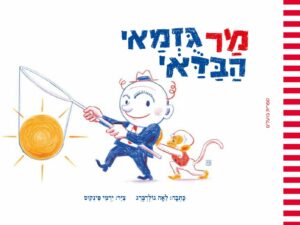
- Mr. Fibber the Storyteller uses his imagination to invent impossible tales. Children, too, can make up wildly exaggerated and imaginative stories. Together with your children, you could work on creating your own imaginary tale. One of you could begin: “One morning, I was on my way to kindergarten when I saw (fill in the blank)…” The next person might continue the story line with: “…when suddenly, I came to…” At the end of the story, you could select one of the imaginary situations you concocted together, and make illustrations for it.
- What makes you laugh? After you read these comics—maybe close to the Purim holiday—you could host a Family Joke Night.
- Do you know other books by Leah Goldberg? You might look for her stories and poems at your school or library, so you can read and enjoy them together. We hope you enjoy reading and talking about this book!
מסיבת פיג'מות בגן
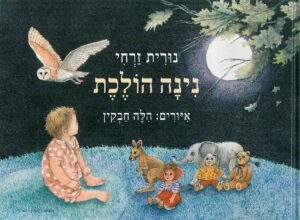
כדאי לערוך מסיבת פיג’מות בגן, יחד עם ההורים אחרי שעות הגן או עם הילדים בלבד בשעות הבוקר, ולקרוא יחד את הסיפור. אפשר לקשט את הגן עם תפאורה של כוכבים וירח ולהזמין את כולם להתכרבל יחד, ליהנות מהאיורים הרכים שמלווים את הסיפור ולעקוב אחר מסע ההתבגרות של נינה.
לשוחח עם הילדים על ההבדלים בין חלום ומציאות
“עכשיו לילה, אבל נינה חושבת שהיא ערה”. אפשר לשוחח עם הילדים על ההבדלים בין חלום ומציאות: האם גם לכם קרה פעם שלא הייתם בטוחים אם אתם ערים או ישנים? מה יכול לקרות בחלום ולא במציאות? אפשר לתת דרור לדמיון ולצייר ציור שכולו חלום.
להשוות את הסיפור
אפשר להשוות את הסיפור עם להיזכר בספר אחר שחולק השנה, “אמיליה” מאת נעמה בנזימן, שגם הוא מתאר עלילה דמיונית.
חבריה הצעצועים של נינה
חבריה הצעצועים של נינה חושבים שהיא מוכנה למעבר מזחילה להליכה, אבל נינה לא בטוחה בכך. בכל רגע בחייהם הילדים עומדים בפתח הישג חדש (למשל, מעבר לגן חדש או לכיתה א’, רכיבה על אופניים, עצמאות גוברת בפעולות יומיומיות). אפשר לשוחח על כך ולשאול אלו כוחות דרושים כדי לצלוח את המעבר, האם הם חוששים?
להמציא המשך לסיפור
הסיפור מסתיים בצעדים הראשונים של נינה. תוכלו להמציא המשך לסיפור: לאן נינה הולכת? האם היא גם מועדת ונופלת? איך מגיבים בני המשפחה והחברים כשהם רואים את נינה הולכת? הציעו לילדים לצייר ולכתוב יחד עמוד המשך לספר.
לשוחח עם הילדים על דברים ש'בוגרים' עושים ו'קטנים' עדיין לא
אפשר לשוחח עם הילדים על דברים ש’בוגרים’ עושים ו’קטנים’ עדיין לא. אפשר לערוך רשימה של הישגים ויכולות: מה יודעים הילדים לעשות היום שלא יכלו לעשות בתחילת השנה, ומה הם רוצים ללמוד לעשות כשיהיו בוגרים יותר.
להביא לגן תמונות שלהם כתינוקות
בעקבות הסיפור אפשר לבקש מהילדים להביא לגן תמונות שלהם כתינוקות, ולהציג אותן על לוח יחד עם תמונות שלהם מהשנה. כך כולם יכולים להתגאות ולהתרשם ממסע ההתבגרות של הילדים – וגם להיזכר בצעדים ראשוניים שלהם.
להכין יחד עם ילדיהם אלבום של "צעדים ראשונים"
תוכלו להפנות את ההורים לאחת ההצעות בסוף הספר – להכין יחד עם ילדיהם אלבום של “צעדים ראשונים”: צילומים של הילדים כתינוקות בזרועותיהם, ובהמשך זוחלים, הולכים, מבקרים לראשונה בגן… ולהציע להשאיר דפים ריקים להמשך ההתפתחות (המעבר לכיתה א’, לימוד קרוא וכתוב ועוד הרבה!).
סיפורים ושירים לילדים
נורית זרחי כתבה עשרות סיפורים ושירים לילדים. כדאי לחפש אותם ולקרוא אותם יחד, ולערוך פינה בגן של היוצרת ויצירותיה.
לשוחח עם ילדיכם על ההבדלים בין חלום ומציאות
“עכשיו לילה, אבל נינה חושבת שהיא ערה”. אפשר לשוחח עם ילדיכם על ההבדלים בין חלום ומציאות: האם גם לכם קרה פעם שלא הייתם בטוחים אם אתם ערים או ישנים? מה יכול לקרות בחלום ולא במציאות? אפשר לתת דרור לדמיון ולצייר יחד ציור שכולו חלום.
חבריה הצעצועים של נינה
חבריה הצעצועים של נינה חושבים שהיא מוכנה למעבר מזחילה להליכה, אבל נינה לא בטוחה בכך. האם ילדיכם עומדים בפתח הישג חדש? (למשל, מעבר לגן חדש או לכיתה א’, רכיבה על אופניים…) אפשר לשוחח על כך ולשאול אלו כוחות דרושים כדי לצלוח את המעבר, האם הם חוששים?
לצייר ולכתוב יחד עמוד המשך
הסיפור מסתיים בצעדים הראשונים של נינה. תוכלו להמציא המשך לסיפור: לאן נינה הולכת? האם היא גם מועדת ונופלת? איך מגיבים בני המשפחה והחברים כשהם רואים את נינה הולכת? הציעו לילדיכם לצייר ולכתוב יחד עמוד המשך לספר.
לשוחח עם ילדיכם על דברים ש'בוגרים' עושים ו'קטנים' עדיין לא
אפשר לשוחח עם ילדיכם על דברים ש’בוגרים’ עושים ו’קטנים’ עדיין לא. אפשר לערוך רשימה של הישגים ויכולות של ילדיכם: מה הם יודעים לעשות היום שלא יכלו לעשות לפני שנה, ומה הם רוצים ללמוד לעשות כשיהיו בוגרים יותר.
להיזכר בצעדים ראשוניים של ילדיכם
ילדים רבים אוהבים לשמוע סיפורים על ילדותם המוקדמת. לאחר הקריאה אפשר להתכרבל יחד ולהיזכר בצעדים ראשוניים של ילדיכם. האם אתם זוכרים באיזה גיל הם התחילו לזחול, ללכת, אולי לעמוד על רגל אחת בלי ליפול? אפשר לחפש תמונות ישנות ולהכין יחד אלבום של “צעדים ראשונים”: צילומים של ילדיכם כתינוקות בזרועותיכם, ובהמשך זוחלים, הולכים, מבקרים לראשונה בגן… אל תשכחו להשאיר דפים ריקים להמשך ההתפתחות (המעבר לכיתה א’, לימוד קרוא וכתוב ועוד הרבה!)
לצאת ל"טיול לילה"
כמו נינה וחבריה, גם אתם יכולים לצאת ל”טיול לילה”. האם הסביבה המוכרת נראית שונה בלילה? מה אתם רואים, אלו קולות אתם שומעים? כדאי לקחת שמיכה ועותק של הספר, לשכב על הדשא ולהביט בשמים. יחד אפשר לחפש את הירח (האם הוא “ורוד ושוטף את העצים באור כסף בהיר”, כמו בסיפור?), לִספוֹר כוכבים וללחוש סודות.
לילה טוב וקריאה נעימה מספריית פיג’מה!
Family Activities:
- You can flip through the book together with your children, looking at OraAyal’s heartwarming illustrations and pointing out each of the occasions on which the blanket helped Maya. You might ask your children what they think made the blanket change its size as the story went along.
- Like Maya, many children have a “lovey” (rag, blanket, pacifier, stuffed animal, or doll) that they take with them everywhere. Talk with your children about the strong attachment Maya feels for her “Blankie,” and share your own experiences: When you were young, did you have a favorite object to which you were particularly attached? Do your children have one? Perhaps you, too, want to embark on a “journey” with the item and do some growing with its support.
- Maya really wants to be four years old already. You could ask your children if there are things “big kids” do that “little kids” don’t. Together you could make an illustrated listof your children’s achievements and capabilities: things they know how to do today andcouldn’t do a year ago, and what they would like to be able to do when they are older.
- You might discuss special occasions throughout the year: holidays, the first or last day of school, important events in the life of your family. How do you mark all these occasions? Do you recite the Shehehiyanublessing, and if so – when?
- How does your family celebrate birthdays? Maya’s story underlines the point that maturity is measured not only by how old you are, but also by your actions. After reading the story, you might add a new custom to your family birthday celebrations—one that will give your children a chance to display their new-found maturity. You could suggest that they choose a toy, an item of clothing, or a doll or stuffed animal that they no longer need “because they’re big,” and give it away to a younger child.
- You could also hold a birthday party for one of your children’s dolls or stuffed animals – plan the party, make decorations, sing songs… everything you do for a birthday!
- Young children’s perception of time is not yet fully developed, and many children, like Maya, ask, “When will…?” Working together, you could design a weekly calendar showing all the days of the week, and then mark each passing day with a small picture or sticker.
A discussion on imagining together
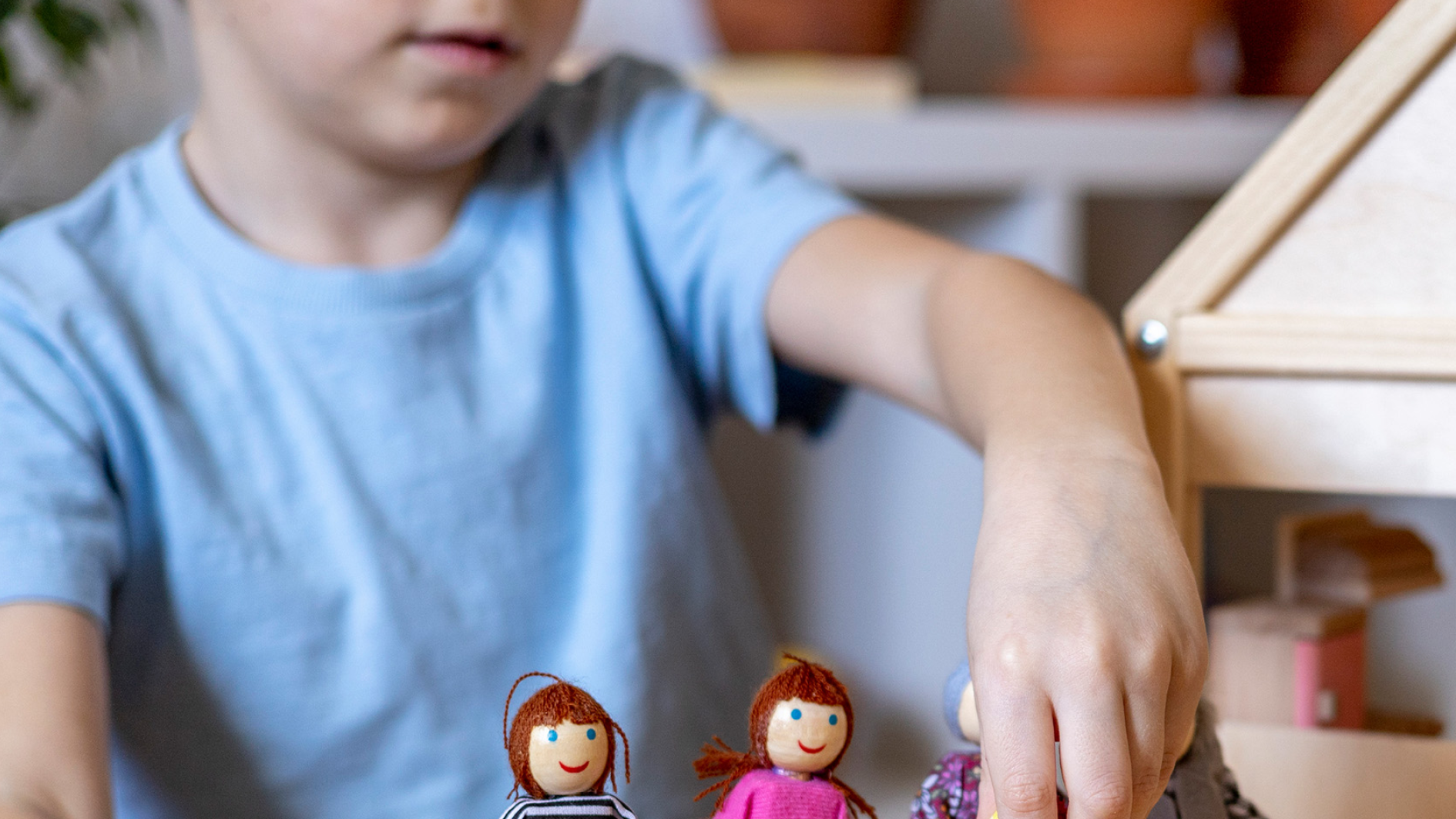
Children love to play “make believe”. They enjoy pretending that they are grown up: “Driving” a car, making mud “cakes”, or playing with an imaginary friend. You can play this game with your child using a prop, such as a doll, pot, or toy car, and ask: Where are we going? What are we cooking together? What is the doll saying?
Family Activities:
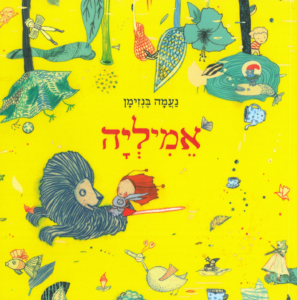
- Together with your children, take the time to look closely at Na’ama Benziman’s beautiful illustrations. You may want to stop at the page where Emilia approaches the three steps leading to the preschool, and note the changes in her facial expression.
- After reading the story, you can make up your own fantastic story and draw it.
- Emilia really wanted to enter the classroom on her own, “without any problems and without making a scene”. You and your child can look at the first illustration in the book, that depicts Emilia saying good-bye to her mother, and compare the entrance to her classroom with your child’s schoolyard. What helps your child say good-bye and go into the classroom in the morning? Do you have a special ceremony or technique that eases the separation? After reading the story about Emilia, you may want to invent a new way to say good-bye in the morning, a way that will help your child feel grown-up and brave.
- Like Emilia, each one of us feels sometimes big and other times small. You can read the story together again and take note of the points in the plot when Emilia feels big and when she feels small. You might ask your child when they feel big and small, and emphasize the advantages of each condition.
- Emilia’s friend Dana enters the story at precisely the moment when Emilia is feeling lonely. You can use this as an opportunity to talk about friendship. You might ask: What do we like to do together with our friends, when do we prefer to be alone and what is more enjoyable to do together with others?
- Dana is very happy to see Emilia, and they play together. You too can play together and even make your own tea party like the girls in the story. What will you serve at your tea party, who will be big and who will be small? You can invite other family members, dolls or stuffed animals to join your party.
- You can recount all the things your child knows how to do alone, and some tasks he or she needs help with. You might want to share an experience of your own, and tell your children about a time when you overcame an obstacle on your own – and when you were helped out by family or friends.
- Emilia’s journey into the classroom is depicted like a dream. You might want to talk to your child about dreams. Do you remember your dreams? You can try to draw a picture of one of the dreams you or your child dreamt.
- You may want to take this opportunity to share one of your own childhood experiences with your child. Did you attend preschool? If so, do you remember being sad saying good-bye in the morning? With whom did you play, and what did you like to do with your friends? You might want to compare your preschool with your child’s current classroom.
רעיונות שהציעה נעמה בנזימן לפעילויות עם הילדים סביב האיורים שבספר
לחצ/י כאן לרעיונות שהציעה נעמה בנזימן לפעילויות עם הילדים סביב האיורים שבספר
Activities to Do Together at Home
Where do you do your grocery shopping? At the corner store? The supermarket? Perhaps the farmers’ market (shuk)? Together with your children, you could find a cake recipe, make a list of all the necessary ingredients, and go shopping together. Then, when you come back home, bake the cake together and share it with your friends and family!
“Ding-ding when you enter, ding-ding when you leave.” You could make some bells for your door. Fasten some small bells, beads, shells, or even some old spoons or keys together. Hang them on the wall or suspend them from the ceiling right by the open door, and wait for the breeze to make your bells go “ding-ding.”
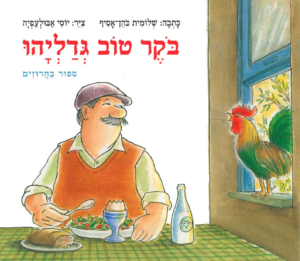
Mr. Gedalyahu dreams a strange but entertaining dream, mixing the real with the imaginary. Have a conversation about dreams with your children. See if they can recall a dream they dreamed. Talk about how sometimes you might feel unsure whether you’re asleep or awake, and about things that can happen in a dream but not in real life. Give free rein to your imagination—draw pictures of your dreams!
Explain to your children the meaning of the Psalm verse, “I have learned something from all my teachers,” and see if you can recall the wise sayings attributed to the cricket. You could choose one of the cricket’s sayings and draw a picture of it. Do you know any other wise sayings? Every creature can serve as a source of wisdom for us. You could ask your children from whom (or what) they have learned something.
In his dream, Mr. Gedalyahu sells unnecessary things to a hen, a goat, and a bee. Talk about buying things. Do you always buy only what you need? Or are you sometimes tempted to buy something you don’t really need? After reading the story, talk with your children about how to be a wise consumer and about the difference between something you need and something you perhaps want but don’t need – always remembering that dreams, too, hold an important place in our lives.
Proposed Family Activities:
- Perhaps you would enjoy looking at the illustrations and finding the child’s three friends, and their dog, who appear on almost every page. What are they doing in each picture? Are they taking part in the child’s adventures?
- You may want to look through the book together, and read the poems out loud. Unlike a story with a plot, a collection of poems can be read in any order you like. Is there one poem you consider to be your favorite? You could try to learn it off by heart.
- You could also try to write short imaginative poems about something you had supposedly done, or had happen to you.
- Following these short rhymes, you may want to play with words, and make up your own funny rhymes. Does your first name rhyme with anything? And does your other family members’
- The child in the poems experiences funny, unexpected adventures: he rides a cloud; fights giants; and takes a walk in the street with an elephant. Perhaps you’d like to imagine yourself as the child: what would the spaghetti have turned into then? Who would you have taken elephant-back riding? And who would you allow into your secret room? Perhaps you would like to illustrate your own imaginative poems, or draw your secret room.
- Using your imagination may help to cope with daily limitations or difficulties. You may want to think of everyday situations together in which our imagination could help, and ask questions such as: “If I were as tall as a giraffe…”; “If I could fly in the sky…”, or “If I could be in two places at once…”. You may enjoy drawing these imaginary situations, and create your own “If I were…” scrapbook.
Family Activities
- “Daddy says ‘Brush your teeth’ / Daddy says ‘Clean out your ears’…”
You may want to play charades and, rather than read the dialogue in the story, act it out without using any words. Can your children guess what the little boy’s daddy said?
- Perhaps you’d enjoy looking at the illustrations and discovering all the little boy’s stuffed animals and other toys. What sort of stuffed animals do you have? Do you also take them to bed with you at night? You may want to follow the illustrations and find out what happens to the toys when they lose the game (they go to sleep!)
- You can also play this game, often known as ‘Simon Says’: you each play the role of the king in turn and give others various instructions. If you begin by saying “The king says…”, the other players must follow your instruction; however, if the “king” orders you to do something without first saying “The king says…”, you do not follow the order. Did you get mixed up? You’re out of the game, and must wait until a new king assumes the throne.
- The little boy in the story pretends to be king and makes up new rules: in his kingdom you’re allowed to jump on beds, fly, be a giant, and ride wolves. You may want to use your imagination together, and think of things you’d like to change in your world. For instance, what would happen if we were to go to school at night and sleep in the daytime?
- The little boy in the story gets ready for bed having brushed his teeth, showered and kissed his father good-night. How does your child get ready for bed? Do you have a ritual, prayer or song that accompanies you as you transit between day and night?
- You may like to share memories from your own childhood with your child: did you share your bedroom with your siblings? Who tucked you into bed at night? Were you read bedtime stories or sung lullabies? Perhaps you went to bed with a doll or teddy-bear. Do you happen to remember a funny story from your past that is related to bedtime?
Haya Shenhav
Haya Shenhav is a poet and author born in 1936 in Kefar Yehoshua, in the Jezreel Valley. Her first children’s book, Mitz Petel (“Raspberry Juice”), was published in 1970, and is a huge favorite among children to this day. Among her well-known and much loved works are Aliza Habarvaza Vehahaverim (“Aliza the Duck and Friends”), and Hippo-Tam, as well as the songs Gveret Im Salim (“A Lady with Groceries”), and Mi Shavar Et Hatzalahat (“Who Broke the Plate?”). In 1985, Haya Shenhav was awarded the Zeev Prize for Children and Youth’s Literature, and in 2004 she was the Bialik Literature Prize laureate. Haya Shenhav lives in Ein Kerem, Jerusalem.
Family Activities
Pit, Pet, Tu is a long and adventure-filled story. You may want to read one adventure at a time, and then ask your child to pick an illustration, and tell you what the dwarves are doing now in their own words.
You could read it together several times, helping your child remember the sequence of events, and join you for the refrain: “Dwarves can do such things…”
You may enjoy looking at the illustration depicting the dwarves turning the mountain into a home. Do you recognize the food? What is your favorite? You may want to prepare one of the dishes the dwarves ate, or plan a back-to-front meal, where you eat dessert first.
One of the dwarves’ favorite pastimes is chatting. They enjoy sitting with one another, and remembering shared experiences. What do you like doing with your friends?
Do you know the tune to the song Meahorey Hahar 1, 2, 3 (“Behind the mountain, 1, 2, 3”)? You could sing it together.
Each time the dwarves transform the mountain into something else – a home, a boat, and even a car. You may also want to engage in a game of “pretend”, and turn familiar objects into other things using your imagination. You could pick a different object each time, and tell each other what it has turned into.
Would you like to play with dwarves? You may enjoy drawing little dwarves on toilet paper rolls, popsicle sticks, old socks, or rolled-up paper… You could make three dwarf puppets, and use them to tell the story.
Pit, Pet, Tu is the last PJ Library book you will be getting this year. Enjoy reading it, and also reread your favorite PJ Library books from previous months. Perhaps this time you could let your child read it to you… See you next year!
Why Did the Child Laugh in His Dream?
Who Gets on the Bus?
What Can You Do with a Leaf?
The Tree of Stars
The Gift of Nothing
Just the Sea
Berale Berale What’s in the Basket?
The Hill Tickle-Tickle
There’s A Rabbit on The Train
The Machine
The Sea of Galilee is Fantastic
One, Two, Three, What Can a Mushroom Be?
A book about A hand
Mr. Zinger’s Hat
What do the Gazelles Do?
Le Cadeau (The Gift)
Matan and the Great Sand Mountain
One Last Thing before Bed
Itamar Meets a Rabbit
Ronnie’s Stories: Ronnie’s Apron
Galilea
Robin’s Secret
One Last Story
A Girl all by Herself
It’s not Easy to be a Super Hero
My Garden
Purple Monster
The Journey to the Island of Maybe
Color Number Eight
Not a Box
There’s No Such Thing as a Dragon
Uri Kadori
Something Yellow and Black
Duck! Rabbit!
Mr. Fibber the Storyteller
Nina Walks
Journey to Age Four
Sheluli
EMILIA
Good Morning, MrGedalyahu
Once I Knocked Down Three Giants
The King Says
Pit, Pet, Tu (“Chit, Chat, Chatter”)