טֶבַע וּסְבִיבָה
שמחה במה שיש
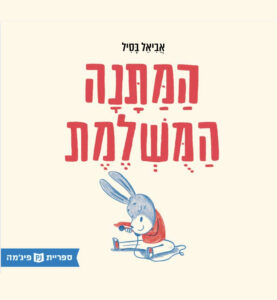
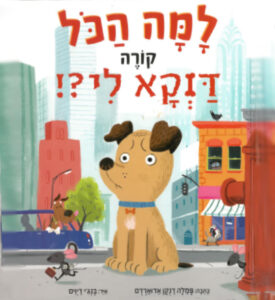
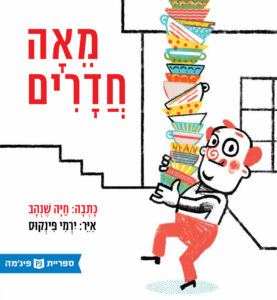
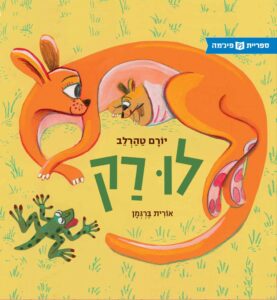
פעמים רבות במהלך החיים, ההתמקדות במה שאין לנו מונעת מאתנו לראות את היופי ואת השפע שהם מנת חלקנו. הכרת הטוב היא בסיס לראיית העולם באופן חיובי ואופטימי. הספרים שלפניכם מעודדים אותנו לראות את העושר שלא ניתן לקנות בכסף, להוקיר את הטוב בחיינו ולהודות על מה שיש.
סְּפָרִים
Book-Related Family Activities
זיכרונות מפעם
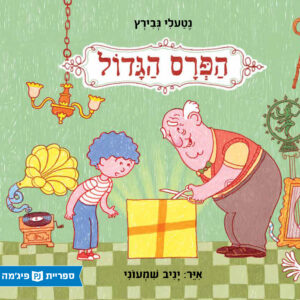
אם תעמיקו באיורי הספר, תוכלו למצוא מגוון חפצים מיוחדים; טלפון חוגה, גרמופון, שעון קוקייה. זוהי הזדמנות לשתף בסיפורים ובזיכרונות: אילו מהחפצים הילדים מכירים? ואילו מהם היו בביתכם כילדים? האם יש פריטים משמעותיים מפעם, שהילדים או אתם שומרים כמזכרת?

חפצים שצריכים מישהו חדש
אפשר לטייל יחד לחנות היד השנייה הקרובה לביתכם, לשוטט בין החפצים ולבדוק אם גם אתם מרגישים כמו ב’מערת אוצרות’. ואולי גם לכם יש דברים שתרצו שיהיה להם מישהו חדש? תוכלו להקים חנות יד שנייה ביתית ו’לקנות ולמכור’ בין חברי המשפחה והשכנים.
מחלקים פרסים מהעבר
פרס הוקרה דמיוני לאבא שהמציא משחק מצחיק בנסיעה, או אולי לסבתא על העוגה שאפתה ליום ההולדת? בהשראת הסיפור, אפשר להכין יחד תעודות הוקרה שמתעדות רגעים קטנים עם משמעות גדולה. כך הופך הזיכרון האישי לשיחה משפחתית מלכדת.
משחק 'חולמים להיות'
סבא חלם להיות זמר, ומה אתם חולמים להיות? כל אחד מבני המשפחה יציג בפנטומימה משהו שהוא חולם להיות, ושאר המשתתפים ינסו לנחש.
Feeling Wonderful
Falleaves found his own way to feel wonderful. What does it mean to feel wonderful? You can discuss this and ask – what made Falleaves feel this way? When do we feel this way? What helps us feel this way?
See the Beauty Around Us
You can take a walk to observe outside and try to find hidden beauty. Focus on one simple thing such as a leaf or a stone. You can play a game in which every family member describes what they chose to observe. You can choose a tree or a shrub and observe what happens to it with the change of the seasons.
Add Some Color
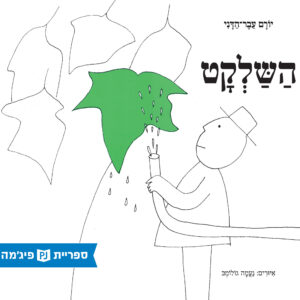
You can be creative with arts & crafts inspired by the illustrations in the book. First collect some leaves and then choose one. Paint the leaf with gouache using a brush, and then attach it to a white piece of paper. After the paint dries you can continue drawing by using a magic marker or a black pen.
Leaf Propagation
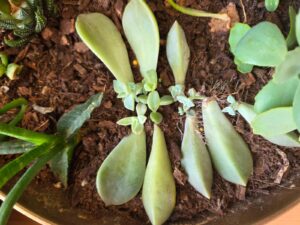
Some plants can be propagated from a leaf – grow a new plant by planting the end of the leaf closest to the stem in a pot with moistened soil. You can try this, for example, with Sansevieria, Peperomia, or various succulents.
QR Code
Scan the QR code and discover special arts & crafts ideas using leaves, inspired by the illustrations of Naama Golomb in the book ‘Falleaves’.
Tips for Family Reading
How can anyone read that? To help children understand and enjoy this book’s unusual structure, let the actors in you shine. While reading the part of the narrator, keep your tone official and monotonous. While reading Louie’s part, use voice and body gestures to enhance the emotional experience – act surprised when he comes across the jelly stain, be angry along with him, and when he seems despaired, add a theatrical sigh.
When our Story Changes
You can talk to your children about coping with a situation over which they have no control by asking: “How would you feel if that had happened to you?” “Have you ever felt the same way?” Sharing a personal coping experience you had while growing up could evoke identification among your children, and help them feel that they are not alone.
Make up your own story
Make up your own story. Scan the code to discover how to play with a story cube and make up your own stories! The cube is ready to print, all you have to do is cut it out, assemble it with some glue, and enjoy.
From a Stain to Art
Make a color stain using water-diluted paint on paper, or place two sheets of paper one on top of the other with some paint in between them to create an unexpected shape. When the stain dries, try to create something new and surprising out of it.
Overcoming any Obstacle!
You can make an obstacle course at home, and take turns trying to get through it, while adding more challenges such as going through it while mopping up the floor, or carrying something on your back. Whoever bumps into one of the obstacles must go back and start the course again from the beginning.
Arts & crafts, songs, and other activities can be found on the Sifriyat Pijama Pinterest page.
Family reading advice
Simple rhyming stories can convey a value-based, meaningful message too. We recommend using the story as a basis for discussion, allowing for opinions to be expressed and questions asked, such as “How would you have felt if you had been in a similar situation?”
“… And happiness shall be yours!”
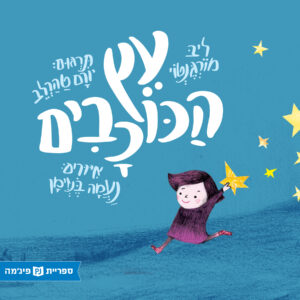
Grandpa is happy to return home with his stars, calling them his treasure, and valuing them more than money. Following this story, you can discuss with your child and ask: “What makes you happy that money cannot buy?” Drawing? Bedtime stories? Perhaps a good-morning hug? Parents can also share – what is their treasures?
Our tree
If you were to have your very own imaginary tree – what would it grow? Hearts? Balloons? Perhaps stars too? You can draw and cut out the shape you have imagined, decorate it, and even write wishes or shared memories on it. The finished product can then be hung on a plant, branch, or tree near you.
Starwatching
We may not find a real star tree, but we can always take an evening stroll and enjoy the sight of the stars twinkling in the sky. You can take this book along with you and read it together by starlight.
QR code
Poet Leyb Morgentoy, 1905–1979, was born in Pinsk, Poland. He wrote this poem in Yiddish in 1938. Yoram Taharlev translated it, Nurit Hirsh composed music to it, and, in 1969, Chava Alberstein performed and recorded it.
Scan the QR code to listen to the song:
Family Reading Advice
A recurring phrase in a book helps children follow the story, and feel active while reading, enhancing the shared experience. You can read this phrase in a special voice, add hand gestures, or change the reading pace. That way, every time you reach it, your children will happily join in.
More and More
The tendency to want more and more is very familiar in kids’ lives – you can discuss with your children and ask: Why did Lady Bezalel drop everything she was holding? Do you think she needed everything she bought? In your opinion, how did she feel when she dropped them? Has anything similar ever happened to you? What would you advise Lady Bezalel to do?
The Grocery List
After having read this book several times, you can have some fun and check – who can remember all the items Lady Bezalel bought and in what order?
Be Careful not to Drop Them!
How many toys and items can you hold without dropping them? This book can inspire you to go around the house, picking up stuffed animals, (non-breakable) toys, cushions and other soft items, and then decide on a “path” from point A to point B. Now take turns holding as many of these items as you can. Walking along the track while carrying them all – did you drop anything? Now you can go back to the beginning.
That is so Good!
What makes you feel good? At the end of the day, before bedtime, you can play a game during which each of you tells the others about something good that happened to you today, or about something that makes you feel good.
Family Reading Advice – “Again!”
Toddlers often ask us to read them the same book over and over again – and they know what’s good for them! Repeated reading allows toddlers to re-experience exciting moments, explore their feelings and emotions, join in at familiar points, and learn words by repetition.
A Cheer
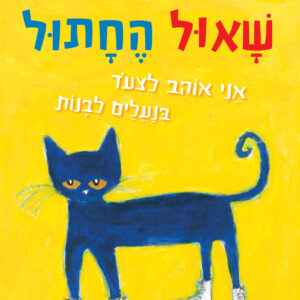
Shaul walks along and sings a song that cheers him up, reminding him just how much he loves taking a walk. You can ask your toddlers: “When do you need cheering up?” and put together your own cheer, or a catchphrase based on Shaul’s cheer (such as “I love walking to kindergarten and seeing all my friends”). You can even add a tune to your catchphrase.
QR Code
Do you like cheerful road songs? Scan the code to listen to the classic song Hopa Hey performed by Yigal Bashan, Uzi Hitman, and Yonatan Miller.
Walking in Different Shoes
You can bring your family members’ shoes – slippers, flipflops, boots, and so on – that are various sizes, types, and materials, and invite your toddlers to walk in them, and feel the difference in the various shoes.
Fun in a Bucket
When Shaul steps into the bucket, his shoes emerge white again! You can fill a bucket with soap and water, take some soiled shoes or toys, dip them in, scrub a little, and see their colors change.
Family reading advice
Children enjoy looking at illustrations and noticing details that do not necessarily appear in the story itself. While reading, you should join them, look at the book together, and discover how the illustrations add fun and amusement to the written text and shared reading experience.
Enjoying the sunset
The characters in this book are friends who enjoy watching the sunset on the beach together. You can also go to the beach, park or even the street to enjoy the beauty of the sky as the sun disappears. You should also take some paper and crayons along to draw a sunset of your own, or any other beautiful thing that can be admired simply by taking a look around you.
Close to home, dear to our heart
What is your favorite place? Is it at home? Is it nearby? Or is it far away from home? You can share with one another: What is your special place, what do you like about it, and what is special about it.
The grace of a place
You can find good things everywhere; every place has some beauty. Take turns choosing a place, whether near or far, in Israel or elsewhere, real or imaginary, and have the other participants ask questions about it to discover what makes it so wonderful.
A good station
How can a bus station make people happy? Scan the QR code and watch the schoolchildren’s heartwarming initiative in Jerusalem.
In our environment
What is happening near your home? Go on a short walk outside, and try to discover how you can do good in your own surroundings: How about picking up litter and placing it in the recycling bin? Or offering people waiting at the bus station a drink of water? Or setting up a library on your street with your neighbors?
A piece of advice when reading as a family
Toddlers “read the illustrations”. Looking at illustrations teaches toddlers to pay attention to detail, while exposing them to art. You could occasionally ask questions related to the illustration, such as: Where’s the fly? What is the chameleon doing?
Color-reading
While reading, you may want to draw your toddlers’ attention to the main color that appears in the text and illustration. Even if your toddlers do not know the name of these colors yet, they would be delighted to look at the colorful illustrations.
Arts & crafts – A color-shifting chameleon
Would you like to have a chameleon that changes its color? Please scan the QR code, print the drawing of the chameleon out on a transparency, and see how it can become colorful, spotted, or even checkered.
Items by colors
Do you have a red ball? What else is red at your house? You may enjoy saying the name of a color, and looking for items of this color together around the house: A cucumber, houseplant, and what other green item can you find?
Playing a game of ‘Who am I like?’
“I crawl on all fours and change colors like a… chameleon!” take turns deciding on an animal which the parents act out and the toddlers follow suit: “We’re lions, let’s roar!”, “We’re puppies, let’s bark and wag our tails!”
A discussion on things that are wonderful and free
What gives you pleasure for free? – You may want to take a look at the illustration in which the wise man presents all the good things in our world that are given to us for free, and share your opinion of them with one another – Do you also enjoy them? And which other things that are given for free do you like?
Listening to a story
The story of the baker, peddler, and wise man is yours to listen to by scanning the code.
Illustrations – A girl and boy
A girl and boy appear in many of the illustrations in this book. You may enjoy looking for them as you leaf through it, and thinking of reasons why the illustrator chose to add them to the illustrations together.
Challah and a pleasant smell
Would you like to make challah? A recipe is waiting for you on the final pages of this book. Bon Appetit and enjoy the wonderful aroma that will fill your home.
A discussion on choosing and investing
You may want to discuss Cyril and Tevye’s choice: Why do you think they chose not to use all the gold? Did that surprise you? Why, in your opinion, did they decide to invest the gold in schooling?
Illustrations – Where is the goat?
The goat is by Cyril and Tevye’s side throughout the book. You may enjoy looking for the goat in the illustrations: What is it doing? What is its connection to the family? How about trying to tell the story from the goat’s point of view? What happens to it as the book progresses?
A game of treasure hunt
Gather several small gifts that you would like to give your family: A drawing, greeting card, or item. Take turns hiding your gifts and having the rest of your family look for the treasure using clues: “Near and far”, “hot and cold”, or arrows placed around the house.
Listening to a story
האזינו לפס הקול של הספר!
If you scan the QR code, you will be able to hear the soundtrack of the story. You can listen to it together at home, while traveling, or anytime and anywhere you choose.
Discussion
Which perfect gift would you like to get for your birthday? How would you feel if you did not get it? Have you ever wanted something very badly but did not receive it? This book prompts us to discuss our expectations – why this specific gift? Do we really need it or are we simply jealous because we saw someone else has it? You may also want to discuss disappointments, and the things that help us cope with them.
Perfect gifts
How well do you know members of your own family, and what do you think would be the perfect gift for them – would it be something you buy or an experiential gift, such as time spent together, or perhaps a trip somewhere? How about playing a game and finding out? In each round, all participants try to guess what one participant would really like to get as a gift. Those whose guesses are the closest win… the perfect family hug.
A human car game
Whoever said only cars drive round and round with a cord attached? People could too! Two of you could hold the two ends of a long cord, leading one another left, right, backwards and forwards. If you get tired, make a pit stop, and start again.
Time together
“A car with Dad is the perfect gift”. And what would you consider to be the perfect gift? What would you like to do with your father or other family members? You could fix broken items, build or assemble something, or perhaps draw, bake, plant, or dance together. In fact, you can do whatever you want, as long as you get to spend time together.
Discussion
Unpleasant things happen to all of us – but do they only ever happen to us? You may want to discuss the feelings that emerge when something unpleasant happens, and help each other think of people who can help, as well as how to cheer each other and ourselves up.
Illustrations tell a story
The illustrations in this book tell us what happened to Winston’s friends without using words. Only Winston doesn’t notice. Pick one illustration, look closely at Winston’s friend, and tell their story as if you were them: What are they feeling? What are they thinking? What about this particular illustration caught your attention?
Lucky it happened to me!
You may want to try looking on the bright side! At the end of each day, share something good that’s happened to you with your family – make sure that both parents and children share news about their day.
Who amuses me? And who surprises me?
Look at the illustrations together and search for details that amuse you – what did each of you find amusing? Did any of the details surprise you?
Discussion
How many rooms does your house have? And what do you do in each one? You may want to look around and think: What do we really need, and what could we forego? You could discuss your own home, or imaginary ones. You parents could tell your children about the house in which you lived when you were their age: What are the differences and similarities between your childhood home and the current one?
Building houses
You can be builders too! You can build a house of Legos, cardboard boxes, pillows, or any other material. How about decorating the structure you’ve built, and asking your parents to help you write the name of the street it’s on. And who would you want to invite over to the house you’ve built?
An illustrated story
You may enjoy looking at the illustrations and discovering the other houses that appear in them: Who is building a house? And who is carrying one on their back?
One room
Look at the final illustration at the end of the book, where the main character is living in a single room: Which items does it contain? Would you have removed any of them, and brought in others in their stead? Which items found in your home would you have added to the room depicted in the illustration? You could take turns and have each family member pick an item in the illustration and decide whether or not they would leave it in the illustrated room, and if not, which item from your own home they would have placed there instead.
Getting [into] the picture
Would you like to go into one of the illustrations in the book? You could choose to be a guest at the home of one of the families described in this story, and imagine how it would feel to be next to the whale, or in the kangaroo’s pouch. What would you want to happen when you meet some of the characters depicted in the illustrations?
Guessing the animals
One family member can make the sound of an animal, or draw a picture of it, imitate it, or give some other kind of clue about it – and the rest can try to guess which animal they were hinting at!
Sound – imitate the sound made by this animal
Pantomime – act the animal out, walk like it or try to look like it
Picture – show or draw a small part of the animal: a tail, wing or foot.
Clue – describe some detail about the animal: where it lives, what it looks like, or the sound it makes.
Couldn’t guess? Help each other by providing additional clues.
Observing – Discovering the positive
Shraga is fed up, and so he runs away elsewhere. But is that the only option available to him? If you’re feeling fed up, you can always look around you, and discover the positive aspects in our lives. Perhaps you can list all the good things that happened each day. How about making a family scrapbook of positive things, such as “my friend made me laugh”, “I got the book I wanted”, or “I’m healthy”. You could share the best moments of your day with one another, and check to see whether focusing on the positive and recording your best moments in the scrapbook will improve your mood in the following days as well.
Playing – The 'I'm Bored' die
“I’m bored!!!” – how often have you said or heard these two words? To shake things up a little, and spice things up, take a large die, or make one out of a cardboard box. Write some routine breakers on each side, such as “putting up a tent in the living room”, “ball games” or “singing and dancing”. Each time one of you gets bored, throw the die, and get inspired to do something fun. We recommend writing some new ideas on your die from time to time, so you won’t get fed up of them…
Acting the story out – What is the alien saying?
Throughout the book, the alien speaks a language that readers cannot understand. Can you tell what the alien is saying? What did it say when it was left out in the snow after Shraga had gone? What did it say upon Shraga’s return? And how did Shraga respond? You could act out the alien’s text, give it a special voice, and tell everyone what it does when it’s fed up…
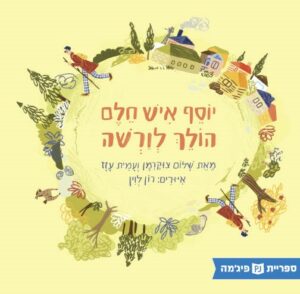
The Wise Men of Chełm
Chełm is a city in Poland, and in Jewish folklore, it is the hometown of the wise men of Chełm, who are not actually all that smart: they are ridiculous and naïve, and their stupidity is often depicted with a smile and much compassion. The wise men of Chełm have become known for their silliness and pointless actions, and are the protagonists of many amusing tales. The term “wise men of Chełm” has come to mean those who act irrationally and absurdly. The stories about the wise men of Chełm can be found in collections and anthologies for both children and adults.
Reading & singing
The story about Joseph makes us smile and laugh. You could ask your child: What amused you about this story? What about the illustrations did you think was funny? What usually makes you laugh?
Inspired by Joyful Joseph, who began each morning with a song about his beautiful life, you too could write a song and tune, and sing it together.
Landmarks
What about your town do you like? You may enjoy taking photographs of places and people you love, or write a short poem about your hometown, using Joseph’s song as inspiration. You could even write a tune and turn your poem into a song.
How will we remember the way? You may want to step outside, look around you, and identify landmarks, such as a tree, bench, or the name of a street. You could draw a map of the route you’d walked, add your landmarks to it, and take it with you next time you set off on your way.
How beautiful is my town and how lovely is my room!
Joseph loves his town and looks kindly upon it. Try to follow Joseph’s footsteps and describe your room – what about it is beautiful and good? What do you love about it? And what do you like about your home? You could take a family tour, during which each of you will describe your favorite parts of the house.
A language of signs
An arrow pointing right, an arrow pointing left, one pointing forward, and another pointing backward – that’s all you need to create a particularly energetic game. You could draw these arrows on dice or directly on the floor, and ask your child to jump in the direction to which the arrow points. You could also throw number dice and jump up and down as many times as shown by the dice.
How about playing “treasure hunt”, and drawing arrows leading to the sought-after treasure?
Discussing – Doing things on my own
“He who sowed sorrowfully, now reaps joyously” – the children in this book enjoy working hard and being independent. Do you, children and parents, enjoy working and creating yourselves? What kind of work do you enjoy doing together with friends or family members, such as your grandparents? And what do you enjoy doing all on your own?
You may want to think together about the kind of work that you find hard, but also rewarding.
Simple pleasures
There are simple, everyday pleasures like drinking lemonade together, smelling a fragrant flower, or listening to a story. You may enjoy making a family collection of pleasures together: draw moments of joy on notes, and post them up in a central area of your house. You could “pick” a note each day, plucking it off the wall, and taking a moment to share some simple joy together.
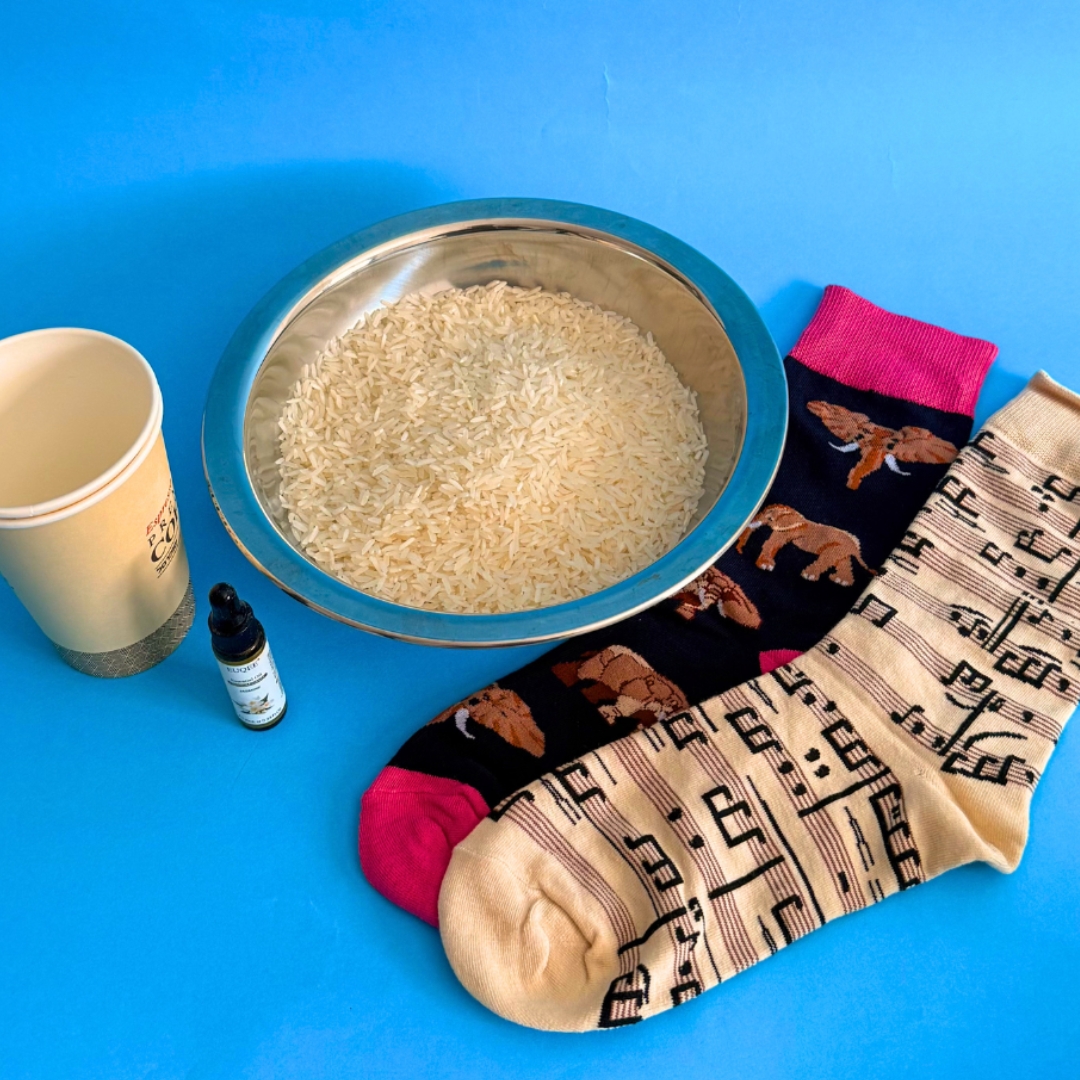
Playing a fragrant game
This book mentions many scents – lemons, herbs, and roses – that may inspire you to play the following aroma quiz: pick some fragrant items (soap, a vanilla bean, mint leaves, orange zest, etc.) and start playing. Take turns closing your eyes, smelling one of the items given to you, and trying to guess what it is. Can you guess by using your sense of smell alone? You could allow participants to use their sense of touch too. When the game is over, you could place the fragrant items in a small basket, and smell them in moments of simple pleasure.
Growing joyously
You may want to take a walk near your home to look for fruit trees, flowers, or herbs. You could try growing some herbs in your garden or a planter – mint, tree wormwood, sage, or lemongrass. This could be the perfect opportunity to give your child a job – being responsible for watering the plants – so that when the time comes, they will be able to pick them joyously, and use them with pleasure!
Proposed Family Activities:
- You may want to leaf through the book together, and look at the special illustrations. Perhaps you could ask your child to notice the different perspectives and angles from which the illustrator chose to draw Mooha and Booha: up close and from afar, from down below or high above, from the front and back. You may enjoy picking an object at home, and trying to draw or photograph it from various angles.
- How about acting the story out together using puppets? You could suggest that your child try to convince the cows to stop bickering, and enjoy their grass.
- It is often difficult to admit that we are jealous of others. Perhaps you could share an incident with your child in which you were jealous of someone else when you were growing up, and how you coped with that feeling.
- Mooha and Booha cannot enjoy their own grass, because they focus solely on what the other has. You may want to toss a ball between you, and have each of you say something good that makes them happy as you take turns catching the ball.
- Seasons change, the green grass turns yellow, and the cows cannot stop fighting. Perhaps you could make a “grass head” using old stockings, some soil, and grass seeds. Take care of the grass head together, and discover how long it takes for the grass to grow at its top.
Proposed Family Activities
- You may want to sit close together, read the story, and enjoy the illustrations. Which amusing details and play-on-words did you discover in the illustrations? Perhaps you could ask your child to tell you the story according to the sequence of illustrations.
- At the end of the book, the animals try on each other’s tails, wings and fins. What is each new animal comprised of? You may enjoy coming up with names for them.
- Somebody is jealous of the other animals, and wants to be like them. Have you ever wished you were more similar to someone else? You may want to share those experiences with your child. Perhaps you could discuss the differences and similarities between your family members, what makes each of you unique, or unites you all. This may be a good opportunity to strengthen your child’s inner qualities, and encourage them to remain true to themselves.
- Perhaps you would enjoy acting the story out together. Using various fabrics and accessories, you could make wings, tails, whiskers and feathers. You may want to keep all the disguises and props in an easily accessible basket, and encourage your child to dress up as a different animal each time, bringing the various characters in the book to life.
- Do not judge a book by its cover: we are accustomed to describing people using their external features. Can you describe one another without referring to any external features? Was it hard?
- This book may inspire you to set up a “garage sale” with clothes, costumes, and accessories that are lying around your house. Invite family and friends over, and together you can play dress up, exchange items, and feel brand new.
- You may want to look for other books on dressing up at home, in kindergarten, or at the local library, and read them together. Books such as BrownStripe (Humpas) by Shlomit Cohen-Assif, An Egg in Disguise (HaBeitza Shehithapsa) by Dan Pagis, or A Very Honorable Coat (Tochal, Meil, Tochal) by Ronit Chacham.
Reading the illustrations
You may want to look at the graceful illustrations together. You could stop on each page, and look for amusing details. Have you found the drawing hen, egg-laying boy, and tower-building bee? What else about the illustrations was funny?
Everyone goes to kindergarten
What do you see on your way to kindergarten? Do you, like the child in the story, see a grocery store, a dog, a baby in a carriage, or a café? Does a pink car pass you by? You may want to draw the route to kindergarten together, adding details about the places and people you encounter on your way.
Acting the story out
You could act the story out using puppets and stuffed animals. Ask one another: “Would you like to change places? It’ll be such fun!” Perhaps you could add other animals and characters who want to go to kindergarten too.
What day is it today?
The boy in the story meets a different animal each day. Does your child know the days of the week? Do you have fixed plans, like afternoon classes or other activities on certain days? Or a shorter day on Friday? And what do you do on Shabbat, when you do not go to kindergarten? You may enjoy making a chart representing the days of the week, and drawing your daily activities under each day.
Thank G-d it's Friday
On the final page of the book, the children and animals perform the Friday Night ritual known as Kabbalat Shabbat. How is Shabbat marked in your child’s kindergarten? You may enjoy having your own Kabbalat Shabbat ceremony at home, and sing Shabbat songs, just as they do in kindergarten.
Kindergarten is the best
Sometimes it is hard to get up and go to kindergarten in the morning. Is your child always happy to go to kindergarten? After reading this story, you may find a game to make getting ready easier in the mornings, and help your child go to kindergarten with a smile on their face.
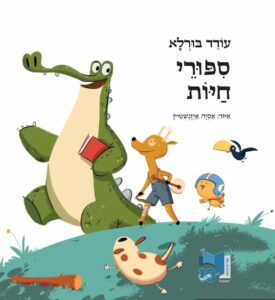
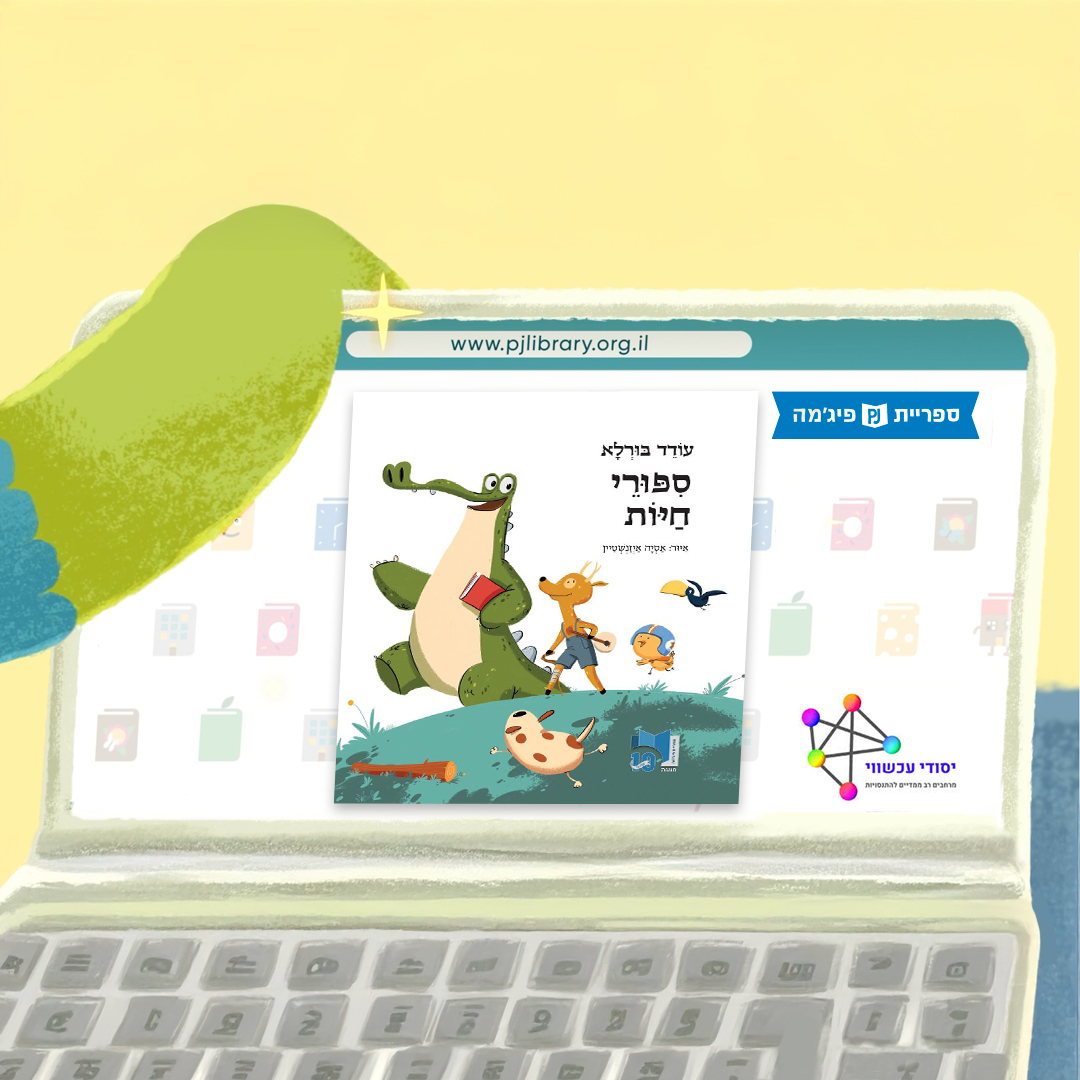
האזינו לסיפור "העופר המסכן" מהספר "סיפורי חיות"
הקשיבו, הקשיבו!!! 🎧 ילדות וילדים, הורים וצוותים חינוכיים ❤️ הימים האלו עכשיו הם ימים לא רגילים, ובימים כאלה סיפורים יכולים לשמח, לרגש, אפילו להצחיק. אנו מזמינים אתכם/ן להאזין להקלטה הקסומה של הסיפור “העופר המסכן”, מתוך “סיפורי חיות”, מאת: עודד בורלא | איורים: אסיה אייזנשטיין | הוצאת: ידיעות ספרים.
יוצרים ומגישים – ירדן בר כוכבא – הלפרין ודידי שחר מוזיקה ונגינה – טל בלכרוביץ’ פתיח ההסכת ולחן השיר בסיפור “החוצה” – דידי שחר.
מוכנים/ות? מת – חי – לים! ▶️
האזינו לסיפור "ההמצאות של קרפד"
הקשיבו, הקשיבו!!! 🎧 ילדות וילדים, הורים וצוותים חינוכיים ❤️ הימים האלו עכשיו הם ימים לא רגילים, ובימים כאלה סיפורים יכולים לשמח, לרגש, אפילו להצחיק. אנו מזמינים אתכם/ן להאזין להקלטה הקסומה של הסיפור “ההמצאות של קרפד” מתוך הספר “סיפורי חיות” מאת: עודד בורלא, איורים: אסיה אייזנשטיין.
יוצרים ומגישים: ירדן בר כוכבא – הלפרין ודידי שחר
מוזיקה ונגינה: טל בלכרוביץ’
פתיח: דידי שחר
Oded Burla (1915–2009)
Author, poet and painter Oded Burla was born in Jerusalem Sephardi family that had lived in this country for over thirteen generations. He published his first book at the age of 45, and went on to write and illustrate more than 70 children’s books, in which, he once claimed, 346 different animals were mentioned! Burla is considered the founding father of nonsense in Hebrew children’s literature; his books are filled with sophisticated humor and a use of language that is both surprising and amusing. For his work, Oded Burla has been awarded the Zeev Prize, ACUM Award, and Bialik Prize.
Proposed Family Activities:
- Animal stories have morals from which people can learn. You may enjoy reading the stories together, and trying to discover the subtle messages conveyed by them. What makes someone pitiful? Why did the tiger help the warbler? Is kindness contagious? And what can a squirrel teach us about independence?
- What about the stories did your child find amusing? The animals and their behavior? The surprising endings the author chose for his stories? Or perhaps the illustrations?
- The toad is an inventor with a great imagination. But are all his inventions necessary or useful? Perhaps you could also let your imaginations run wild, and invent new things together. Are your inventions useful?
- In the poem entitled “Noah’s chick” (HaEfroah shel Noach), almost every line rhymes with “Noah”. You may also choose a word or sound, and try to write a poem in which every line rhymes with that sound. How long was your poem?
- The story about Sakiki the Saki contains a plethora of idioms and phrases containing the Hebrew word for “eye” – ayin. You may want to make an amusing, illustrated dictionary together containing all the expressions found in this story in picture form.
- Do you also like animals and stories? Then how about going to the zoo with a notebook and pen, and drawing all the animals that remind you of certain people? Together, you can make up stories with morals about them, and write them down, to create your very own animal stories.
The feelings of others
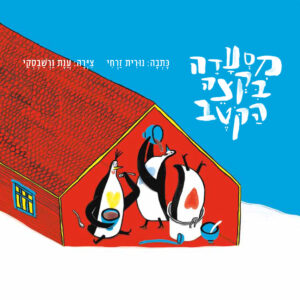
The feelings of others. You may want to sit close to one another, enjoy the amusing illustrations, and read the story aloud together. When you first read the story, you may want to pause on the page where the passengers of the first boat leave the restaurant, enraged, and ask your child how they think the penguins felt.
The effect of others
The effect of others. One may wonder why the penguins decided not to offer their delicacy to the passengers on the second boat, and decided to eat it all themselves. Perhaps you would like to share with one another a memory of a time in which you had changed your mind following the response of others. When did it happen? How did you feel?
Waiting
Just like in the story, in some situations at home we must wait. Perhaps you could make an hourglass, to facilitate the wait. All you need are two empty plastic bottles. Use a strong adhesive to glue the two bottle caps together. Then, using a heated nail, carefully puncture a hole through the two glued-together bottle caps. Now fill one bottle with sand, recap it with the glued-together bottle caps, and attach the empty one on top of it. Turn it upside down, and see how long it takes for the sand to pass from one bottle to the other.
Tastes & preferences
Tastes & preferences. Do all the members of your household like to eat the same dishes? How do you decide what to eat when you are all sharing a meal, and who cooks? You may want to suggest that your child prepare a menu for the whole family. You could even open a restaurant: who would you invite over to dinner?
A warm scent of cinnamon
A warm scent of cinnamon. You may enjoy making a delicacy together that will spread the warm scent of cinnamon throughout your neighborhood: peel some apples and cut them into thick slices. Sprinkle an equal amount of sugar and cinnamon on them, and place them in the oven. Your nose will be sure to let you know when your delicacy is ready.
About Nurit Zarchi:
Nurit Zarchi was born in 1941 in Jerusalem, and raised in Kibbutz Geva. She has published more than 100 books of children’s literature, poetry, prose, and research.
Zarchi has received many literary awards, among them the Bialik Prize, Yehuda Amichai Prize, Lea Goldberg Prize, Andersen Award for children’s literature, and more. In 2014, she won the Devorah Omer lifetime achievement in children’s literature award.
Among her much-loved books are: Namer Bepijama shel Zahav [A Tiger in Golden Pajamas], Machalat Hagaguim shel Solly [Solly’s Homesickness], Lehitraot BeAntarktika [Goodbye, Antarctica], Doda Margalit Nafla el HaShlulit [Aunt Margalit fell into the Puddle]. You may want to look for these books at home or the library, and read them, both together and separately.
Proposed Family Activities
- Have you noticed the special combination of words and illustrations in this book? Was it easily read aloud? What about the illustrations and plot did you find amusing?
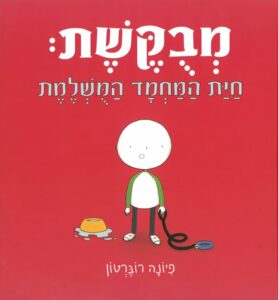
- You may enjoy searching together for the page on which Henry puts up the wanted poster for the perfect pet. What other ads can you see up there? Do these products really exist? Perhaps you would like make an ad of your own with your child, seeking something they greatly desire, even if it only imaginary.
- A dog cannot quack, and a duck cannot play catch. But if you look upon things with kindness, you can always find the good in them. You may want to make note of the unique talent each of your family members and friends possess.
- Henry knows a lot about the characteristics of frogs, dogs – and ducks! What animals does your child know? You may want to visit a farm, zoo or pet store, and get to know new animals.
- You could share a childhood experience with your child: which animals lived nearby? Did you own a pet when you were a child? If so, you could tell them about it, and show them pictures from your past.
- Perhaps you would enjoy having a costume night at home. Each of you can dress up as a different animal, and the others could guess which animal they are. You could even invent imaginary animals, mixing a horse’s tail with cat’s ears and so on. What would you name the animals you have invented, and what would their characteristics be?
Proposed Family Activities
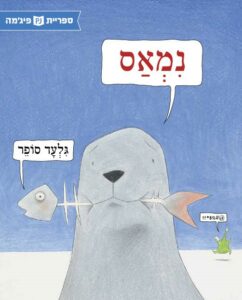
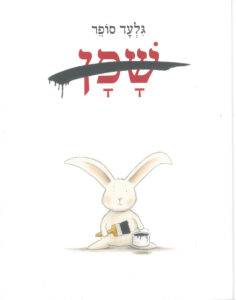
- You may want to look at the special illustrations by Gilad Soffer The book looks a little like a comic strip. How easily did you read it out loud? Did you notice that the word “Shafan” on the front cover was struck through? You could perhaps discuss this line across the word. Was it a printing error?
- Comic books are for readers of all ages! They describe the plot in words and illustrations, forming a sophisticated technique that adds another level of meaning to the written words of the story. You may enjoy picking a well-known story, or make up your own, and create a comic book out of it together using speech bubbles. You could take a look at the parts of the book that are so illustrated, and discover what facial expressions, body language, and the use of colors tell us that we couldn’t have known just by reading the words. Notice, for instance, how content the magician looks, compared to the upset look on the rabbit’s face.
- Have you ever been mistaken for someone else? How did you feel? Perhaps you would like to share your thoughts, and think together what we could do to ensure others call us by our real names.
- This book is full of humor, and appeals to readers of all ages. Did both you and your child find the same parts amusing?
- Can you differentiate between a rabbit and hyrax? An eagle and vulture? An ostrich and emeu? You may want to make a “confusing animal dictionary” in which you write and draw the animals whose names we tend to confuse. During your next visit to the zoo, you’ll be sure to get them right. You could also make a card game, with pictures and names of animals that need to be matched.
- You may also enjoy making a hyrax and rabbit out of playdough, and use them to act the story out.
- Perhaps you could look for illustrated books at home or in the library that mention hyraxes or rabbits, and check whether the illustrators drew them accurately, or got confused.
- You may also want to discuss the rabbit’s feelings throughout the book. Why is he so offended at being called “shafan”? And why do you think he remains unhappy all the way to the end of the book?
Family Activities
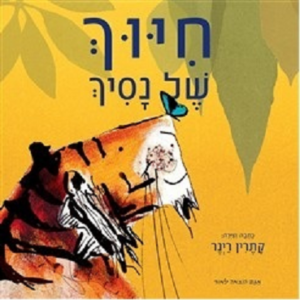
“… the tiger understood that a smile would appear on his face each time he felt happy”
Take your child for a walk outdoors and enjoy the nature that surrounds you. Like the tiger, you too can play with crushed leaves, listen to birds chirping and climb up hills.
What makes you and your child smile? You can play “the smiling game” together: Pass a ball between you. Each time one of you tosses or rolls the ball to the other, mention something that makes you happy. Don’t forget to smile throughout the game!
Where is our child and his or her smile? You can play hide-and-go-seek throughout the house, looking for each other’s smile.
The tiger looked into a puddle and discovered his smile right under his nose. In our homes we don’t have puddles but we do have mirrors! Your child can discover his or her smile in the mirror, and make funny faces at his reflection.
Song and dance are natural ways of expressing our happiness. You can sing and dance with your child, even without a special reason. Think of songs that are especially appropriate, such as “If you’re happy and you know it…”.
At the end of the story the tiger jumps with joy. If the story had continued, he might have even burst into laughter. Do you want to laugh? Here’s a funny way to start: Everyone in the family lies down on the carpet, with one person’s head resting on another’s belly. One member of the family starts to giggle, his or her tummy trembles, and soon you’ll all see how contagious the laughter becomes!
The author and illustrator Katherine Rayner loves the animals she depicts in her books. Our story is accompanied by special drawings. Go through the book with your child, noting how the tiger looks when he has lost his smile, and how he appears when he finds it in the puddle.
“Augustus and his Smile” is the first Sifriyat Pijama book of the year. Reading books together as a family is one way to bring joy and happiness into the home, and can put a smile on everyone’s faces. Enjoy!
Activities You Can Do at Home
- Brownstripe envied the other animals in the forest. You might talk with your children about feelings of envy and jealousy, and share your own life experiences with them. Perhaps, when you were a child, you wanted to be like someone else? Do your children sometimes envy others? This is an opportunity to reinforce your children’s unique qualities and to encourage them to remain true to themselves.
- You might talk together about the saying, “Who is rich? One who is happy with his lot.” What does it mean for you? Is everyone in your family happy with what he or she has? What do we, as a family, feel happy about?
- People often say: “May all your wishes come true.” When Brownstripe gives voice to his wish, his wish is realized! You could ask your children if they, too, have wishes, or if they ever wished for something that came true. While the fulfillment of some wishes is not within our power, we can fulfill others. You can play a game together: each one takes a turn and makes a wish out loud. Be sure to focus on wishes that can be fulfilled (for example:” I wish I had a comfortable pillow under my head,” or “I wish I could curl up under a cozy blanket”). It’s natural to want things, and it also feels good to make someone else’s wish come true!
- You can put on a skit based on the story. Create a tail, antlers, wings and fins using fabric and simple props. Your children can pretend to beBrownstripe, who envies the other animals; you, the parents, can play the parts of the other animals. At the end of the show, you can have a great time playing the mother bear who hears and sees Brownstripe through his costumes. Be sure to share a great big “bear hug” as a finale!
- Brownstripe wants to have body parts that aren’t suitable for a bear. Each of our body parts has an important function. Together with your children, you could examine the illustrations throughout the book. Do your children know what the purpose of a lion’s tail is? Why do deer have antlers, and fish have fins? You can also go over our own human body parts and discuss the function of each.
- The book “Brownstripe” is one of many children’s books that deal with the desire to be like someone else – for example, “The Fish that Didn’t Want to Be a Fish” by Paul Kor (in Hebrew), “The Mixed-Up Chameleon” by Eric Carle and “A Color of His
Family Activities
- Talk with your children about the two protagonists in the story, Balthazar and Joseph, and compare them. Balthazar has much treasure at home but doesn’t share his wealth with others, whereas the impoverished Joseph is content with his lot in life and opens his home to guests on Shabbat.
You may want to discuss the difference between being “thrifty” and being “stingy” (both terms used in the story), and talk about the kind of generosity that doesn’t depend on having money.You might also discuss the concept of envy, and ask your children why they think Balthazar was so determined that his treasure not fall into Joseph’s hands.
- Using simple props (you could make a precious “diamond” out of a crumpled ball of aluminum foil, and use a towel or scarf for a turban), you could dress up as the characters in the story and put on a family play. You could also use dolls, puppets, and stuffed animals to put on a show about this story.
- Joseph’s daughter goes with him on his trip to the market. Where do you do your shopping – at a farmers’ market, or at the supermarket? A visit to a bustling farmers’ market can be an enjoyable adventure for young children. You could work together to write and illustrate ashopping list for Shabbat, and then look for them in the farmers’ stalls at the market, or at the store.
- After reading the story, you can talk with your children about the way your own family celebrates Shabbat. What does your family do that is special? Who are your guests? You might work with your children to make an album of photos and drawings: “Our Shabbat,” featuring the people and things that make the Sabbath day special in your family.
- Do you, like Joseph and his family, enjoy hosting or being a guest on Shabbat? Many children enjoy taking part in the preparations for entertaining guests into their home. They can make a “Welcome” sign and hang it on the front door, help set the table, help with kitchen chores, or decorate the table with special drawings for each place setting.
- Many sources tell us about the unique character of Shabbat and the preparations for the day. Together, think of all the songs and stories you know about Shabbat (for example, “Who Loves Shabbat” by Ehud Manor; “Chanaleh and the Sabbath Dress” by Yitzchak Demiel; “The Missing Spice” arranged by Devorah Omer; etc.).
- Do you know a different version of the “Joseph Who Treasures Shabbat” story? If you do, you can share it with your children and compare the differing versions.
- The illustrations on the final pages of the book tell us, without words, what happens at the end of the story. Look at the illustrations together, and then use your ownwords to describe what happens after Joseph buys the big fish in honor of Shabbat. Notice the many figures that the illustrator added to the pictures throughout the story, and maybe invent a dialogue between these gossiping bystanders and Joseph.
Have fun reading and talking about this book!
Activities:
- Tell your child a family story – one that is funny or special – that is worth preserving as family legend: for example, a story of your childhood. Include details that say something about the place and time when the story took place. Look in a family album together at places where your child’s grandparents grew up and point out aspects of the past, such as: “Here is the bakery of your great grandfather that made the best challah in the world…”
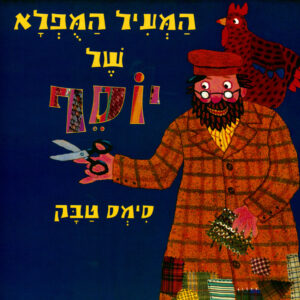
- Travel back in time: To prepare for time travel back to Joseph’s village, look together at the illustrations in the book and encourage your child to identify items in his world. You can ask leading questions, such as: What does Joseph have in his house? What animals roamed around his neighborhood? Were there any buses there? What did people wear? In short: Was his world similar to ours? No? In your child’s opinion, why or why not?
- The fun of traditional sayings: The saying “When a coat is old, only its holes are new” is framed on the wall in Joseph’s house (see the page which begins, “Joseph had an old vest…”). The saying reflects Yiddish humor. Make a similar wall hanging with a saying that comes from your family or from your heritage. Who used to say it and on what occasions? Write the saying out and let your child make illustrations around it.
Eze’hu Ashir? Ha’sameach Be’chelko (Who is rich? He who is happy with his lot.)
In the Ethics of the Fathers (chapter 4), it is written: “Who is rich? He who is happy with his lot.” This proverb teaches that happiness is not measured in things or money, but rather in our ability to enjoy what we have. Although Joseph is poor, he is rich because he knows how to enjoy every “new” item of clothing he creates from what has worn out.
Activities:
- Look at the pictures and follow Joseph’s moods. When and why is he sad? When and why is he happy? What is his mood at the end of the book? How does your child explain these moods?
- Create two lists with your child: one of things that made him happy today and one of things that bothered him or made him sad. Look at the list of sad things and try to find something positive in the sad. In the evening just before your child goes to bed, you can make a habit of exchanging a list of the good things that happened to each of you that day.
Bal Tashchit (Respect for Existing Resources)
The mitzvah of bal taschit which appears in the Torah (in Deuteronomy) prohibits destroying a fruit tree even during a siege on a city. Over time a broader interpretation has come to prevail, to avoid destroying anything which can still be useful. Joseph’s Wonderful Overcoat takes place in a time when resources were scarce and people had to make good use of everything they could. Joseph found creative ways for re-using his coat. Today, in our era of abundance, there is an increasing tendency to try and re-use things to prevent harming the environment. This book provides a good opportunity to discuss with your child ways of limiting harm to the environment.
Activities:
- Ask your child to identify items at home whose use has changed over time and are used for something different: for example, a cracked plate that is used under a plant, a cup that is used for flowers etc.
- Talk to your child about the concept of wasting: What does it mean to waste? Do we throw away things that we could still use? What can we do to limit wastefulness?
Family Activities
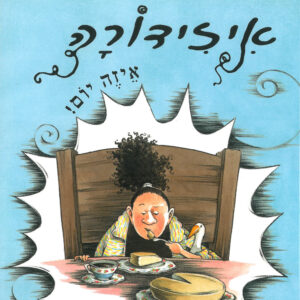
- Many things cause Isadora’s morning to be gray and gloomy. Look at the illustrations. Search through them with your children and seek out all the things that are difficult for Isadora and that annoy her. You may ask your children: “Does it ever happen to you that you get up ‘on the wrong side of the bed’? What is most difficult in this kind of morning? How do you respond when it happens?”
- Isadora isn’t alone during her day. A small goose accompanies her throughout the entire story! You may want to tell your children about the help that you receive from friends or from family members whenever you are in a bad mood, and suggest that they give thought to who accompanies and helps them to “sweeten” difficult situations.
- Isadora gathers up her gloomy morning and transforms the difficulties into a cake. You, too, can prepare a cake, and sweeten it even more by adding chocolate sprinkles, raisins or candies. You may want to relate to all the sweet additions as symbols of difficult things in the children’s lives, thereby demonstrating the expression “Me’az yatza matok” (Out of the strong came sweetness).
- Isadora is very active. She dances, plucks, bakes, and in the end eats the entire cake! You and your children are invited to make a list of ten ways to overcome a bad mood. You can prepare an illustrated list together and to hang it in a convenient place, as a reminder whenever the need arises.
- Little by little the illustrations in the story change from black to gray to pink. You might explain to the children the special symbolism of various colors. For example, the color pink symbolizes happiness and being positive. It would be fun to prepare some “rose-colored glasses” together from construction paper and rose-colored cellophane. Put them on and see how everything looks different!
- What do you think: Do you and your children think that eating the entire cake was a good idea?
- You and your children may want to invent a different ending for the story. Send your ideas to the Sifriyat Pijama website pj.crunchcart.com, and we’ll post them on the site!
Family Activities:
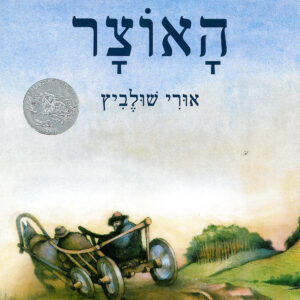
- The illustrations by Uri Shulevitz remind us of a lifestyle from a different time and place. Talk about this with your children: If the story were to take place today, what would be different about the illustrations? You may want to prepare an illustrated booklet together of the same story, drawing pictures of the background and environment that is familiar to them today.
- The tale doesn’t reveal what the treasure was that Yitzhak sought or why he had to leave his home on a journey that brought him right back to the place where he started. It would be interesting to discuss this with the children and to hear their thoughts on the subject.
- This is an opportunity to share with your children the accomplishments that you have achieved after many efforts and great endeavor, and the sense of success that accompany these accomplishments. It is worth listening to their ambitions and dreams, too, and important that you encourage your children to try to realize them.
- Your children are invited to lead you on a journey of hidden discovery throughout your home. Close your eyes or tie a handkerchief around your eyes, and let your children lead you to places and “treasures” hidden about the home that you didn’t even know existed. The children can also give you household items and objects to feel. Are you able to recognize what they are? At the end of the journey, trade places, and lead your children around the house.
- Go on a treasure hunt – at home! You can hide a small “treasure” within the home. The children’s task is to look for it through the help of notes on which you have drawn hints and signs. The children will be happy to follow the hints that you have prepared, and to pass through different places in the home until they find the treasure.
- “Sometimes a person has to walk a long distance in order to discover what was in fact right nearby”: Have you ever noticed your children’s joy in discovering the nice, familiar feeling of
home upon returning from a trip or a vacation? What are the “treasures” in each room of the home? What makes each one of you happy when you return home? - There are “treasures” in the vicinity of your home, too, that the children will be happy to discover and to collect. It would be fun to go on a “discovery excursion” in your neighborhood. You can select a suitable “treasure” together to bring home, and you may even want to dedicate a special corner of the children’s room to “treasures”.
- “The Treasure” is the last book that will be distributed this year in the “Sifriyat Pijama” program. The school year is ending, and with it, your children will set off on a journey – whether they continue on to a new kindergarten or to school, or whether they remain in the same kindergarten and join the group of older children. This story reminds us that every journey brings with it a renewed appreciation of the treasure that is always with us, at home and within the family. Have a wonderful vacation from Sifriyat Pijama!
Activities to Do Together at Home
Spend some time looking at the illustrations together and recalling all the things that the girl in the poem loves. Ask your children what they love “the most in the world.”
Did anything in the illustrations make you laugh? In the poem, the girl drew a lion that came out looking more like a rabbit, so she called it her “rabbitlion.” You and your children could draw some imaginary animals and invent made-up names for them.
Accepting oneself does not mean having no aspiration to improve. Have a conversation with your children about the things in our lives that we need to learn to accept, and contrast those with the things that we could strive to change. Brainstorm together about something that you all would like to improve, and about ways to achieve that goal.
Explain to your children the meaning of “Who is rich? The person who is happy with what they have,” and discuss what it signifies to each of you. Ask your children: who is rich in their eyes? What makes each member of the family happy? And what makes us, taken together as a family, happy?
You might start a new family tradition, using bedtime to recall the good things that happened today, and the good people that we love. Each family member might say two good things that happened to them today, and mention someone or something that they especially cherish.
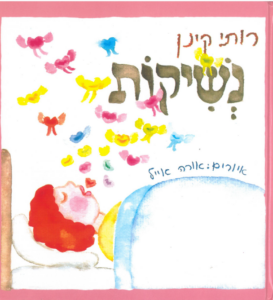
Family Activities
- It’s fun to read a story and act it out: ask your child to close their eyes, and kiss the tip of their nose at the beginning of the story. As the story progresses, get kisses and hug each other, just like they do in the story.
- Once you have read the story several times, your child will know the rhymes and be able to complete the sentences on their own:
נְשִׁיקָה בְּצֶבַע תְּכֶלֶת – מֵאֲחוֹרֵי הַ… דֶּלֶת
נְשִׁיקָה סְגַלְגֶּלֶת – מֵרֹב צְחוֹק מִתְ… גַּלְגֶּלֶת.
- You may want to paint your lips and create kiss-shaped stamps on a sheet of paper, much like the inner cover of the book. Once you have a page full of kisses, you could cut them out, and use them to decorate your child’s bedroom.
- When Mommy tries to collect all the kisses that blew away, they disappear as soon as she catches them. You may enjoy blowing soap bubbles at bath-time, and trying to catch them (hint: soapy hands make it easier to catch bubbles without bursting them).
- And in the morning, when your child wakes up all warm and sweet, kiss their nose – it’s a sure recipe for a wonderful day!
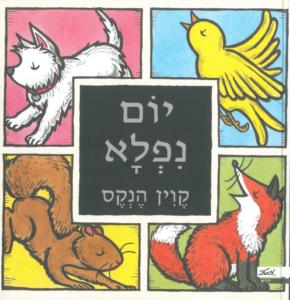
Family Activities
- You may want to read this story several times, pointing out the various animals, the feather, dog leash, and nut. As you read it a second and third time, your child will be able to point at the illustrations instead of you, and know the name of each item depicted.
- You may want to pay attention to the details drawn by author and illustrator Kevin Henkes. Did you notice that the dog, squirrel, fox and bird are all part of the little girl’s good day at the end of the book?
- You may enjoy looking for the picture in which the bird looks for its lost feather. Can your child reveal the feather’s hiding-place?
- You may want to use puppets or stuffed animals and act the story out.
- Perhaps you would enjoy looking at the final illustration and guess how the little girl’s day had begun. Did she also get off to the wrong start?
- At the end of the story, the little girl finds a feather. You could buy synthetic feathers and glue in an arts & crafts store with which to decorate your own colorful bird.
- You may enjoy taking a yellow feather, much like the one the little girl found in the story, curling up with your child and tickling them with it.
The Grand Prize
The Shalkat
A Perfectly Messed-Up Story
The Tree of Stars
A Woman from Betzalel Street
Saul the Cat
Something
The Bus Stop
The Chameleon Who Couldn’t Decide
The Peddler and the Baker (Literally in Hebrew: Pleasure’s All Ours)
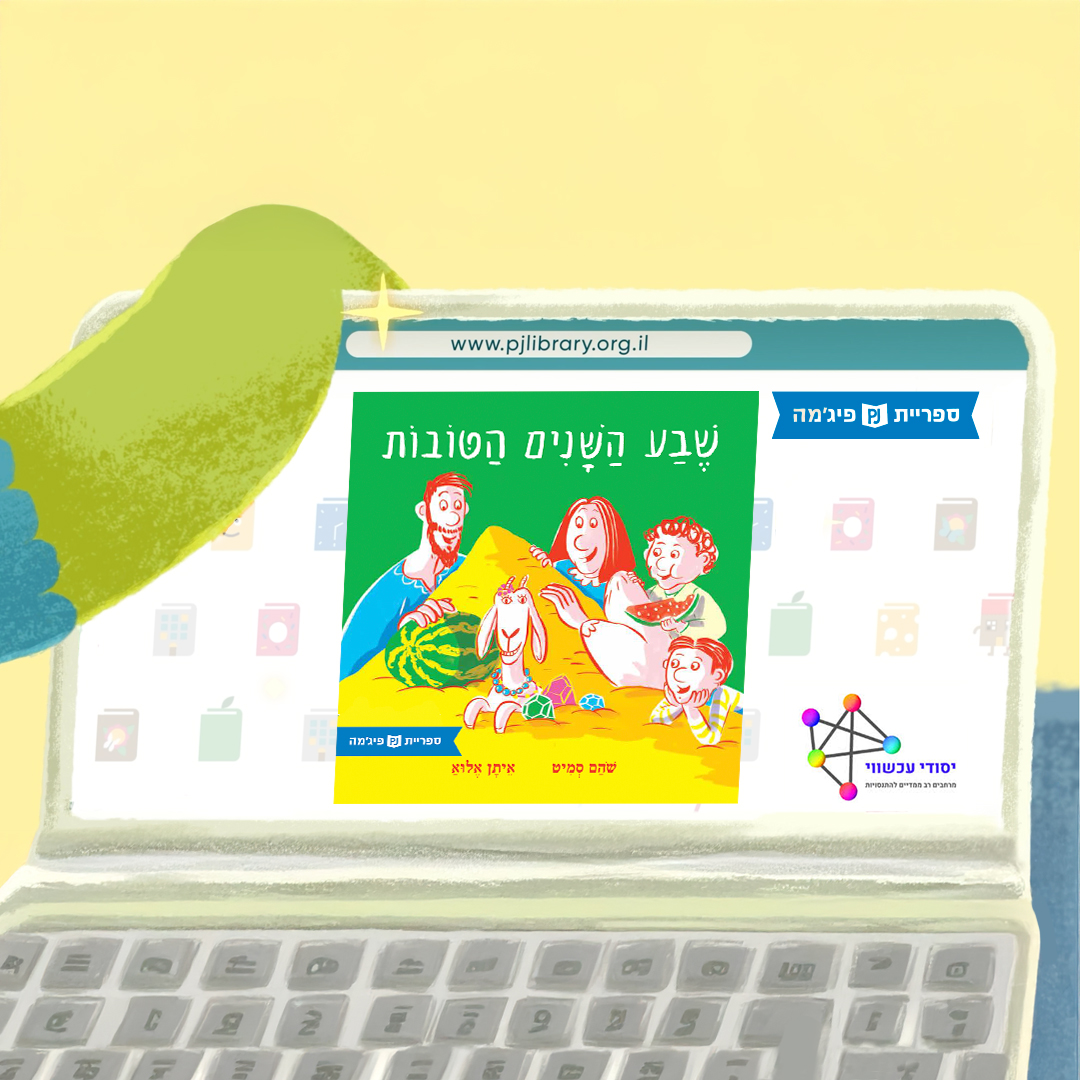
Seven Good Years
The Perfect Gift
Winston was Worried
One Hundred Rooms
If Only
Fed Up
Joseph from Chełm goes to Warsaw
Lemonade
Mooha and Booha
Somebody
How about Changing Places?
Animal Stories
The Cooking Penguins
Wanted: The Perfect Pet
Shafan (Hyrax)
Augustus and his Smile (Hebrew title: Prince’s Smile)
Brownstripe the Bear
In the Market of Zhakrobat
Joseph’s Wonderful Overcoat
Mrs. Biddlebox In Hebrew, “Isadora, What a Day”
The Treasure
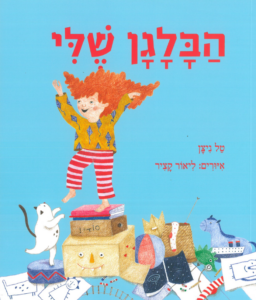
My Mess
Kisses
A Good Day