כִּשּׁוּרֵי חַיִּים
ערבות הדדית
ערבות הדדית מבטאת את האחריות הקהילה כלפי כל אחד מחבריה, ושל כל אחד מחבריה כלפי האחרים. הערבות ההדדית פועמת ורוחשת גם בעולמם של ילדים וילדות, בתוך קבוצת השווים שלהם ומחוצה לה, במעגלי קהילה שונים. ספרים על ערבות הדדית, על מעשים קטנים כגדולים ועל אחריות חברתית, יכולים להרחיב את ארגז הכלים הרגשי והחברתי של הילדים ולתרום רבות לערך העצמי שלהם ולתחושת השייכות לקבוצת השווים ולקהילה.
סְּפָרִים
Book-Related Family Activities
Tip for Family Reading
After reading this book, you should discuss how the characters felt and coped with the situations in the story. You can discuss how you were inspired by them. Children identify with the characters, will be exposed to different perspectives, and will learn from them about emotions and behaviors that are familiar to them from their own lives.
It was a good idea to let him go first
After reading the story, you can discuss, share, and ask: How do we feel when we wait in line? Have we ever felt that our turn was more urgent than the others’? In your opinion, how did Dog feel when the others were considerate toward him? How did Monkey and the others who were waiting in line feel after giving up their turn? Try to recall an incident together in which you were considerate toward others, or others were considerate toward you.
Who is next in line?
Monkey, Giraffe, Elephant, and Alligator try to establish a principle that would determine the order among those waiting in line. They can inspire you to play an amusing game with your whole family, during which you can form a line while following a different order each time. For instance, you can stand according to your age from youngest to oldest, or by the color of your shirts from the lightest to the darkest, or by how much you love ice cream. You can come up with different, amusing characteristics together and find out who is next in line this time?
Waiting around and having fun
How does Monkey end up passing the time while waiting in line? He chats with those who are waiting alongside him, coming up with ideas on how to determine the order, and meeting new friends. You can also think together and raise ideas that would help you pass the time while you are waiting for something. You can come up with a funny song to sing while you wait, or a game involving moving your fingers, or even prepare aids that will help you pass the time – a storybook, coloring book, puzzle, or squishy ball, or any other amusing idea with which you can come up.
QR Code
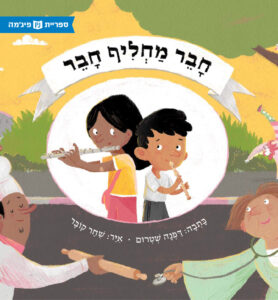
Would you like to find out what Monkey sounds like? Or what Dr. Tzviya sounds like? Scan the code and listen to the story.
A discussion: What if I were… Mom
Which roles does each member of your household have? Who would you want to take over from? This book could inspire you to imagine switching roles within your home: What would your child do if they were to take over from Grandpa? What would Grandpa do if he took over from Mom? And how would you be able to help one another?
Listening to the story
What do you play in a parade? And what do musical instruments in a band sound like? You can find out all the answers to these questions and more if you listen to this book by scanning the code.
A game of “my occupation”
Am I a physician or a clown? Can you guess my occupation? Take turns choosing a profession and acting it out for the other players to guess. If a player’s profession is a little hard to guess, you could give them a clue.
Going into the illustrations
Which character in this book would you like to take over from? You may enjoy looking through it, choosing a character you would like to replace, and share your thoughts with one another: Would you want to take over from the baker? Or play in the parade?
A game of “Find me!”
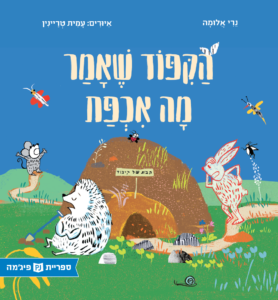
The main characters in this book are a hedgehog, rabbit and mouse. But other animals also appear in the illustrations –
Can you find them?
How many animals have you found?
“Did you find me in the illustrations?”
Words of emotion
The letters in the story describe feelings: missing someone, loving someone, feeling happy…
How about making some cards with words of emotion, as well as phrases that describe these emotions, and connecting each word with the sentence describing it?
Missing someone: I wish we could see each other again
Loving someone: It feels good when we’re together
Feeling happy: This tune makes me want to jump up and dance
Feeling thankful: I’m so glad we met! Thank you for coming round!
Having a party
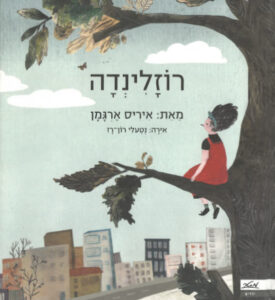
Would you like to party like Rosalinda and Aaron? You could use the invitation they made to write an invitation of your own, prepare one of the dishes they had at their party, play some party music, and dance together.
You could even take some photos during your party, and save them in an envelope inside the book you’ve received.
Discussion
Who are your friends? What do you like doing together? You can have a conversation about this and look into these questions: Do you like sitting together with other people quietly, like the penguin? Perhaps you like running, like the tortoise? How about thinking together about how you can bring some joy to friends who need you.
What story do the pictures tell?
Through the unique drawings in the book, you can read the story together even on the pages that have no words. Look, together, at the pages with the drawings, and tell each other what those drawings are expressing. Is there an illustration that you liked in particular?
Hello, Red Balloon
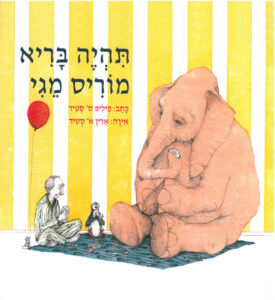
Which drawings does the red balloon appear in? When does it disappear? You can look for it in the book, and play some games with balloons, too, like hitting a balloon between your hands, tossing it into the air and trying to prevent it from touching the floor, or inflating it , releasing the air, and seeing where it ends up.
Visiting the sick
Amos McGee takes care of his friends, and they take care of him when he’s sick. Think along with your children about how you can make a sick friend or relative happy (through a phone call, a hand-drawn card, a small gift, and more).
Pinterest – Arts and crafts suggestions on the book’s page in PJLibrary’s Pinterest account
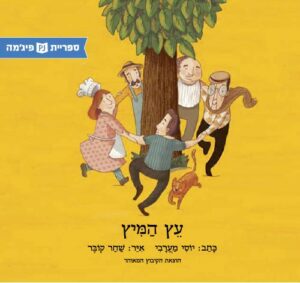
Discussing – What about our world?
What is your responsibility, as parents and children, for your friends, family, and environment? Which roles do you play within the family, and which additional roles would you like to assume responsibility for in order to help others and your surroundings? Perhaps you could discuss and make suggestions that would help your family in their day-to-day, such as: sweeping the porch; checking in with a sick friend; recycling bottles, paper, and bio-degradable materials; set the table for dinner, or tightly close leaking faucets.
Doing some arts & crafts – A family tree
Cut out some paper leaves. Each family member gets some leaves, and writes suggestions for actions that would be considerate of other members of the family, such as: leaving enough warm water for others to shower; feeding your pet hamsters, or saying ‘good morning’ with a smile. Make your tree in painting form or some other artform using recycled materials or tree branches you have collected, and attach all the leaves to it.
You could try to put your ideas to practice. How about deciding to try out one suggestion each day? And if it doesn’t go too well for you, don’t worry, tomorrow is another day…
Suggestions and examples can be found on the PJLibrary Pinterest page – The Juice Tree.
Playing – How can we pass leaves round?
The villagers must cooperate for the tree to grow more leaves. Games are a delightful way of working together as a family: cut out a paper leaf, and stand in a row. Ready? Here we go!
Pass the leaf round from one player to the next without touching it with your hands. If any of you struggle, help by giving them advice and cheering them on. By way of celebrating when the game is over, enjoy your favorite beverage.
Raise your glass to your cooperation, and the many collaborations still to come!
Continuing with the story
The book ends with Mr. Milly’s silence. He smiles, and helps water the tree. And then what happens? You could try to continue the story from this point: What was Mr. Milly thinking while he smiled quietly? What happened to the juice tree and the villagers? Did they keep on picking a single leaf? Or did something surprising happen down the line?
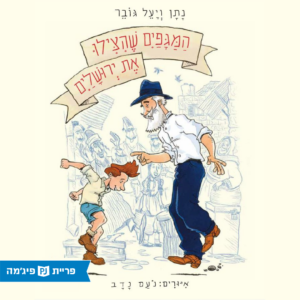
Proposed Family Activities:
- You may enjoy reading this book together and asking for your child’s opinion – do they think this story really happened? How did the friendship between the shoemaker and the Emir “save” Jerusalem? Perhaps you could choose one elderly friend or member of your family, and suggest that your child interview them about their childhood. The interview can be recorded, drawn or written down, to be kept for posterity.
- This story takes place in Jerusalem at the beginning of the 20th Which characteristics of Jerusalem can you identify in the illustrations? You may want to look for other pictures of Jerusalem from the same period, and compare it to contemporary ones: does Jerusalem still look this way? What about it has remained the same, and what has changed?
- The narrator’s grandfather was a craftsman, a shoemaker. Perhaps you would enjoy discovering the occupations in which your family members engaged in past generations. Is any of the professions passed down from one generation to the next? You may want to create a family tree, and draw a symbol of each family member’s profession alongside their name.
- Many last names provide information about one’s family history. Does your last name hold a clue about an ancestor’s occupation? Or the place from which your family immigrated to Israel? Or any other past family characteristic?
- By squeaking, the boots remind the Emir of the help he received from his friend, the shoemaker. Perhaps you can remember someone who once helped your family. What reminds you of them? Together, you may want to think of ways to make them happy.
- Many past professions are disappearing – milkmen, watchmakers, blacksmiths, streetlamp lighters, etc. Can you think of any other occupations that no longer exist? Perhaps you could imagine together what the world would be like if other professions we now have will no longer be required. Which occupations might come in their stead?
Family reading tips
Adrianus (Hadrian) was a Roman emperor from 117 to 138. The Roman empire thrived under his reign. Adrianus suppressed the Bar Kokhba revolt and enacted regulations against the Jewish people. In the Talmudic legends (Midrashim) he is described as a wise and well-educated emperor, but also as being cruel. He is often cited as the main cause of the destruction of Judea.
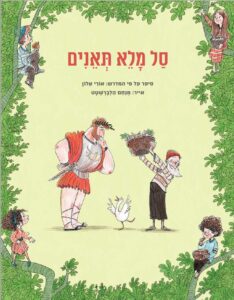
Basket full of gifts
Special gifts are passed through generations: a family story, a tasty recipe or a unique holiday tradition. What important gift did you receive from your parents, grandparents or other family members?
Past to future
Take a look around the house: What items can you find that were made in the past? Can you find things that were created recently which can be used by future generations? Maybe a new building being built, a playground, a school or a grove?
Make a family album
The old man in the story left figs for future generations, and we are left with the story. Why not create a family album with family photos and stories. You can add photos from trips or special occasions, and share stories of things you experienced.
Find more arts and craft projects, songs and other activities on Sifriyat Sifriyat Pijama Library’s Pinterest page.
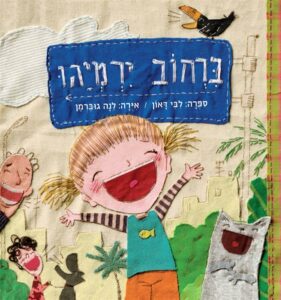
You are welcome to leaf through the book
You are welcome to leaf through the book, and look at Lena Guberman’s unique illustrations closely. Make sure you read the words and signs in the illustrations too! Has anything about the illustrations made you laugh? They are all made of colorful fabrics, thread, and wool. Perhaps you would also like to look for a piece of cloth or an old sock, cut it up, glue or sew it together, to make your own special artwork.
You may want to discuss the Haruvis' demand for quiet, and their neighbors' responses with your child
You may want to discuss the Haruvis’ demand for quiet, and their neighbors’ responses with your child. Have you ever been asked to change your habits in order to be more considerate of others, such as family members or neighbors? Did that request seem reasonable or over the top? Having read the story together, you may be reminded of your own neighbors. Who have you not seen in a while, and would like to invite over to your house?
Perhaps you would like to take a walk around the neighborhood
Perhaps you would like to take a walk around the neighborhood. What does it look like? Who are your neighbors, and do you know them all? Do you spend time together, or help each other out? You may want to draw or make a model of your neighborhood together, and add those who live in each apartment or house.
Would you like to play "silence"?
Would you like to play “silence”? You’re welcome to whisper to one another, play in silence, walk on tiptoes, eat quietly, and even try to laugh without making a sound. Would you have passed the Haruvis’ “quiet neighbor test”?
You may enjoy discussing the following with your family or sharing it with your neighbors:
You may enjoy discussing the following with your family or sharing it with your neighbors: Does anything require improvement or repair in your shared space? You could initiate some neighborhood activities, such as decorating the shared stairwell, planting a community garden, or helping one another in your community. Put together an action plan, and get started.
Laughter is an easy and fun way of coping, it makes you happy, and can even be contagious
Laughter is an easy and fun way of coping, it makes you happy, and can even be contagious. Perhaps you would like to try laughing while making every possible sound: Hoo hoo hoo, Ho ho ho, Ha ha ha, He he he, Hee hee hee. Start laughing and change sounds each time. Did your laughter “roll and tickle”? Did it lift your mood?
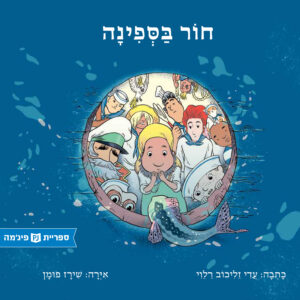
The Family Ship
You can look at the illustrations together, ask and share: Is anything other than the rope tying the sailors to one another? Just like on the ship – what connects members of our household to one another? How do you view the role played by each member? How can each of them contribute to the family “ship”?
An Illustration in Gestures
A funny chef arranging strawberries on a cake, or a fisherman trying to walk with his leg stuck in a bucket – the illustrations in this book are full of interesting details. You can select one amusing illustration at a time, describe it in your own words, and try to convey what it portrays using gestures.
We Are all One Ship
Stand in a row holding hands with some friends or family members. Now try to walk a pre-determined course, such as from the living room to the bedroom. You can add some “waves” – meaning obstacles that you need to climb over or crawl under without letting go of each other’s hands. What will happen if someone let’s go? Will the “ship” be able to sail?
Experiment
You can give a demonstration of a “hole in the ship” using a bucket full of water and a cardboard cup or bowl. Your bucket will be the great big sea, while your cup or bowl will be the ship – sail your ship and watch it float on the water. What will happen if you make a hole at the bottom of it? Try it and find out!
Arts & crafts, inspirations, and other surprises can be found on the Sifriyat Pijama Pinterest page.
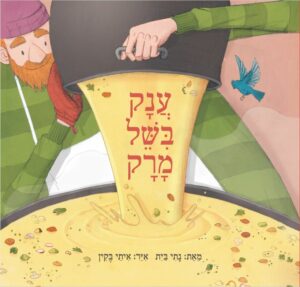
"I will save the soup!"
“I will save the soup!” You may want to read the story together, pause each time the giant is about to say “I will save the soup!”, and ask your child to shout out the phrase. You may also enjoy looking at the illustrations together, and discover details that do not appear in the text. What do you see in the giant’s kitchen? Have you noticed the bird? You could imagine together what the rest of the rooms in the giant’s big house might be like.
Acting the story out
Acting the story out: You could act out the story using cooking utensils. Take out pots of different sizes, a spoon and ladle, and prepare imaginary soup. Your child can act the story out, telling it in their own words. You could continue past the end of the text, and imagine what happened once the guests had left the giant with a pile of dirty dishes and more ingredients for a soup.
Sweet or savory?
Sweet or savory? You may want to experiment with flavors together. Take two identical plates, pour some sugar into one, and salt into the other. Ask your child to taste from each plate, and guess whether it is sweet or salty. Could they figure it out? You could later discuss your family’s preferences, and prepare a family dinner consisting of one savory dish, a sweet dessert, something spicy, and something sour.
Fixing is possible
Fixing is possible: What is hard to fix or needs fixing in your house? Together you could try to find solutions. Is your room crowded, and filled with items you find little use for? You could ask your child to choose some toys they no longer play with, and give them to a child younger than them. Is one of their games broken? Perhaps it can be glued together again. Are they bored and looking for a new book to read? You could get a group of friends together, and have them swap books among them. You could consult your child about identifying the difficulties, and commend them for finding creative solutions to them.
Soup stories
Soup stories: Do you know any other stories about soup? You may want to look for books such as Nira Harel’s Grandpa Cooked a Soup, or Aubrey Davis’ Bone Button Borscht at home or the public library, and read them together. Both these books were given as part of PJ Library in previous years.
A soup fest
A soup fest: You could also make soup together. Who would you invite to eat it with you?
Ingredients:
2 large onions, chopped
3–4 cloves of garlic, crushed
4 carrots, diced
3 zucchinis, diced
3 potatoes, diced
2 cups of pumpkin, diced
A packet of celery
Some parsley or coriander
Salt, pepper, turmeric
Method:
Fry the onions and garlic in some oil until golden.
Add the vegetables, chopped herbs and spices, and stir.
Keep stirring until all the vegetables have been fried and somewhat softened.
Add boiling water, and cook until all vegetables have thoroughly softened.
Taste, adjust seasoning if necessary, and serve.
Bon Appetit!
Family activities:
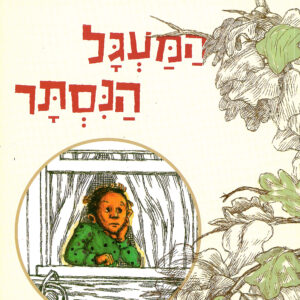
Leaf through the pages with your child and look for instances of giving in the book. Who gives openly and who gives in secret? The title of the Hebrew version of the story is “The Hidden Circle”. Why do you think the author chose this title?
Draw your child’s attention to the items on each page that are filled in with color. Why do you think the illustrator chose to highlight these pictures?
The facial expressions depicted in the illustrations convey the characters’ emotions (e.g. – the face of the child watching the old man sleeping, or the face of the old man eating the muffin). How can we “read” others’ feelings by observing their facial expressions?
You can play the game “Identify the Feeling” with your child. Make an expression that conveys a certain emotion and let your child guess which emotion that is. Then change roles and try guessing the feelings your child is conveying.
Look at the illustration of the old man crumbling a bit of his muffin for the birds. In the Talmud the rabbinical sages say: “Even a poor man who himself survives on charity should give charity” (Gittin, pg. 7b). What is the logic of this commandment?
“A Circle of Friends” is a story about everyday actions that are familiar to all of us. In the book of Deuteronomy (chapter 30, verses 10-14) it is written: “This mitzvah… is not in the heavens… or across the ocean… Rather (it) is very, very close to you, upon your lips and in your heart to perform it”.
In other words, good deeds are within all of our reach. Even young children can perform mitzvot, or good deeds. Take the time to think together with your children about some of the good deeds they have done (and things they would like others to do for them), for example: sharing toys with a friend, helping their siblings or friends at school…
At the end of the book the boy receives a surprising gift that brings him joy. Draw a big, yellow sunflower together. On each petal draw a gift that appears in the story. In your opinion, does the cycle of giving end with the blossoming sunflower outside the boy’s window? Invent together with your child a continuation to the story and illustrate it.
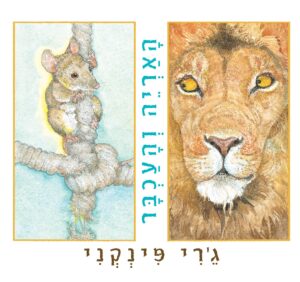
How do we read a book that has no words?
Slowly, and with great pleasure! You can look at each page and enjoy the beautiful illustrations. You may want to tell the story in your own words, taking turns, each of you “reading” one page. Perhaps you would like to look for the picture depicting the lion letting the mouse go and think together: why did the lion choose to let it go? Did it know that one day the mouse would come back and help it?
Acting the story out
You may want to act out the story using puppets: use words one time, and another time, use only pantomime.
Continuing the story
After the mouse releases the lion from the net, the mouse returns to its friends. What do you think it will tell them? You may like to make up a conversation between the mouse and its friends, in which the mouse shares its experiences with them. Do you think they’d be surprised? Will they believe it?
"Every man has his hour…"
The story demonstrates the advantage the mouse has, being small and having sharp teeth. Sometimes the larger creature has the advantage, but other times, the smaller does. You may want to think together of things your child can do that you can’t (like crawl under the sofa to retrieve a fallen object, get into narrow spaces etc.)
Drawing a story
The special illustrations in the book combine pencil, colored pencils and water color techniques. You may want to choose a page that you like and draw the picture using the same techniques. You may also like to look for another book you own and draw the story.
Comparing similar stories
This fable reminds us of the tale of King Solomon and the bee. You may wish to compare the two stories.
Do you know any other fables about animals (for example, The Tortoise and the Hare, or The Fox and the Vineyard)? You may find more Jewish tales and fables on the following website: http://agadastories.org.il/. You’re invited to log on and enjoy the different tales together.
Who would have thought that a lion and a mouse could become friends? Following the book, you may want to discuss friendship, compassion and helping others, returning favors and keeping promises.
"Oh No!"
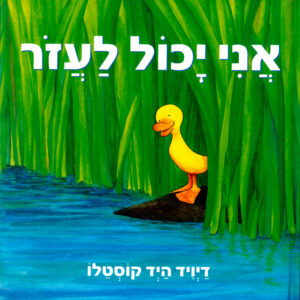
David Hyde Costello chose to describe the distress of the animals in the pictures. You may want to look at the illustrations together, and ask your child to explain the various problems in their own words. You could read the story together, and take turns to say “Oh No!” and explain why the animal is distressed. Each time the other can answer “I can help!” and describe the solution. Don’t forget to thank each other every time!
Acting the Story Out
You can choose puppets or stuffed animals with your child, and use them to act out the story. You may also want to make the animal characters yourselves out of card or cardboard, attach them to popsicle sticks, and put on a play.
A Giving Circle
Your children will probably be delighted to discover that the little duckling who was lost at the beginning of the book was able to help the mighty big elephant! No one is too little to help, and sometimes, the smaller creatures actually have an advantage. You may want to remember a time when your young child helped solve a grown-up’s problem (like getting something that fell behind the sofa, or under the table, out).
Anyone can Help
Every day, all of us, no matter how old we are, could use some help, and also help others. You may want to think together of all the people who help you in your everyday life – siblings, friends, the kindergarten staff, and neighbors. Perhaps you would enjoy establishing a family tradition whereby, at the dinner table, or before bedtime, you each recall the help you extended and received that day.
What Happens at the End of the Story?
You may want to take a look at the last illustration in the book, and try to guess what each animal does in order to help the lost duckling.
Next in Line
One Friend Takes Over for Another
The Hedgehog Who Said: Who Cares?
Rosalinda
A Sick Day for Amos McGee
The Juice Tree
The Boots that saved Jerusalem
A Basket Full of Figs
Yirmiyahu Street
A Hole in the Boat
The Giant is Cooking Soup
A Circle of Friends
The Lion and the Mouse
I Can Help