כִּשּׁוּרֵי חַיִּים
עזרה הדדית
כוחה של קבוצה או קהילה וכוחו של כל קשר טמונים בהדדיות. ביכולת לתמוך ולהיתמך, לתת ולקבל. עזרה הדדית מחזקת את האמון בין חברי הקבוצה, מעניקה בטחון ומשמעות ותורמת לתחושת השייכות. אמנם לא לכולם פשוט לבקש או להושיט עזרה - מגוון של סיפורים משעשעים, מרגשים ומופלאים על עזרה הדדית יכולים לסייע להטמיע את ערך ההדדיות, לעורר השראה ולמלא את הלב ברצון טוב.
סְּפָרִים
Book-Related Family Activities
טיפ לקריאה: חזרה והצטרפות
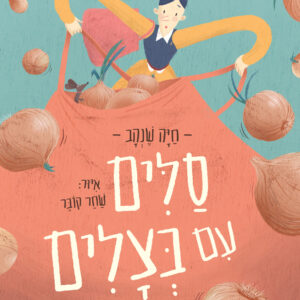
בספרים רבים יש חזרות ופרטים חדשים נוספים בהדרגה. בספר זה, בכל פעם דמות אחרת אוספת את הבצלים, והאישה חוזרת ואומרת “תודה”. החזרתיות נותנת לפעוטות הרגשת ביטחון ומאפשרת להם לעזור “לספר” את הסיפור ולקחת חלק פעיל בו. תוכלו להדגיש את המשפטים החוזרים בקריאה, להשתהות מעט לפני שדמות חדשה מצטרפת ולהזמין את הפעוטות להשתתף.
עזרה בדרך
הגשת עזרה לאחרים, גם בדברים הקטנים ביותר, תורמת לפיתוח אמפתיה ורגישות. תוכלו לשוחח על כך בעקבות הספר – איך הרגישה האישה כשנפלו הבצלים מן הסל שלה? איך היא הרגישה כשעזרו לה? עזרתם פעם למישהו? עזרו לכם?
בצלים רבותיי, בצלים
כמה בצלים מופיעים בכל עמוד בספר? תוכלו לחפש ולמנות אותם יחד. אחרי כן תוכלו למלא סל או שקית ולבדוק כמה בצלים נכנסים בלי ליפול. ואם אין בצלים בבית? החליפו אותם בתפוחים, בכדורים או בכל פריט מתאים אחר.



מגלגלים מלמעלה למטה
באיורי הספר מופיעים מקומות שונים בעיר ההררית חיפה וממחישים את הנפילה מלמעלה למטה. חפשו גם אתם מקומות בסביבתכם כמו גבעה או מדרגות ונסו לגלגל בהם כדורים מגבהים שונים. באיזה אופן מתגלגל הכדור? האם הוא קופץ? מהיר? איטי?
האזינו לשיר!
עם כמה סלים אפשר לעלות לאוטובוס? האזינו וגלו את התשובה בשיר “גברת עם סלים” מאת חיה שנהב, בביצוע אריק איינשטיין.
Family Reading Advice
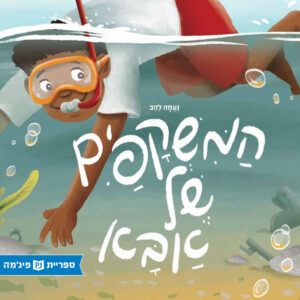
There are lots of ways to enjoy a book – after reading it, you can go back and “read the illustrations”: Which objects can you identify? And which plants?
Every Excursion has its Own Story
You can discuss with your children and remember family trips together – Where did you travel? Did anyone get upset on the trip and you helped them? Do you also have a story about an item that got lost while you were on a trip? Or perhaps you also helped to protect the environment?
Searching in the Water
This book can inspire you to play an entertaining quest – fill a large bowl or bucket with water, then add soap so that the water will not be clear and transparent. Now slip in all sorts of small objects: A teaspoon, bottlecap, pebble, coin, or any other item. Ask your children to help you find the “lost” items in the water.
What is it like to have Blurred vision?
If you wear glasses, you know how it feels. Now you can let the rest of your family experience what it feels like: Place baking paper or a thin, light-colored fabric on your eyes, and try to see through it. Look around and at one another – what is different? How do you feel?
Holes in the Boat
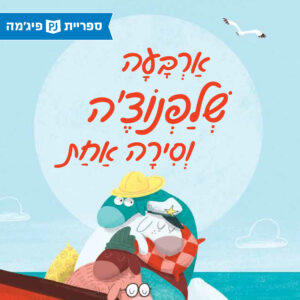
At home, much like the Schlofnoche’s boat, there are problems, or ‘malfunctions’ at times, that require a joint effort to solve. After reading the story, you can discuss and think together: In what situations does our family need to come up with an idea or solution? When is a joint effort needed? When do we realize there is a problem but only discuss it without trying to resolve it? And which ‘bird’ can ‘save’ us in such instances?
Family challenge
At the end of the story, in the absence of an appropriate solution, “Four Schlofnoche huddled on top of one small cabinet”.
You can also have fun finding out: How many family members can huddle together on one small carpet? Or a hammock? Or anywhere else you choose. Try coming up with creative ideas and solutions together to help with this challenge.
Creating creatures with funny names
What sort of funny name is Schlofnoche? Do you have any more ideas for similarlyfunny names? The whimsicalinos? Or sillynillies? You can come up with imaginary and amusing creatures of your own. Imagine them, draw them, color them, and then decide on a long and funny name for them.
Listen to the Schlofnoche’s Story
You can listen to the Schlofnoche’s story by watching this video.
Family reading advice – Recurring phrases
Many books written for toddlers have a recurring phrase that helps their target audience follow the story and join in the reading. The recurring phrase can be emphasized while reading using a special voice, body movement, or a change of reading pace. For example, when you read bo itanu (“come with us”), you can add an inviting hand gesture, or make the end of the phrase longer – veyesh etzlenu m-a-k-o-m (“and we have r-o-o-m”).
Hosting friends
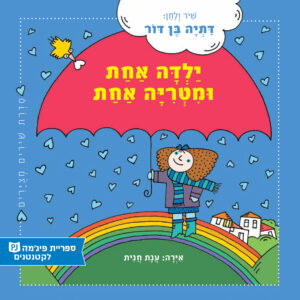
The girl in this book invites the children to join her under her umbrella and “hosts” them. You can ask the children whether they like to host at home, and who they would like to host.
Sometimes toddlers find it hard to share their games when they host others at their homes. You can discuss that and explain that, just as the umbrella in the book is still the girl’s umbrella, even when she allows others to take cover under it, so do their personal belongings remain theirs when sharing.
Listen to the Song
You can listen to the song as sung on Kan Kids’ children’s show Parpar Nechmad, and join in the singing as well as the dance movements.
Lyrics and music: Datia Ben Dor
Performing Artists: Ester Rada, Uri Banai, Meital Raz, Ami Weinberg.
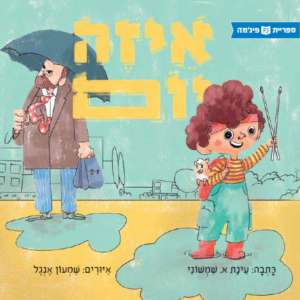
A family with an umbrella
How many family members can fit under a single umbrella? And how many can fit under a blanket? Or the dining-room table? This book can inspire you to find out how well you can all squeeze into various places in amusing and fun ways.
A walk in the rain
On a rainy day, you can pull on some boots, put on a coat, take an umbrella and go out for a walk in the rain! You can step into puddles and observe the special things that change around us when it’s raining – How many people are outside now? What do the skies look like? What happens when the rain falls on soil or the sidewalk? What kind of smell is in the air?
Connections
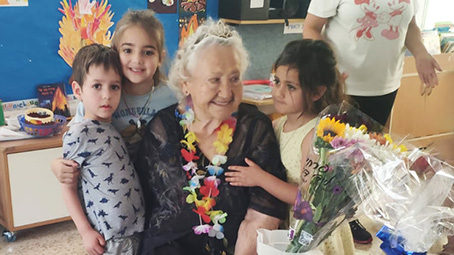
You can talk about older people you know or knew in the past: Who are they? What is your connection to them? What do you like doing with them now? What memories do you, the parents, have of older figures from your childhood?
Story time
Want to listen to the story? Scan the QR code and you can listen to the story together while turning the pages, at home, in the car or whenever you have time.
Hello Your Majesty
Amira suggests playing a game she played as a child – so can you! How do you play? One participant is the king and the rest are his children coming for a visit. They greet him with “Hello, Your Majesty”. The king replies: “Hello my dear children? Where have you been and what have you been doing?”
The children must explain where they were and what they did in mime, and the king must guess correctly. Then they switch roles.
Party time
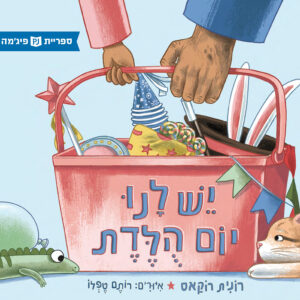
Alma is planning a magic party with a magic hat and a magic potion, and invites witches and wizards to join. You can plan a magic party as well, with your own magical ideas. And maybe it will be a “resting” party? Or a game party? Or another themed party of your choice?
A discussion: What if I were… Mom
Which roles does each member of your household have? Who would you want to take over from? This book could inspire you to imagine switching roles within your home: What would your child do if they were to take over from Grandpa? What would Grandpa do if he took over from Mom? And how would you be able to help one another?
Listening to the story
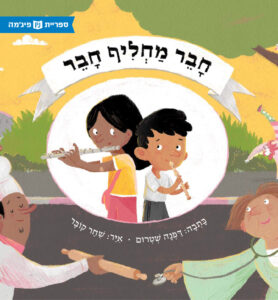
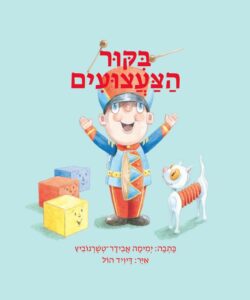
What do you play in a parade? And what do musical instruments in a band sound like? You can find out all the answers to these questions and more if you listen to this book by scanning the code.
A game of “my occupation”
Am I a physician or a clown? Can you guess my occupation? Take turns choosing a profession and acting it out for the other players to guess. If a player’s profession is a little hard to guess, you could give them a clue.
Going into the illustrations
Which character in this book would you like to take over from? You may enjoy looking through it, choosing a character you would like to replace, and share your thoughts with one another: Would you want to take over from the baker? Or play in the parade?
Discussion
This story prompts a discussion about neighbors and relationships: You may enjoy asking one another which neighbors you know, and come up with an activity that would help you get to know a family that lives nearby better. You, parents, are welcome to share stories about the neighbors living near your childhood home: Who were they, and what did you do together?
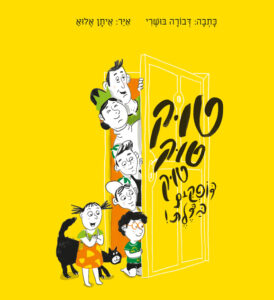
Pleased to meet you – Getting to know your neighbors
You could, perhaps, prepare something together to give to your neighbors: It could be something to eat, a drawing, or a letter that you could leave by the door. You could even just visit them and ask them how they are doing. And the simplest suggestion of all: Smile when you see your neighbors, and say: “Hi, how are you?” and “Have a great day!”
Fun at home
The characters in this book do lots of fun things at Yael’s house! You could look at the illustrations, choose an activity that interests you, and do it yourself, or with the rest of your family.
A home of your own
The children in this book make a building out of boxes. You can do the same! Find different-sized boxes and build a home from them for yourselves or your toys. Don’t forget to invite your neighbors over to visit!
Reading & discussing
Reading & pausing – this story is comprised of several events, and we therefore recommend stopping every once in a while, and trying to think what will happen next: What will the children do? What secret will be revealed?
Together & separately – what is it that you do better together than you do separately? You may want to discuss this with your child, and share stories of successful collaborations you’ve had as children and adults with them.
The branches experiment
Having read this book, you may enjoy collecting some twigs or thin branches and finding out for yourselves: What happens when you try to break one as opposed to a bundle of them?
Encouraging and being encouraged
When the children in the story begin to get frustrated, their mother says: “It’s ok, don’t despair, sweethearts. We fall down, we get up, we overcome, and hold our heads up high”. What encourages us when we feel like giving up? Then how about coming up with a family cheer for when the going gets tough.
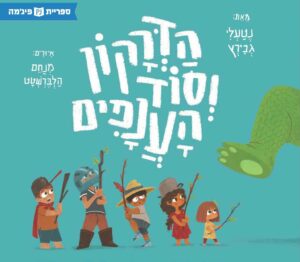
Making a dragon
To make your very own dragon, you will need a cardboard box, crayons, and some paper: you could cut out holes for your eyes and mouth, add on paper teeth and ears, as well as a cardboard tail. You could even make a family dragon, moving it in tandem – the dragon will only move if you all work together.
Proposed Family Activities:
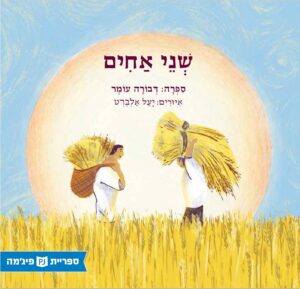
- You may want to leaf through the book and look for all the activities that the brothers do together. Perhaps your child can think with you about all the things around the house that are easier and more fun to do together by joining forces.
- There are many words in Hebrew that describe farming. Does your child know the names of all the different actions? You could look at the illustrations depicting farming activities in the book, and try to do the same using hand gestures.
- Each of the brothers is considerate of the other, and gives up his share without ever having been asked to do so. You may enjoy making an illustrated list together of examples of actions that show how each of you has conceded and helped members of your family.
- Like the brothers in this book, you too can make a heartwarming surprise for your child during the night, to which they will open their eyes in the morning. Afterwards, your child may surprise you too!
- The brothers in this story understand that dividing things up equally is not always the fairest method, and therefore each of them wishes to give up some of his share for his brother. You may want to discuss the different needs of your own family members, and promise your child that even when they do not get exactly the same things as their siblings, they too will always get what they need.
- “Each of us has a city called Jerusalem” (Natan Yonatan): the book informs us that the Temple in Jerusalem was built on the exact spot where the two brothers met. Having read this story, you may want to look for pictures of Jerusalem together, sing songs about the city, and tell your children about “your Jerusalem”.
Proposed Family Activities:
- You may enjoy looking at the special illustrations together while reading the book. You may want to discuss whether letters can indeed have feelings, and whether you recognized the boy who received the letter at the end of the book.
- What is known and unknown in the book? Perhaps you can guess: What did Nitay’s mother, Lily, whisper in his ear at night? What did the letter say? Why was the man on the bus angry? And why were the old man and his daughter sad? Remember, there are no wrong answers – that’s the magic of the story!
- The illustrations combine photographs with drawings. You may want to print out a family photo or a picture of your child on a black and white printer, and then color in the printout using color pencils, enriching it with color and a creative imagination.
- Sometimes we keep special letters for a long time – official letters, love letters, or letters we received from friends. Have you also kept any special letter? Perhaps you could share such a letter with your child, and tell them who wrote it to you, and what it is about. Inspired by this book, you could start writing letters to one another, and keeping them in a special place.
- A letter need not be long, and does not necessarily require an envelope. You could surprise your child by sticking notes on their lunchbox or bathroom mirror, or placing them under their pillow. Whichever way you choose – spreading a good word wherever you go is the best!
- Who would love to receive a “magical letter” from you? Perhaps a member of your family, a neighbor or classmate? You can go ahead and write one together, put it into an envelope, and mail it. You would not believe how much happiness a letter can bring.
- How about writing a letter in invisible ink? Squeeze a lemon, dip a cotton swab into the lemon juice, and use it to write a note on a white sheet of paper. Your hidden message will only be seen by those who shine a flashlight under your letter.
Proposed Family Activities:
- You may enjoy looking at the illustrations together. The bee appears on every page (sometimes it is hidden). You could try to follow it, and tell the story from her perspective. Can you identify the various gifts that the Queen of Sheba brings King Solomon? What kinds of gifts can one bring a king? Does he need them?
- You may want to look for the illustration in which King Solomon lets the bee go. Perhaps you could ask your child: Why is he laughing? Does he truly believe a small bee could ever help him?
- You could pretend to be bees yourselves. Let your child be the bee, and pretend to be its fellow bee. Fly together and buzz to one another – your child will tell you all about the bee’s encounter with the king, and you can react to the story.
- “Wise is he who learns from all men”: you may want to ask your child what makes one wise, what wisdom is, and what King Solomon learned from the little bee. Perhaps you could tell your child something they did not know, and ask them to enlighten you with their knowledge!
- Perhaps you could discuss the skills and contributions made by each member of your family. Together, try to remember times when your child was particularly helpful. Even the youngest members have their “hour”, in which they help and contribute to the greater good.
- The Queen of Sheba came to Jerusalem to ask King Solomon riddles and test his wisdom. Do you know any riddles? You can put them to your child, or invent some new ones together.
- This story is based on a tale about King Solomon, “the wisest man who ever lived”. Do you know any other stories about King Solomon? Perhaps you could share them with your child.
Proposed Family Activities:
- You may enjoy reading this book together and asking for your child’s opinion – do they think this story really happened? How did the friendship between the shoemaker and the Emir “save” Jerusalem? Perhaps you could choose one elderly friend or member of your family, and suggest that your child interview them about their childhood. The interview can be recorded, drawn or written down, to be kept for posterity.
- This story takes place in Jerusalem at the beginning of the 20th Which characteristics of Jerusalem can you identify in the illustrations? You may want to look for other pictures of Jerusalem from the same period, and compare it to contemporary ones: does Jerusalem still look this way? What about it has remained the same, and what has changed?
- The narrator’s grandfather was a craftsman, a shoemaker. Perhaps you would enjoy discovering the occupations in which your family members engaged in past generations. Is any of the professions passed down from one generation to the next? You may want to create a family tree, and draw a symbol of each family member’s profession alongside their name.
- Many last names provide information about one’s family history. Does your last name hold a clue about an ancestor’s occupation? Or the place from which your family immigrated to Israel? Or any other past family characteristic?
- By squeaking, the boots remind the Emir of the help he received from his friend, the shoemaker. Perhaps you can remember someone who once helped your family. What reminds you of them? Together, you may want to think of ways to make them happy.
- Many past professions are disappearing – milkmen, watchmakers, blacksmiths, streetlamp lighters, etc. Can you think of any other occupations that no longer exist? Perhaps you could imagine together what the world would be like if other professions we now have will no longer be required. Which occupations might come in their stead?
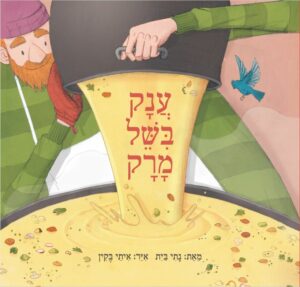
"I will save the soup!"
“I will save the soup!” You may want to read the story together, pause each time the giant is about to say “I will save the soup!”, and ask your child to shout out the phrase. You may also enjoy looking at the illustrations together, and discover details that do not appear in the text. What do you see in the giant’s kitchen? Have you noticed the bird? You could imagine together what the rest of the rooms in the giant’s big house might be like.
Acting the story out
Acting the story out: You could act out the story using cooking utensils. Take out pots of different sizes, a spoon and ladle, and prepare imaginary soup. Your child can act the story out, telling it in their own words. You could continue past the end of the text, and imagine what happened once the guests had left the giant with a pile of dirty dishes and more ingredients for a soup.
Sweet or savory?
Sweet or savory? You may want to experiment with flavors together. Take two identical plates, pour some sugar into one, and salt into the other. Ask your child to taste from each plate, and guess whether it is sweet or salty. Could they figure it out? You could later discuss your family’s preferences, and prepare a family dinner consisting of one savory dish, a sweet dessert, something spicy, and something sour.
Fixing is possible
Fixing is possible: What is hard to fix or needs fixing in your house? Together you could try to find solutions. Is your room crowded, and filled with items you find little use for? You could ask your child to choose some toys they no longer play with, and give them to a child younger than them. Is one of their games broken? Perhaps it can be glued together again. Are they bored and looking for a new book to read? You could get a group of friends together, and have them swap books among them. You could consult your child about identifying the difficulties, and commend them for finding creative solutions to them.
Soup stories
Soup stories: Do you know any other stories about soup? You may want to look for books such as Nira Harel’s Grandpa Cooked a Soup, or Aubrey Davis’ Bone Button Borscht at home or the public library, and read them together. Both these books were given as part of PJ Library in previous years.
A soup fest
A soup fest: You could also make soup together. Who would you invite to eat it with you?
Ingredients:
2 large onions, chopped
3–4 cloves of garlic, crushed
4 carrots, diced
3 zucchinis, diced
3 potatoes, diced
2 cups of pumpkin, diced
A packet of celery
Some parsley or coriander
Salt, pepper, turmeric
Method:
Fry the onions and garlic in some oil until golden.
Add the vegetables, chopped herbs and spices, and stir.
Keep stirring until all the vegetables have been fried and somewhat softened.
Add boiling water, and cook until all vegetables have thoroughly softened.
Taste, adjust seasoning if necessary, and serve.
Bon Appetit!
Family Activities:
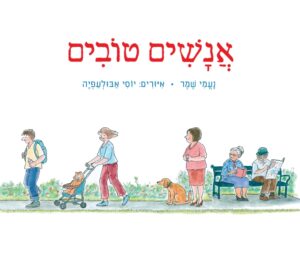
Open your eyes and look around… Good people can be found everywhere, but we don’t always notice them. You can discuss with your children who the “good people” are in your lives and what makes them good. You might want to prepare a booklet and ask your children to draw the good people who surround you: family, friends, neighbors, teachers etc.
Invite your children to take a close look at Yossi Abulafiya’s illustrations of the song. How many “good people” can you find on each page? What are they doing?
Are you acquainted with other songs by Naomi Shemer? Do your children know them as well? This is an opportunity for you to teach your children a new song. Together you can prepare a song book of songs you love, and organize a sing-along with family and friends.
You can create your own special rose-colored binoculars, through which the world looks positive and rosy. Take two empty toilet paper rolls,you’re your child to decorate them and attach them to one another with glue. At one end of the rolls attach pink-colored cellophane wrap, and take a good look around you!
Does your child know the way to kindergarten? Together you can draw a map of the road from your home to the classroom, adding images of “good people” along the way.
You and your children can take a walk in the neighborhood and be “good people” for others! Before setting out, try to think of things good people would do (for example, watering a dried-up plant, feeding crumbs to hungry birds, greeting people with a smile and a warm “shalom!”…)
Who are the “good people” you met today? You may want to initiate a family bedtime tradition of reflecting and remembering all the good people and things you encountered during the day. Be sure to mention ways in which you were “good people” for others as well!
A Good Eye
2000 years ago Rabbi Yochanan Ben Zakkai asked his pupils to suggest what aids a person in walking the proper, righteous path through life. His pupils looked around and saw good and righteous people of different sorts:
[Rabbi Yochanan] said to them: Go and see which is the best trait for a person to acquire. Said Rabbi Eliezer: A good eye. Said Rabbi Joshua: A good friend. Said Rabbi Yossei: A good neighbor. Said Rabbi Shimon: To see what is born [out of ones actions]. Said Rabbi Elazar: A good heart.
Rabbi Eliezer said that the good path is in the eye of the beholder. One who has a good eye sees the good and righteous in others, and acts so himself. Rabbi Joshua and Rabbi Yossei stressed the importance of those who share our path – friends and neighbors. Rabbi Shimon recommended examining one’s actions in light of their future consequences, and Rabbi Elazar said that it all begins with what is in one’s heart.
Naomi Shemer suggests that we open our eyes and see those who share the righteous path, in order to learn from them so that we too can be “good people” on the positive, righteous and pleasant path of life.
Family Activities
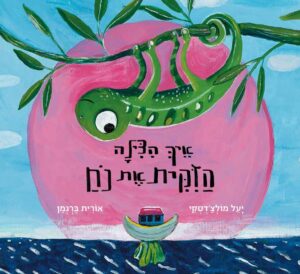
- Stage a family play based on the story. Find simple props at home (sheets and scarves can be used to improvise costumes for Noah and his family; dolls, puppets, and stuffed animals can stand in for the various kinds of animals) and try to imagine the sights, sounds, and smells in the background. Think of ways you could represent the stormy sea, and what might serve as your ark?
- The illustrations that accompany this story add a lot of details that aren’t in the text. Examine the pictures and see if you can identify the different creatures. Can your children name them all? You could divide them up into “family groups” (birds, insects, etc.).What animals do your children know that do not appear in the story? Do your children know how to assign these animals, too, to their “family groups”?
- Noah is concerned about all the creatures on the ark and devotes himself to their care. Talk with your children about the proper way to treat animals, and discuss what “proper care” entails. Take this book with you when you visit a zoo or nature center, and see if you and your children can locate there some of the animals that appear in the book. Some zoos and nature centers let you watch while they feed the animals; others even permit you and your children to participate in the feeding. Do your children know what each type of animal eats, which animals they are allowed to feed, and what food they should be fed? After this visit, you could talk about the differences between domestic pets and wild animals, how we handle animals in captivity, and other related topics.
- “To each his own.” Noah feeds each animal the kind of food that’s appropriate for its species, and he tries very hard to figure out which food will suit the chameleons. Do all the members of your family like to eat the same things? Or do you, like Noah, prepare special foods for different family members, based on individual preferences, allergies, or ages? You could discuss food preferences with your children and see which foods everyone in the family likes, and which are enjoyed only by individual family members.
- Make a model ark out of a shoe box. Ask your children to decorate the model ark as imagination dictates; then put in dolls and either Lego or game pieces to represent Noah, his family, and the various animals.
- This story is based on a Midrash, which in turn was based on the Biblical account of Noah. You could talk about Noah’s character with your children, and retell the story of Noah and the flood. If you know any other Midrashic tales about Noah and the ark, you could share those with your children as well.
Have fun reading and talking about this story!
The Story of Noah and the Chameleon appears in Gemara, Tractate Sanhedrin 108:42
“It is written, ‘After their kinds they went forth from the ark.’ Now, how were you situated?” — He replied. ‘We had much trouble in the ark. The animals which are usually fed by day we fed by day; and those normally fed by night, we fed by night. But my father [Noah] did not know what food the chameleon ate. One day he was sitting and cutting up a pomegranate, when a worm fell out of it, which it [the chameleon] consumed. From then onward, he mashed up bran for it, and when it became wormy, the chameleon devoured it.’
Family Activities:
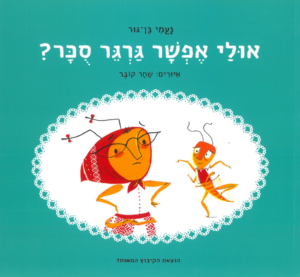
- You might ask your children to flip through the pages and “read” the pictures to you in their own words. See if together you can discover all the things the illustrator added to the written text. Did you or your children find anything funny? Were there objects that your children did not recognize? You can ask them to point out the pictures that show the ant and the cricket helping one another. Then you can draw your own picture of the ant and the cricket, as you imagine them. Does your ant wear eyeglasses too?
- Go to the ant… consider her ways and be wise (Proverbs 6,6): Discuss with your children the characteristics of the ant and the cricket in the story. The ant is industrious and plans ahead, while the cricket sings and dances. After reading the story, you can talk about the different traits and tendencies of everyone in your family and note the distinct contribution of each member.
- Who are your neighbors? Do you help one another? After reading the story, you might think of a small act of kindness that you and your children can do for one of your neighbors. How does it make you feel? Have you, like the ant, ever felt that there are times when “it’s even better to give than to receive”?
- Are you acquainted with Aesop’s fable about the ant and the grasshopper? In that version, the ant refuses the grasshopper’s request for food. You can share the fable with your children and compare it with this story. Do you like one version more than the other? Why?
- “What goes around, comes around”: Sometimes children feel that family life is not fair, when they are asked to help out and their siblings are not. You can discuss how the ant responded to the cricket’s repeated requests for ingredients, and ask them how they think she felt after working hard and saving up all week. It is important to point out that in the end, the ant benefited by helping the cricket. This is often the case in families – there are many opportunities to help others and to be helped, each one according to his or her ability and to the circumstances.
- You too can bake a cake for Shabbat! It is fun to work together in the kitchen, and even more fun to share what you made with neighbors and family! You might want to invite some neighbors or friends over to eat your cake and sing songs with you, just like the ant and the cricket in the story.
Recipe for Orange Cake:
Ingredients:
150 grams butter or margarine
1 cup sugar
4 eggs, lightly beaten
1 tsp vanilla
Grated rind of two oranges
1 cup squeezed orange juice
2 1/2 cups flour
3 tsp baking powder
Powdered sugar for decoration
- Beat together the butter and sugar until smooth and fluffy.
- Add the beaten eggs, vanilla and orange rind and continue mixing.
- Add, alternating liquids with solids, the orange juice, flour and baking powder until smooth.
- Pour the batter into a lightly-greased cake pan and bake at low-medium heat (170 degrees) for 35-45 minutes.
- When completely cool, dust the cake with powdered sugar.
Bon appetite and shabbat shalom!
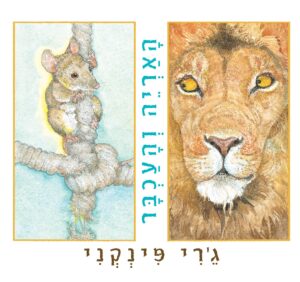
How do we read a book that has no words?
Slowly, and with great pleasure! You can look at each page and enjoy the beautiful illustrations. You may want to tell the story in your own words, taking turns, each of you “reading” one page. Perhaps you would like to look for the picture depicting the lion letting the mouse go and think together: why did the lion choose to let it go? Did it know that one day the mouse would come back and help it?
Acting the story out
You may want to act out the story using puppets: use words one time, and another time, use only pantomime.
Continuing the story
After the mouse releases the lion from the net, the mouse returns to its friends. What do you think it will tell them? You may like to make up a conversation between the mouse and its friends, in which the mouse shares its experiences with them. Do you think they’d be surprised? Will they believe it?
"Every man has his hour…"
The story demonstrates the advantage the mouse has, being small and having sharp teeth. Sometimes the larger creature has the advantage, but other times, the smaller does. You may want to think together of things your child can do that you can’t (like crawl under the sofa to retrieve a fallen object, get into narrow spaces etc.)
Drawing a story
The special illustrations in the book combine pencil, colored pencils and water color techniques. You may want to choose a page that you like and draw the picture using the same techniques. You may also like to look for another book you own and draw the story.
Comparing similar stories
This fable reminds us of the tale of King Solomon and the bee. You may wish to compare the two stories.
Do you know any other fables about animals (for example, The Tortoise and the Hare, or The Fox and the Vineyard)? You may find more Jewish tales and fables on the following website: http://agadastories.org.il/. You’re invited to log on and enjoy the different tales together.
Who would have thought that a lion and a mouse could become friends? Following the book, you may want to discuss friendship, compassion and helping others, returning favors and keeping promises.
Family Activities
- Perhaps you could look for toys and stuffed animals at home, and use them to act the story out. You may want to keep the toys in a basket, and let your child continue acting the story out themselves.
- You might enjoy looking through the illustrations in the book together. You could take a look at the toy parade on its way to visit Rama. How are they supporting one another?
- You may want to ask your child who they think could use some medical attention aside from Rama. Shula the Doll is injured, her leg fell off a year ago… You may enjoy setting up a toy hospital: take all your “injured” dolls out of the closet, as well as the plastic toys that have lost their leg, or the soldiers who took a hit during playtime, and try to fix or “treat” them.
- Do you know anyone around you (a friend, neighbor, or relative) who is not well? You may want to think of ways ti make them happy together with your child, such as making them a get-well card, calling them up, sending them something yummy, or paying them a proper visit.
- You may want to look at the illustration depicting Rama lying in her bed, unwell but smiling following her toys’ visit. Do you think people who are sick feel better after their friends’ had been to visit them? You may like to tell your child about a visit you had made to a sick person, or one you received when you were unwell.
- Try thinking together – what happened then? What did Rama do once she was well again? What did she tell her toys? How did they welcome her back when she returned to play with them? You could use your own toys to act out the next scenes in the story.
Yemima Avidar-Tchernovitz (1909–1995)
Yemima Avidar-Tchernovitz was born in Lithuania, and immigrated to the Land of Israel when she was 12. She began writing when she was in her teens, and told her early stories to the children in the Tel Aviv kindergartens in which she taught. Her stories were first published in the weekly children’s magazine Davar Liyladim, and she also wrote radio skits, in which she also acted on the “youth corner” broadcasts. Generations of children and youth in Israel grew up reading the dozens of well-loved books she authored, among which are Muki is Angry with Mom, Stories for Nivi, Two Friends on the Road, Eight in Pursuit of One, and One of Ours. Yemima Avidar-Tchernovitz is a Zeev Prize laureate and was also awarded the Israel Prize for Children’s Literature.
Baskets of Onions
Aba’s Glasses
Four Shlofnoche in a Boat
A Girl with an Umbrella
It’s Our Birthday
One Friend Takes Over for Another
Knock Knock Knock – Knocking on the Door!
Dragonsticks
Two Brothers and the Temple Site
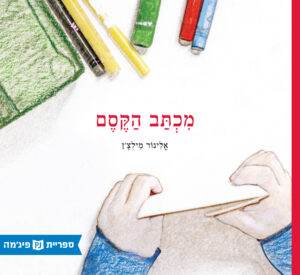
The Magical Letter
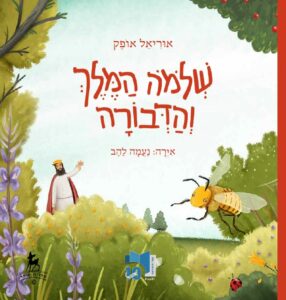
King Solomon and the Bee
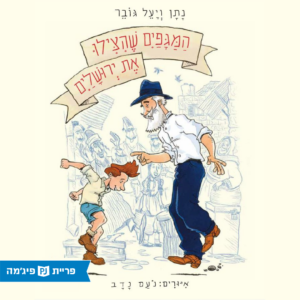
The Boots that saved Jerusalem
The Giant is Cooking Soup
Good People
How the Chameleon Saved Noah
Can you Spare a Spot of Sugar
The Lion and the Mouse
The Toys’ Visit