מִשְׁפָּחָה וּקְהִלָּה
מעורבות חברתית
כמה משמעותיים ושייכים אנחנו מרגישים כאשר אנחנו יוזמים למען הקבוצה או הקהילה שבה אנחנו חיים. סיפורים מרגשים ומעוררי השראה על מעורבות חברתית הבאה לביטוי באופנים שונים יכולים לסייע בפיתוח הבנה חברתית, ולקדם שיח משותף ומיזמים חברתיים וקהילתיים.
סְּפָרִים
Book-Related Family Activities
זיכרונות מפעם
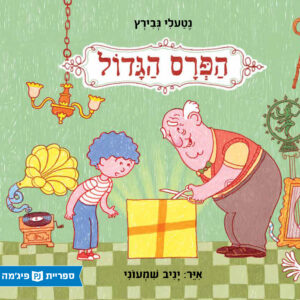
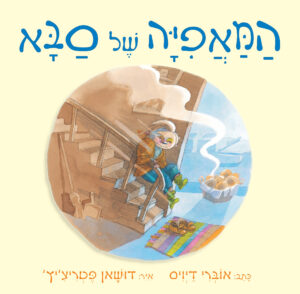
אם תעמיקו באיורי הספר, תוכלו למצוא מגוון חפצים מיוחדים; טלפון חוגה, גרמופון, שעון קוקייה. זוהי הזדמנות לשתף בסיפורים ובזיכרונות: אילו מהחפצים הילדים מכירים? ואילו מהם היו בביתכם כילדים? האם יש פריטים משמעותיים מפעם, שהילדים או אתם שומרים כמזכרת?
חפצים שצריכים מישהו חדש
אפשר לטייל יחד לחנות היד השנייה הקרובה לביתכם, לשוטט בין החפצים ולבדוק אם גם אתם מרגישים כמו ב’מערת אוצרות’. ואולי גם לכם יש דברים שתרצו שיהיה להם מישהו חדש? תוכלו להקים חנות יד שנייה ביתית ו’לקנות ולמכור’ בין חברי המשפחה והשכנים.
מחלקים פרסים מהעבר
פרס הוקרה דמיוני לאבא שהמציא משחק מצחיק בנסיעה, או אולי לסבתא על העוגה שאפתה ליום ההולדת? בהשראת הסיפור, אפשר להכין יחד תעודות הוקרה שמתעדות רגעים קטנים עם משמעות גדולה. כך הופך הזיכרון האישי לשיחה משפחתית מלכדת.

משחק 'חולמים להיות'

סבא חלם להיות זמר, ומה אתם חולמים להיות? כל אחד מבני המשפחה יציג בפנטומימה משהו שהוא חולם להיות, ושאר המשתתפים ינסו לנחש.

Actions Speak Louder than Words
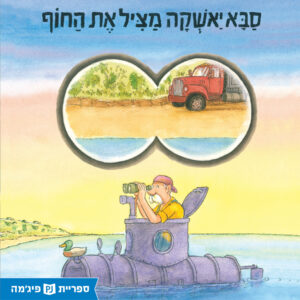
You can discuss Yashka’s statement: “Words won’t help, we need to convince them with actions”. Ask what he means by it and what your opinion is. When is it best to speak and discuss things first, and under which circumstances would you prefer to convince with actions?
QR Code
Scan the code to watch a special video with Yossi Abolafia, the author and illustrator of this book.
For our Environment
Do you have a favorite public place in your vicinity? When you visit it, take a moment to think about what makes it pleasant, how it contributes to the environment, and how it can be protected. For example, you can initiate a cleaning up or cultivating spree with your family and friends.
Original Inventions
Yashka makes special inventions such as a night light that turns off when you fall asleep and an underwater bird observatory. What helpful and special inventions would you like to invent? You can imagine them, draw sketches of them, or build special inventions from whatever is lying around your house.
Family reading advice
Children enjoy looking at illustrations and noticing details that do not necessarily appear in the story itself. While reading, you should join them, look at the book together, and discover how the illustrations add fun and amusement to the written text and shared reading experience.
Enjoying the sunset
The characters in this book are friends who enjoy watching the sunset on the beach together. You can also go to the beach, park or even the street to enjoy the beauty of the sky as the sun disappears. You should also take some paper and crayons along to draw a sunset of your own, or any other beautiful thing that can be admired simply by taking a look around you.
A discussion: What if I were… Mom
Which roles does each member of your household have? Who would you want to take over from? This book could inspire you to imagine switching roles within your home: What would your child do if they were to take over from Grandpa? What would Grandpa do if he took over from Mom? And how would you be able to help one another?
Listening to the story
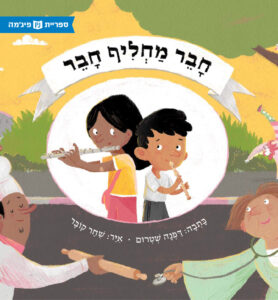
What do you play in a parade? And what do musical instruments in a band sound like? You can find out all the answers to these questions and more if you listen to this book by scanning the code.
A game of “my occupation”
Am I a physician or a clown? Can you guess my occupation? Take turns choosing a profession and acting it out for the other players to guess. If a player’s profession is a little hard to guess, you could give them a clue.
Going into the illustrations
Which character in this book would you like to take over from? You may enjoy looking through it, choosing a character you would like to replace, and share your thoughts with one another: Would you want to take over from the baker? Or play in the parade?
Discussion
You may want to discuss your experience of acquiring Hebrew: What were the first words you said as toddlers? Did you invent any words? Do you, parents, know what the first words you said were? Did you acquire another language? If you learned to speak Hebrew at a later stage, you could discuss the experience of learning the language, and discover what language you speak when you dream at night.
A family dictionary
Which word does your family like, and why? Are there any words that you have invented, and only your family members understand? Perhaps some of those words have a special story behind them? You may enjoy collecting stories from family members: a word of friendship, a special term of endearment, or secret family codeword.
Name, place, animal, thing (a game)
In Hebrew the game is called Chai, Tzomeach, Domem (animal, vegetable, thing). Select a letter, and participants must name animals, vegetables and things starting with the letter selected.
Haftaa [surprise], boreg [screw], glida [ice cream]
Rakevet [train], mapuhit [harmonica], and kruvit [cauliflower] are just some of the words that Eliezer Ben Yehuda invented. Others appear on the second to last page of this book. You could take turns to choose two words from this page and use them in a sentence: a sentence containing the words haftaa [surprise] and ganenet [kindergarten teacher], or ganenet [kindergarten teacher] and tizmoret [orchestra], or how about tizmoret [orchestra] and nazelet [nasal mucus]? Do you think you could put a small story together featuring all the words on this page?
The revivers of the Hebrew Language
Rabbi Yechiel Michel Pines (1843–1913) was involved in the purchase of lands, setting up the Academy of the Hebrew Language with Eliezer Ben Yehuda. Rabbi Pines invented new Hebrew words, such as agvania [tomato] and shaon [clock/watch].
Nissim Behar (1848–1931) founded the Torah Umelacha School in Jerusalem where Hebrew was taught in Hebrew. Eliezer Ben Yehuda was a teacher at this school.
Hayim Nahman Bialik (1873–1934) – the national poet was a key activist at the Academy of the Hebrew Language, inventing professional terms in fields such as music and the playing of musical instruments. Matos [airplane], matzlema [camera], and etzbeoni [thimble] are some of the words he invented.
Many others actively contributed to the revival of the Hebrew language. You could learn more about them by visiting the Academy of the Hebrew Language website.
Discussion – What does it mean to be considerate?
“It’s important to be considerate toward our environment” – What does being considerate mean? How can we be more considerate of one another at home, within our own family? And how can we care for our environment? You could discuss these questions with your child, and come up with suggestions on how to be more considerate of other people as well as the environment.
An invitation for an observation
You’re most invited to embark on an observation on a piece of nature in your immediate surroundings: A park near your home, or field, or yard, or even a planter on your balcony. What would you discover if you sat down quietly and watched? You may want to bring a magnifying glass along with you.
Learning from one another
What can adults learn from children? Lots of things! How to play their favorite game, engage in arts & crafts, find out more about a subject they learned about in preschool, or just share an interesting thought. And what can children learn from adults? To find out what we can learn from one another, all we have to do is sit together, and pay attention.
Catching colors
The sky is blue, the earth is brown, and vegetation is green. You may enjoy going outdoors and “catching colors”: Take turns to say a color, while the other players quickly find an item around them that is the same color, and point to it.
Discussion
The family in this book is rushing to make the train and celebrate Grandpa Dov’s birthday, and yet its members remember to be considerate toward others, and care for animals and the environment. Perhaps you would like to try and discuss what being considerate means – how would you like others to be considerate of you? Who could you offer to help in your immediate surroundings or family? Which actions can you take to make the older members of your family happy?
Playing "fast or slow?"
You may enjoy playing a game called “fast or slow”: take turns to choose a certain action and tell the other players to perform it quickly or slowly. For instance, clap your hands… quickly, and now… slowly; sing a song extra slowly, and then super-fast! After you’ve played, you may want to discuss and discover what you enjoyed doing quickly, and what was more fun to do slowly.
Hidden illustrations
The illustrations in this book are extremely detailed. How about choosing your favorite page, and looking for the tiny details in it? Perhaps you could take turns to ask each other whether you can spot a particular detail in the drawing: Where’s Grandpa Dov’s gift? Where’s the football? Who can find the teddy bear?
Types of…
This book specifies types of plants, toys, cats, and musical instruments. Perhaps it can inspire you to take turns choosing a subject, and having the other players list as many items associated with it as they can. You could choose topics such as clothing, friends’ names, types of toys or musical instruments.
Proposed Family Activities:
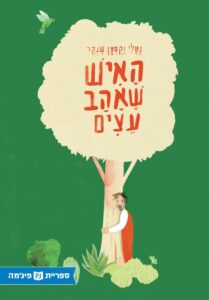
- How about packing this book along with some refreshments and a blanket, finding a beloved tree in nature, and reading the story there together. Afterwards, you may enjoy collecting pine cones, tree bark, leaves, and more. When you return home, you can use them to make a piece of artwork together.
- You may want to snuggle up and look at the magnificent illustrations closely. Can your child identify some familiar trees by their illustration?
- After you finish reading the story, you may want to ask your child what they think Giora will do now, and what will happen to the trees. Perhaps you would enjoy writing up a creative follow-up to the story told, and illustrating it.
- Baobab, loquat, Tamarisk, Pecan… Giora knows every tree by name. what kinds of trees grow near your home? How can you identify them? How can you tell them apart? You may want to take go tree-spotting together, learn about the trees you see, and make an illustrated tree guide together.
- How about taking a walk near your home? Are there any open spaces or dilapidated courtyards nearby? Perhaps you and some friends could clean them up, and make them look nicer. You could even plant a community garden with your neighbors.
- Do you know any other stories or poems about trees (like Zuta and the Apple Tree by Orit Raz, What’s it like to be a Tree? By Datia Ben Dor, The Abba Tree by Devora Busheri, What Does it Take by Gianni Rodari)? You may want to look for them at home or in the library, and read them together.
This is the last book your child will receive from PJ Library this year. We hope you have enjoyed reading, discussing, and doing the activities together. We wish you a summer full of wonderful experiences and story times. See you next year!
Proposed Family Activities:
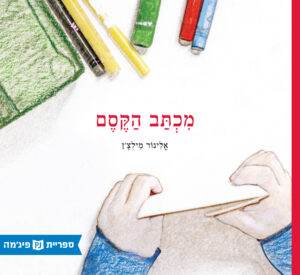
- You may enjoy looking at the special illustrations together while reading the book. You may want to discuss whether letters can indeed have feelings, and whether you recognized the boy who received the letter at the end of the book.
- What is known and unknown in the book? Perhaps you can guess: What did Nitay’s mother, Lily, whisper in his ear at night? What did the letter say? Why was the man on the bus angry? And why were the old man and his daughter sad? Remember, there are no wrong answers – that’s the magic of the story!
- The illustrations combine photographs with drawings. You may want to print out a family photo or a picture of your child on a black and white printer, and then color in the printout using color pencils, enriching it with color and a creative imagination.
- Sometimes we keep special letters for a long time – official letters, love letters, or letters we received from friends. Have you also kept any special letter? Perhaps you could share such a letter with your child, and tell them who wrote it to you, and what it is about. Inspired by this book, you could start writing letters to one another, and keeping them in a special place.
- A letter need not be long, and does not necessarily require an envelope. You could surprise your child by sticking notes on their lunchbox or bathroom mirror, or placing them under their pillow. Whichever way you choose – spreading a good word wherever you go is the best!
- Who would love to receive a “magical letter” from you? Perhaps a member of your family, a neighbor or classmate? You can go ahead and write one together, put it into an envelope, and mail it. You would not believe how much happiness a letter can bring.
- How about writing a letter in invisible ink? Squeeze a lemon, dip a cotton swab into the lemon juice, and use it to write a note on a white sheet of paper. Your hidden message will only be seen by those who shine a flashlight under your letter.
Proposed Family Activities
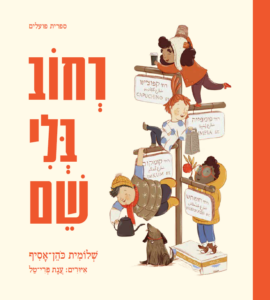
- You may want to look closely at the illustrations. Were you able to find all the people and objects that went missing on their way to the nameless street? Was there anything about the illustrations that you found particularly funny?
- Does your street have a name? Do your children know it? Who or what is it named after? Sometimes streets are named after typically Israeli flowers, leaders, or historical events. You may want to research the source of your street, and adjacent streets’, names together.
- You may want to look for street signs in the illustrations. What do the street signs in your neighborhood look like? On many street signs, the name of the street appears in three languages. Can you read all the names? You could make signs for various rooms in your house, and design them in the form of street signs.
- Perhaps you would enjoy strolling around the neighborhood, and getting to know the names of the streets and their meanings. You may want to look for different things, such as: are there lampposts, benches, nice-looking trees? Is there a bus stop on your street? Where are the crosswalks? Maybe you could draw a map of the neighborhood and its streets together.
- It is very difficult to explain how to get from one place to another without using street names. Try describing how you would get from your house to school without using street names, only landmarks. You could then draw a map of the route and walk/drive according to it. Did you get lost along the way?
- We can all change things for the better – even in our own homes or neighborhood. You could hold a family discussion, or share your thoughts with your neighbors, about anything that might require improvement or repair. You could even take a vote, choose one issue to take care of, and go ahead and fix it.
- And perhaps there are some problems you cannot solve, and you would like to contact your mayor about? You could find the e-mail address for public petitions, and send an e-mail containing your request or suggestion. Maybe the mayor will pay you a visit too!
- You may want to think about how streets get their names. Think about the discussions, selection, and decisions reached. What is your opinion on the way the decision was made? Is that how all decisions are made? When is it a suitable way, and when is it not?
Family activities:
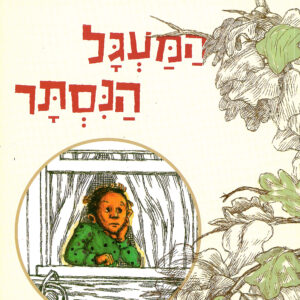
Leaf through the pages with your child and look for instances of giving in the book. Who gives openly and who gives in secret? The title of the Hebrew version of the story is “The Hidden Circle”. Why do you think the author chose this title?
Draw your child’s attention to the items on each page that are filled in with color. Why do you think the illustrator chose to highlight these pictures?
The facial expressions depicted in the illustrations convey the characters’ emotions (e.g. – the face of the child watching the old man sleeping, or the face of the old man eating the muffin). How can we “read” others’ feelings by observing their facial expressions?
You can play the game “Identify the Feeling” with your child. Make an expression that conveys a certain emotion and let your child guess which emotion that is. Then change roles and try guessing the feelings your child is conveying.
Look at the illustration of the old man crumbling a bit of his muffin for the birds. In the Talmud the rabbinical sages say: “Even a poor man who himself survives on charity should give charity” (Gittin, pg. 7b). What is the logic of this commandment?
“A Circle of Friends” is a story about everyday actions that are familiar to all of us. In the book of Deuteronomy (chapter 30, verses 10-14) it is written: “This mitzvah… is not in the heavens… or across the ocean… Rather (it) is very, very close to you, upon your lips and in your heart to perform it”.
In other words, good deeds are within all of our reach. Even young children can perform mitzvot, or good deeds. Take the time to think together with your children about some of the good deeds they have done (and things they would like others to do for them), for example: sharing toys with a friend, helping their siblings or friends at school…
At the end of the book the boy receives a surprising gift that brings him joy. Draw a big, yellow sunflower together. On each petal draw a gift that appears in the story. In your opinion, does the cycle of giving end with the blossoming sunflower outside the boy’s window? Invent together with your child a continuation to the story and illustrate it.
The Game of Thanks
The Game of Thanks: One player begins a sentence with the words, “I want to say thank you for…”, and tells about something good in his or her life. It may be something that has happened to them, or anything – small or big – that he or she has seen, heard, tasted or smelt. The next player completes the sentence as he or she wishes, and so on. The whole family can play this game at dinner or at bed-time.
Gratitude can be expressed through songs!
Gratitude can be expressed through songs! Sing together songs of thanks that you know, for example: Toda (by Uzi Hitman), Elohim Natan Lecha Bematana (composed by Eitan Masori), Hallujah (preformed by Gali Atari.
Many people help us every day
Many people help us every day: The guard at the entrance to the shopping mall, the cashier at the supermarket, housekeepers, etc. Closer to the children’s lives there are neighbors who play with us in the park, our relatives, kindergarten teachers, and more. Sometimes just saying “thank you” is enough, and sometimes people would enjoy receiving a letter or a drawing. Think of a person you would like to thank. Use the letter or a drawing to describe the good times you have had with this person, times when they helped you, or simply the happiness that they bring to your life.
How does one thank God?
How does one thank God? This question bothers Benny. He chooses to thank God in the synagogue, because he believes it is there that most people talk with God. Like Benny, many young children ask big questions: Does God exist? Where does he live? Will he hear me if I speak to him? Discuss your beliefs with your child.
All’s well that ends well!
All’s well that ends well! At the end of the story, Benny is disappointed to discover that it was the poor man, and not God, who ate the bagels. But Grandfather explains that thanks to Benny, “the world has become a better place… and what better thanks than that can God receive?” Discuss with your child the story’s surprising ending and Grandfather’s words. How can we understand the connection between Benny’s good deed and thanking God? Together with your child, try to remember a time when they did a good deed and helped someone. Link this incident to the story, and think about how your child’s good deed also contributed to making the world a better place.
Bagel-shaped Buns Recipe
Bake “if only we had…” bagel buns together.
This is how you play: “Let’s make bagels! If only we had flour… we would have wonderful bagels”. The child brings the flour and you thank him or her happily, then continue by saying: “If only we had sugar…” and so on. Accept every ingredient (flour, sugar, oil, etc.) into your bowl with happiness and thanks. Bake the buns and give them to people you would like to thank or please.
Ingredients:
2 cups of flour 2 spoons of sugar
1 teaspoon of quick-rising yeast 1 teaspoon of salt
1 cup of water 1 ½ spoons of oil
Instructions:
Mix all the ingredients together until a ball of soft dough is formed. If necessary, add a bit of flour. Set the dough aside and let it rise. Once the dough has doubled in volume, divide it into smaller portions, and form bagel-shaped buns. Brush the buns with an egg, and scatter sesame seeds on top. Let the buns rise again. Bake at 190°c degrees, until golden.
Bon Appétit!
Proposed Family Activities
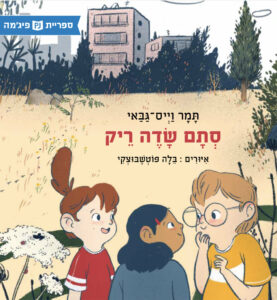
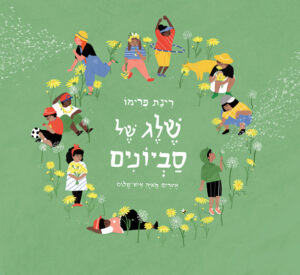
- Your child might enjoy telling you the story according to the series of illustrations. They might want to pick a certain character, and look for it in each illustration throughout the book: Who did they choose? Why that character? What does it like to do in the field?
- You may want to share stories about the changes you have undergone since childhood with your child. Has a childhood puddle turned into a highway? What happened to the field you used to play in as children? Perhaps you would like to look at old photographs together, and compare them to today.
- Is your neighborhood, like the one in the story, expanding and undergoing changes? You may want to visit a construction site together, peek over the fence, and look for tractors and cranes. If tall buildings are being built there, you could try counting the stories together. Or perhaps you’d like to imagine the flowers the new tenants will plant in their gardens, and who they would be. Maybe new friends will move in there?
- Have you ever left a familiar, well-loved place behind? Did the change make you happy? Try to remember and share with your child: How did you feel before the change, and how did you feel once you had gotten used to it?
- The book describes the flowers and greenery typical for each season. You could take a walk with your child, observe nature, and look for flowers. Which flowers have you come across? What color are they? Do you know names of wild flowers? You could also take a picture of yourself with pretty flowers. Have you found a dandelion? Try blowing on it. Have you managed to blow its white “hairs” off and see them fall to the ground like snow?
The Grand Prize
Saba Yashka Saves the Beach
Something
One Friend Takes Over for Another
The Sleeping Language
Just an Empty Field
Hurry Up!
The Man who Loved Trees
The Magical Letter
A Street with no Name
A Circle of Friends
Bagels From Benny
Snow of Dandelions