אֲנִי וְעַצְמִי
סבלנות
"סבלנות – לא קונים בשום חנות!" מדקלמות גננות ומדקלמים הורים במשך שנים, בניסיון להנחיל מיומנויות התנהגות של המתנה ושל דחיית סיפוקים. כמה שזה קשה! ספרים שעוסקים בקושי לחכות, להתאפק ולהמתין כשצריך, יכולים לסייע בשכלול המיומנות והיכולות להתאזר בסבלנות.


סְּפָרִים
Book-Related Family Activities
Tip for Family Reading
After reading this book, you should discuss how the characters felt and coped with the situations in the story. You can discuss how you were inspired by them. Children identify with the characters, will be exposed to different perspectives, and will learn from them about emotions and behaviors that are familiar to them from their own lives.
It was a good idea to let him go first
After reading the story, you can discuss, share, and ask: How do we feel when we wait in line? Have we ever felt that our turn was more urgent than the others’? In your opinion, how did Dog feel when the others were considerate toward him? How did Monkey and the others who were waiting in line feel after giving up their turn? Try to recall an incident together in which you were considerate toward others, or others were considerate toward you.
Who is next in line?
Monkey, Giraffe, Elephant, and Alligator try to establish a principle that would determine the order among those waiting in line. They can inspire you to play an amusing game with your whole family, during which you can form a line while following a different order each time. For instance, you can stand according to your age from youngest to oldest, or by the color of your shirts from the lightest to the darkest, or by how much you love ice cream. You can come up with different, amusing characteristics together and find out who is next in line this time?
Waiting around and having fun
How does Monkey end up passing the time while waiting in line? He chats with those who are waiting alongside him, coming up with ideas on how to determine the order, and meeting new friends. You can also think together and raise ideas that would help you pass the time while you are waiting for something. You can come up with a funny song to sing while you wait, or a game involving moving your fingers, or even prepare aids that will help you pass the time – a storybook, coloring book, puzzle, or squishy ball, or any other amusing idea with which you can come up.
QR Code
Would you like to find out what Monkey sounds like? Or what Dr. Tzviya sounds like? Scan the code and listen to the story.
Discussion – How can we cheer ourselves up?
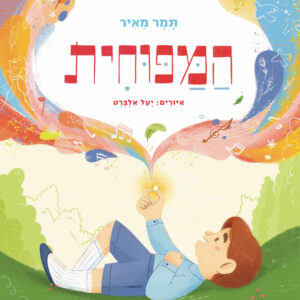
“Even in rough times – Shmulek can count on his harmonica” –What helps you during hard times? You can discuss and share ideas on how to cheer yourself up when you are sad or times are hard: It can be a tune, a dream, or a hug from someone you love.
Heartbeats of memories
Which songs are your favorite? You can listen to songs you like when you are sad or happy, in the morning , or those that help you fall asleep. You may want to create a family soundtrack of favorite songs to listen to when the mood is right.
A dream box
Shmulek places his teeth that had fallen out in a box. You can also find a box, decorate it, and place special objects in it, such as treasures that you have found, or paintings of dreams that you would like to make come true.
A discussion on yearning
How does yearning feel? Have you ever missed someone? Who? – This book is an opportunity for a discussion during which you, parents, can share your own experiences of missing someone and waiting for their return.
What does it mean to miss someone?
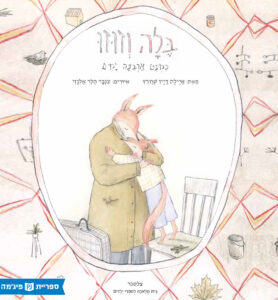
Pupik misses his father, and Ohad knows exactly how he feels. They share their feelings, and think of things they could do while missing someone. You may want to scan this QR code to watch them, and get some good advice for times when you miss others.
Arts & crafts – A yearning box
Does it feel like time is standing still while you are missing someone who is away? – You may want to make a box filled with items that could make time go by faster, and make you forget about that person’s absence for a while. How about putting some photos of the two of you in it, materials with which to make a gift or a drawing for them, which you could give to them upon their return?
A game for passing the time
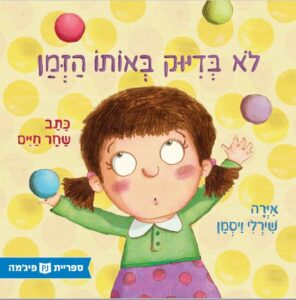
A minute can go by very quickly, or it can almost stand still. Would you like to try? – Set your timer for one minute, choose an activity, and do it for a full minute: Hopping on one leg, sitting still, finding items beginning with the letter G – Which activity helped time pass by faster? And which activity made it go by extra slowly?
Discussion
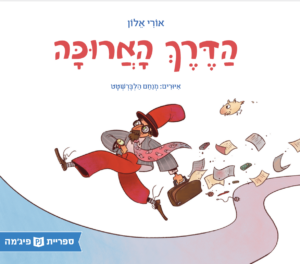
What do we do when we can’t decide which step to take? Who do you like getting advice from? Whose advice do you find difficult to follow, and why? Sometimes good advice comes unexpectedly: you may want to discuss that with your child, be reminded of times when you chose to listen to a piece of advice you’d been given, and share the things you’ve learned from others, young as well as old.
Enjoying the way
Are you traveling on a long, perhaps boring road? You could pass the time by playing games: counting the road signs along the way, recognizing familiar letters, discovering the changes to your surroundings brought on by the different seasons, singing your favorite songs and also… looking at the road and enjoying the existence of things you have not noticed until now.
Learning from everyone
What could children teach adults? And what could adults teach children? You may want to share your knowledge with one another, and try it out together: You could teach each other a game, song, or dance, share sports knowledge, information on a certain animal or anything else that comes to mind. Did you teach? Have you learned? Now swap roles.
A game – How do you get to…?
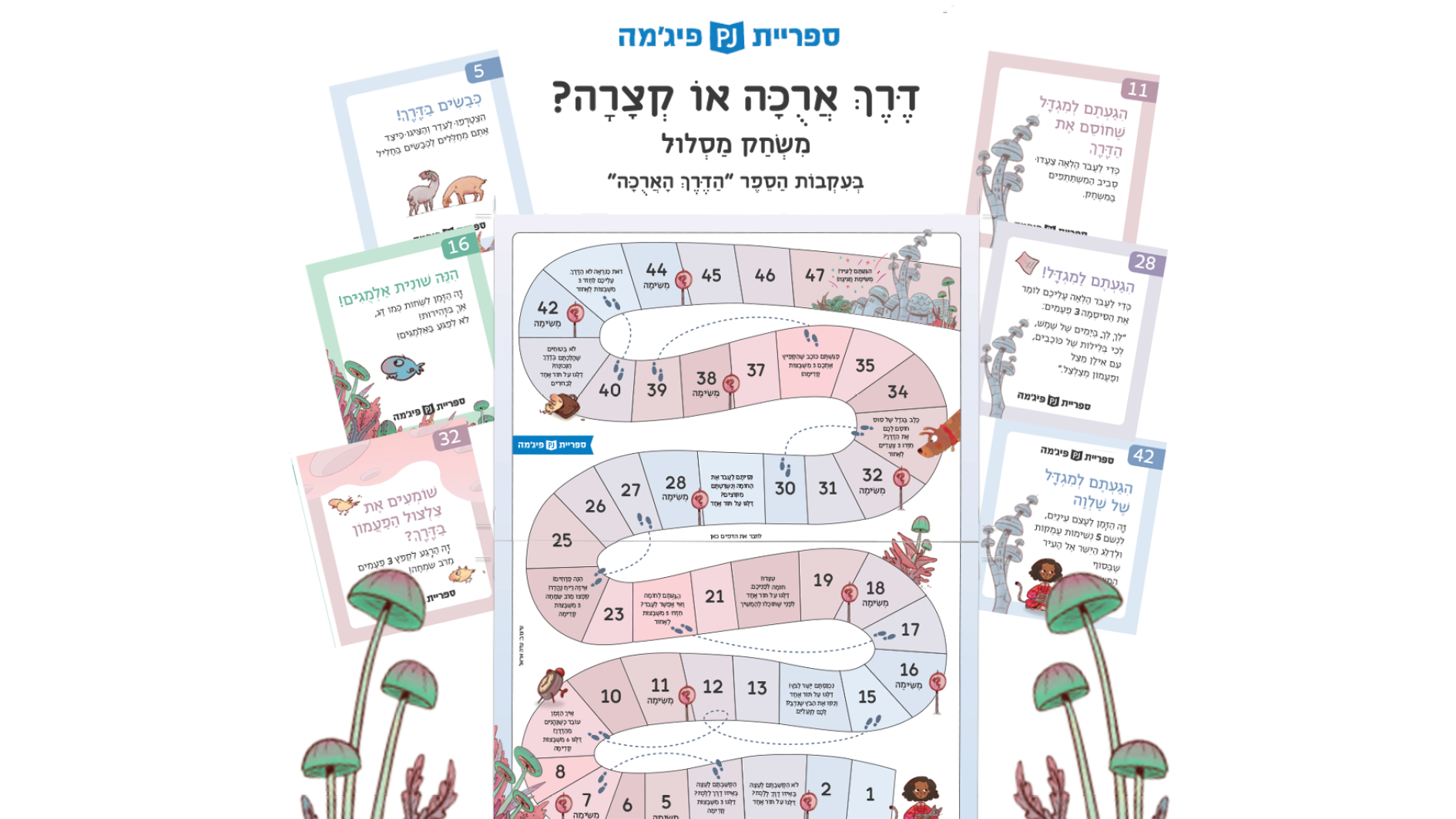
How do you get from one place to another by listening? Stand in the doorway with your eyes closed, and ask your family members to lead you safely to another room in the house by giving you instructions. You could follow up by playing a board game inspired by this book which we have created for you.
יש לכם קופסה? יש לכם משחק!
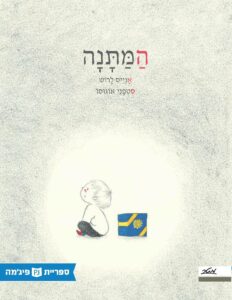
יש לכם קופסה? יש לכם משחק! צפו בסרטון וגלו איך להכין משחק קופסה מתוק מדברים שיש בכל בית, בעקבות הספר “המתנה” מאת אַנְיֵיס לָרוֹשׁ!
Reading & discussing
Once you have finished reading the book, you could discuss what Michael (originally: Nicodème) did: Why did he want to give his mother a present? What do family members give one another? And what would you like to get from yours? Would you like to receive material gifts, such as toys, or are there “gifts” of conduct, intimacy, and friendship that you would like to give and receive?
Looking at the illustrations
Some of the special illustrations in the book are black and white, while others are colorful. You may enjoy looking at them with your child and discovering: which illustrations did the illustrator choose to color? Why did he choose to color those items instead of others? Would you have chosen to color a different item?
Creative fun – What's in the box?
We readers do not know which gift is contained in the box that Michael (originally: Nicodème) gives his mother. Perhaps the book is trying to tell us that it’s the act of giving that matters most. However… wouldn’t you love to know what was in there? Well, how about making a giftbox by taking a box, decorating it, and covering it with giftwrap. You could use the box to play a game called “What’s rattling in the box?”: Collect some “rattling” items, and place one in the box at a time. Then let each of the participants shake the box, listen to the item rattle inside, and try to guess what it is.
The gift of waiting
Michael (originally: Nicodème) waited patiently for this day to come, but many children find the wait a difficult challenge. You may want to share some waiting experiences together at home: making pastries with yeast, baking cookies, etc. or playing waiting games like the staring game. How patient are you?
Proposed Family Activities:
- You may want to leaf through the book together. Did you find anything about the illustrations amusing? You may want to ask your child to use them in order to identify the different characters’ activities.
- At the end of the book, the entire family sits down for a Shabbat meal together. Can your child identify each character as it sits round the table? You may want to ask them to point at some of them, and try to remember the two activities each of them likes to do.
- You may enjoy holding a Shabbat meal for some toys using plastic dishes. You could ask your child who to invite, what the toys should have, what they can do while dining together, and what is best not to do while sitting around the table.
- You may want to try doing different things at the same time, like singing and playing ball, showering while listening to a story, or putting toys away while clapping. Were you able to do both?
- You could discuss your family with your child. Ask them when you usually get together for a meal, and what you usually do on Shabbat.
Proposed Family Activities:
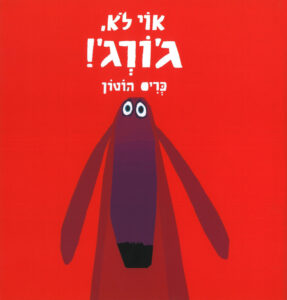
- You may want to read the book over together several times. You could stop on each page and ask your child: “What will George do?”. Your child could repeat the phrase “Oh no, George!” out loud.
- Perhaps you may enjoy using a stuffed animal or making a simple puppet with which to act the story out together. You could walk around the house with it, looking for various “temptations”. What will your stuffed animal or puppet do in each room? How will it behave? Will it manage to restrain itself?
- You may like to leaf through the book together, looking for various items in the illustrations, such as the cake, cat, or flowers. How many times does each of them appear in the story?
- This story describes George’s contention with the things he is not allowed to do. But surely George does some things he is allowed to do as well! You may want to think together of some of the good things George likes to do, and invent your own story, entitled Oh yes, George!
- The book ends with the question: “What will George do?”. Perhaps you might like to tack on a different ending to the story together.
Family reading tips
Adrianus (Hadrian) was a Roman emperor from 117 to 138. The Roman empire thrived under his reign. Adrianus suppressed the Bar Kokhba revolt and enacted regulations against the Jewish people. In the Talmudic legends (Midrashim) he is described as a wise and well-educated emperor, but also as being cruel. He is often cited as the main cause of the destruction of Judea.
Basket full of gifts
Special gifts are passed through generations: a family story, a tasty recipe or a unique holiday tradition. What important gift did you receive from your parents, grandparents or other family members?
Past to future
Take a look around the house: What items can you find that were made in the past? Can you find things that were created recently which can be used by future generations? Maybe a new building being built, a playground, a school or a grove?
Make a family album
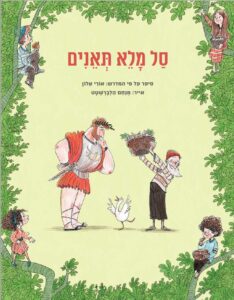
The old man in the story left figs for future generations, and we are left with the story. Why not create a family album with family photos and stories. You can add photos from trips or special occasions, and share stories of things you experienced.
Find more arts and craft projects, songs and other activities on Sifriyat Sifriyat Pijama Library’s Pinterest page.
What pictures tell us:
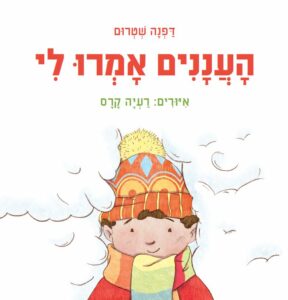
Your child may want to look at the illustrations, and discover details that do not appear in the text. Were they able to find the cat and bird? What do the animals do on each page?
What do we wear in winter?
You could go to your closet, and look for winter clothes – flannel undershirts, gloves, socks, boots, and umbrellas. You may enjoy playing a game together in which one of you closes their eyes, names an item of clothing, and counts to ten, and the other must put on that item of clothing before the time is up. How well did each of you do?
Young weather forecasters
Children can follow the weather from a young age. Before leaving the house, you may want to ask them to look up at the sky, and report – is it sunny or cloudy? Should we wear a coat, or take an umbrella?
Getting our toys dressed for winter
Does your child’s teddy-bear or doll have a coat, hat, or scarf? You may want to look for pieces of fabric, or used baby clothes, and help your toys prepare for a rain-filled winter too.
Drawing winter on the windows
On cold and rainy days, you could draw on the cold vapor that covers your windows. Perhaps you would like to draw clouds, and ask your child to mark the raindrops with their fingertips. You could add a puddle, or even an umbrella. You may want to return to the window an hour later – what happened to the drawing?
Games for rainy days
You may want to take a shoebox and fill it with various small surprises, such as stickers, special crayons, small containers of soap bubble liquid, and so on. Hide the box, and only open it on rainy days!
Do you like the rain and cold?
You can take a walk outside on wintry days too! You may want to look up at the clouds, and discover what they look like. Can you see a person’s face, or an animal? Perhaps you’ll get lucky, and have raindrops fall on your head. You could also talk as you walk, and tell each other what you like most about winter, and what you do not. What does the air smell like? What do the trees look like? Perhaps you would enjoy picking up dry leaves, jumping into puddles, and feeling the wind blow.
Family Activities
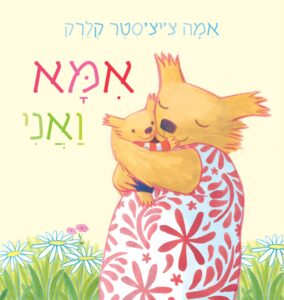
- Duvshan and Mummy do all kinds of things together. You can go over the illustrations in the book with your children and with their help, tell the story in your own words. Invite your children to “read aloud” the story from the point of view of little Duvshan, and you can tell the same story from the perspective of Mummy Bear. At the end, you may ask your children to choose one joint activity that is described in the book, and do it (or a similar activity) together.
- Honoring one’s parents: The story presents a wonderful opportunity to share your own experience with your parents, by recalling ways in which you honor or honored your parents. Be sure to let your children know how they honor you too!
- Duvshan helps Mummy with gardening work and in the kitchen. Your children can also honor you and help out around the house. They can help set the table, match socks from the laundry, or help dust the furniture. For very young children this is a wonderful opportunity to feel needed and learn that they are capable of helping out with household chores.
- Like Duvshan, many children like to prepare little “surprises” for their parents and show their independence. They can get dressed by themselves, wash themselves, pick up and organize their toys. And just like Duvshan’s Mummy, you too can marvel at your children’s desire to help you – and in return prepare a small surprise for them!
- A “patience clock”: We all know how difficult it can be for young children to be patient. Setting an alarm clock or an hourglass can help your child know when the “being patient” time has ended. If you plan what you’ll do together when the time is over, it might help the time pass even quicker.
- Many young children have a hard time thinking up ways of being on their own. For such instances you might want to prepare an “I Can Do It All By Myself” album together with your children, including a collection of drawings that describe ideas for independent activities. Each page can contain a different activity. Your child can color the pictures and you can add short sentences such as “I can draw”, “I can cut”, “I can water plants”, etc. Looking through the album will help the children choose an activity to carry out on their own while they’re waiting for you, and afterwards, just like Mummy Bear, you can say: “Oh, my little one, you are so talented!”
Family Activities
- Notice the fly in the illustrations that accompany the story: It, too, tries to irritate, and usually, it succeeds. Try to tell the story with your children from the fly’s vantage point.
- In order to shake Hillel out of his tranquility the man chose to approach him at a very inconvenient time of day: just before the start of the Sabbath. Are there times when it is not advisable to ask your children questions or to request something of them? Do your children know when it is not advisable to ask you questions?
- You can act out the story with your children. You can wrap the head of “Hillel” with a large towel, and add a tub and bath accessories. The “friend” can look for Hillel, call out to him and make up strange questions of his own. You are invited to photograph your skit and send the pictures to the Sifriyat Pijama website: pj.crunchcart.com/.
- In the story a man approaches Hillel and attempts to provoke him. Coping with provocation is a task required of almost all young children. The story about Hillel may present an opportunity for family discussion on the topic of teasing and provocation, and an invitation for your children to describe how they know when one child is trying to provoke another, and what one can do when this happens.
- You can make your own bubble bath: Take some old soap and shred it with a grater into a bowl. Add warm water and whip it with a mixer until you get thick suds. You can add a few drops of food coloring to the suds. The children will enjoy bathing with the special suds they made with you!
- Hillel was an exemplary figure who knew how to control his anger. What helps us overcome our anger? You can prepare a “Hillel doll” with your children. The children can ask for advice from the doll and tell it what helps them get over their anger. Make the doll from an old sock, on which you can draw a mouth, glue two eyes, and add white hair from cotton wool. You can even make a hat for the doll. Place your hand inside the sock, and have the doll answer the children’s or parents’ questions and make up new stories. This is also an opportunity for you to share with your children ways that help you cope with anger when it arises.
Activities You Can Do at Home
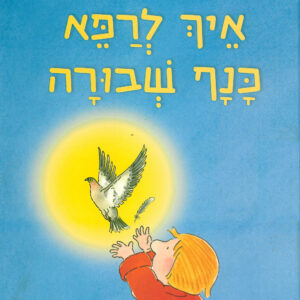
- Your children can “read” the illustrations and tell you the story, using the pictures as a guide. You could ask them: Why do you think the boy is the only one who notices the injured bird?
- Bob Graham added details in his illustrations that do not appear in the text of the story. Try examining the pictures together to find how Bill, and his parents, treat the injured bird. What does each one do in the pictures?
- You might compile a joint list of questions about things you want to know about birds. You can then look up the answers in books or on the Internet, or visit a pet store, an aviary, or a zoo. The people working at these sites will surely be happy to explain to your children what birds eat, how we take care of them, when we need to take them to the vet, and so on.
- Pay special attention to the page in the story where Bill lets the bird go free and fly away. Together with your children, you could imagine how Bill felt as he let the bird go. If the bird could speak, what might she have told her friends once she got better and returned to them? You could even turn this “conversation” between the bird and her friends into a little play, using puppets or stuffed animals.
- How can we help birds? It’s easy to make a bird feeder: take a big empty plastic bottle, rinse it well, and cut a large hole in one side. Devise a way to hang it from a tree branch or deck railing and fill it with cut-up fruit, seeds, and breadcrumbs. You can watch from a distance (quietly!) as the birds come and eat from it.
- It is important to encourage young children to show empathy and compassion for animals—but you should also make clear to them that we don’t always need to inter This is a chance for you to explain to your children that, if they are out walking and see a baby bird or kitten, they shouldn’t touch it as its mother may be nearby and will soon return to take care of it.
Family Activities:
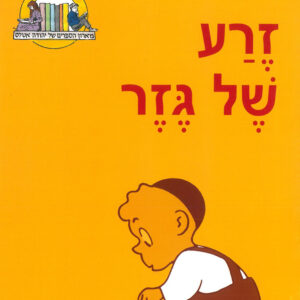
- The adults in the story are doubtful that the carrot will grow. You can discuss this with your children and share your own experiences. You may ask: Why do the adults had trouble believing that the carrot would grow? When you read the story, did your children think the carrot would grow? Did you ever have someone not believe you? How do you feel when others doubt things of which you are certain?
- The boy in the story does not speak, and we can only imagine what he is thinking and feeling as the others express their skepticism. If the boy could talk, how do you think he would respond? Together with your child you can select dolls to represent the boy, his parents and his brother. As you re-read the story, use the dolls to create a dialogue between the boy and his
- At the end of the story, the boy transports the carrot in a wheelbarrow. What do you think happens next? Where is he taking the carrot? How do the others respond when they see the giant carrot, and what does the boy do with it?
- The carrot grows under the ground, and not on the shelves of the grocery store! You can visit the supermarket or neighborhood grocery and take note of the various fruits and vegetables. What grows from a seed, like the carrot? What grows under the soil, and what blossoms on a tree? Which foods can be prepared from each fruit and vegetable, and what do we like in particular?
- Crockett Johnson’s illustrations depict the story that occurs above ground. You can suggest to your children that they draw a parallel story of the carrot, page after page, reflecting the process under the soil. In the end you will have two booklets illustrating the story “The Carrot Seed”: one of the boy and his family, and the other – the story of the
- There are many delicious foods that can be prepared with carrots: carrot juice, carrot soup, carrot salad, carrot bread and more! Here is an easy recipe for sweet and delicious carrot salad: Ask your children to help peel and grate a few carrots into a bowl. Add a bit of lemon juice, sugar and a handful of raisins and mix together. You can serve your carrot salad to the whole family. Bon Appetite!
- “The Carrot Seed” demonstrates the great amount of patience and perseverance needed to grow vegetables. These traits are necessary to achieve many goals in life. You can share a personal story with your child of something you achieved with great effort and after a long wait, and tell them about the sense of satisfaction this
Family Activities
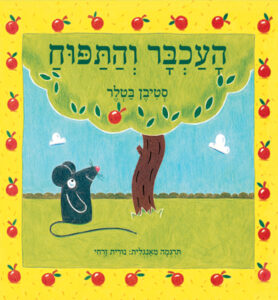
- You may want to look through the book and enjoy the lovely illustrations. Can you spot the apple on every page? Some of the objects and animals remain constant, while others change position. Which are constant? Which are in motion?
- Have you noticed that the mouse is smiling almost throughout the book? How do you think it feels while waiting patiently?
- You may want to take puppets or stuffed animals to represent the characters in the story, and act it out to your family and friends.
- We all lose our patience at times, waiting on line at the cashier, or getting stuck in traffic. You may like to share an experience with your child in which you finally made it after having waited for something for a long time. What ‘gift’ did you get at the end of the long wait?
- Many children find it hard to wait for their parent to finish what they are doing, or for their turn to be on the computer. Perhaps you could mark the time left to wait on an analog clock. Children are often more patient when they know when their “patience time” will be over.
How about putting on your aprons and making apple confit?
Ingredients:
1 kg of green apples
1/2 kg of sugar
1 cinnamon stick
1 lemon
Peel the apples with a peeler, take out the cores and dice them. Cook the apples, sugar and cinnamon stick in a pot on a small burner for one hour (you must be patient!). Once cooked, add some squeezed lemon to your confit.
Be-teavon! Bon Appetit!
Family Activities
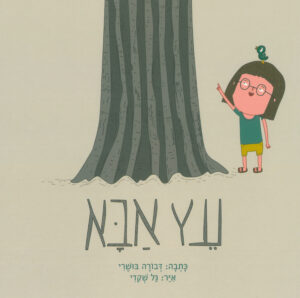
- Spend some time together examining Gad Shkedi’s illustrations. Notice the many different animals featured in the illustrations, alongside the trees. Compare the various trees: how many trees are mentioned in the story? Which are fruit trees, and which don’t bear any fruit? Did you notice that the end of the story is toldusing only illustrations? Tell the story in your own words.
- Do you perhaps have a favorite tree in your own yard, or near your home? Does your favorite tree have a “story”? You could take your children on a “tree tour” in your neighborhood. Can you spot any of the trees that appear in the story? Can you identify other types of trees? Compare the various trees you find: what is the benefit of each kind? Which trees are decorative, and which bear fruit? How do we know if a tree is young or old? You might pack this book, a blanket, and a light picnic, and read the story together in some lovely spot outdoors, under a tree. Then (if local environmental regulations allow) you could gather fallen pine-cones, bits of tree bark, leaves, etc., and use them to create a work of art when you get back home.
- In the story, Hannah wants to climb a tree “now,” and her father wants to rest “now.” For many families, this situation is all too familiar. How do you respond when there are conflicting desires in your family? You might discuss things we want immediately vs. things for which we must wait, along with the need to consider others’ wishes and to be patient.
- Trees provide us with an abundance of good things. You could go from room to room in your home and try to identify everything that comes from trees, for example: furniture made out of varying kinds of wood, olive oil that we use in cooking, maple syrup from the sap of the maple tree, wine and raisins harvested from grape vines, and so on.
- Do you know any other stories about trees (for example: the traditional tale of “Honi the Circle-Maker and the Carob Tree,” featured below; the poem “The Tree Man” by Shlomit Cohen-Assif; “Mr. Mini and the Apple Tree” by Orit Raz, or “What Do We Need For…” by Gianni Rodari)? Look for these books at home or at the library, and read them together.
- In Jewish tradition, it is customary to plant a tree to mark important milestones in one’s life. How does your family celebrate or remember important occasions and people? Does your family plant trees to mark a birth and/or other major occasions in your lives?
- Various Jewish source texts compare humans to trees. Talk with your children about your family’s roots, about the” seeds” you are planting for the future, about the different branches of your family, and so on. You might also draw your own family tree, from the grandparents’ generation down to your children’s generation.
- Just like trees, we humans also need a firm foundation in order to grow and flourish. After reading the story, you might have a conversation with your children about the things that matter most to you —your values, deeds, traditions, and beliefs—that strengthen the “foundation” of your family’s tree and support your collective growth.
Have fun reading and discussing this book!
Every loaf starts with a single grain
“Every loaf starts with a single grain”: You may want to ask your child how “bread is brought out of the ground”, which forces of nature helped the wheat and other ingredients grow, and what one needs in order to turn wheat into bread.
ask your child to think of five things they like to eat
You could ask your child to think of five things they like to eat. Do they know what they are made of, and how they are prepared? You may want to make a “true meal” together, one that you make on your own from start to finish, including serving and clearing the table. Did you also feel satisfied with your effort and the entire process?
The princess did not want to disappoint her father
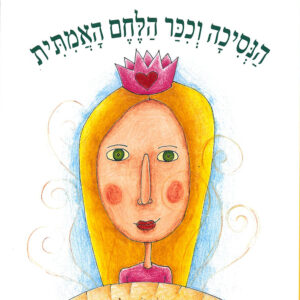
The princess did not want to disappoint her father, but hoped she could please him without making much of an effort. She ultimately overcame the difficulties she had encountered, and completed the task well. You may want to discuss the following with your child: Why do you think the king was unhappy with the ready-made loaves of bread brought to him by the princess? What is so special about the “true” loaf of bread? Have you ever been in a situation where you achieved something that was important to you after working hard, making a tremendous effort, or repeated attempts? You may want to share this experience and subsequent feelings with your child.
King Baguette looked at his princess'
King Baguette looked at his princess’ hands to determine whether she had brought him the true loaf of bread. You could also look at your child’s hands, and try to guess what they had done today. Children’s hands resemble their parents’, but are also different. You may want to compare your hands, and notice the lines “drawn” on them. Do you have the same lines?
At the end of the story
At the end of the story, the princess learned to appreciate the farmers’ hard work, and their contribution to her life, and even learned to thank them. Together with your child, you could think of the people around you who work hard to make everyone’s lives easier. You may want to try and count all the people who have helped us throughout the day (such as the people who clean the streets, security officers, bus drivers, those in building maintenance, etc.).
playing the "thank you game
You might enjoy playing the “thank you game”. A family member starts by saying “I’d like to thank…” and tells of a good thing another has done for them. It could be anything, great or small, whether ongoing or a single incident. The next begins their sentence the same way, and ends it as they wish, and so on. You could have a thank you round at the dinner table, or before bedtime.
During the journey
During the journey, the princess makes a loaf of bread, as well as a new friend! You may want to discuss the friendship between Fire and the princess together with your child, and compare it to the princess’ relationships with other characters in the book. Perhaps you’d enjoy telling your child about your friends, and share experiences with each other.
A Ciabatta Rolls Recipe
Ingredients
4 cups of flour
40g of yeast
1 tsp of sugar
1.5 tsp of salt
1.5 cups of lukewarm water
0.25 cup of olive oil
Method
- Stir the yeast in the lukewarm water until it dissolves, add the sugar, and let the mixture rise.
- Place the flour and fermented yeast in a bowl, add the salt and olive oil, and knead into dough.
- Cover and let the dough rise for approximately two hours.
- Form rolls and place on an oven tray covered with parchment paper or corn flour (to keep them from sticking). Let them rise for another thirty minutes.
- Bake in the oven for 25 to 30 minutes, at 220 degrees.
Bon Appétit!
Next in Line
The Harmonica
Bella and Zouzou
The Long Road
The Gift
Not at the Exact Same Time
Oh No, George!
A Basket Full of Figs
The Clouds Told Me
Mummy and Me
The Patience of Hillel the Elder
How to Heal a Broken Wing
The Carrot Seed
The Mouse and the Apple
The Daddy Tree
The Princess and the True Loaf of Bread