כִּשּׁוּרֵי חַיִּים
עזרה לזולת
טיפוח ערך העזרה לזולת מוביל אותנו לפתח קשרים טובים יותר עם הסביבה ועם הקהילה, ומעצים את תחושת המשמעות, הסיפוק והשייכות. סיפורים על עזרה לזולת, פותחים דלת להבנה חברתית, להתחשבות באחרים ולנתינה המרחיבה את הלב.
סְּפָרִים
Book-Related Family Activities
Family reading advice
A demonstration of the characters enhances the reading experience, peaks toddlers’ curiosity, and helps them focus on the story. You can add a suitable voice or hand gesture for each character, and repeat it each time it appears, for instance: arm-flailing to denote the bird, feelers to denote the ladybug, or making a fist to denote the snail’s shell.
Rinat Hoffer illustrated and wrote many Israeli children’s classics, including Hannan the Gardener [Hanan HaGanan] and Cloud on a Stick [Anan Al Makel]. Her unique amusing style perfectly incorporates rich language, imaginativeness, and rhymes into her texts and illustrations. For her prolific work, Hoffer has won many awards.
Encountering animals on our day out
You can discuss the animals you encounter on your way home, on trips, or in your general vicinity. Have you encountered one of the animals mentioned in the book? What other animals have you encountered? Where does each of these animals live?
QR code
Ayelet’s Day Out features on Didi and Yarden’s Sifriyat Pijama podcast too. Scan the code and enjoy listening to
Illustrated clues
The appearance of each animal in the book is preceded by textual and Illustrated clues. Try to guess which animal is about to appear at each stage. You can also play a guessing game – each family member in turn can mimic one of the animals in the book using voices and movements, while the other players try to guess which one it is.
A day out at home
You can take animals of various sizes, and try to carry them all just like Ayelet while taking a walk around the house. Which one fits in your pocket? Which one can stand on your head? Perhaps you can find some other way that Ayelet has not tried yet.
A piece of advice when reading to toddlers
We recommend reading the book alone first, before reading it as a family. Prior familiarity with the book helps to read it seamlessly later, at a pace suitable for toddlers. Enjoy reading this book!
A discussion on who can help
We can all help others, even toddlers. You may want to ask your toddlers how they can help others, or tell them that they are helping when it happens: “Remember when you helped me set the table?” “Look at you helping me put away the toys!”
Listening to the story
Would you like to listen to the book Noni and his Mom Walk Homefrom Kindergarten? Please scan the QR code to find a recording of this book. You could listen to it while traveling, playing, or sitting together while turning the pages of the book.
A story in illustrations
The illustrations are part of the story, and using them, toddlers identify and recognize the plot and some of its details. You may enjoy looking at the illustrations together, and searching for the items that Nomi gives his mother: ‘Where do you see an illustration of a bag?’ and ‘Where can you find an illustration of a coat?’
Playing a game of ‘An items tower’
Inspired by the items piling on top of mom in this book, you may want to take turns building a tower out of various items: Very carefully, one on top of the other, you can place building blocks, toys, hats, bags, and anything else you might want to add.
A discussion on fear and encouragement
As our children grow up, they experience various fears, but discussing them helps them to cope with them, while instilling in them a sense of security. Together you can choose to discuss what they find scary, and what helps them overcome their fears.
Listening to a story
Would you like to hear Maayan and listen to everyone cheering her on? Scan the code and listen to the story together.
הַסִּפּוּר לְהַאֲזָנָה – עַכְשָׁו בָּפּוֹדְקַאסְט שֶׁל סִפְרִיַּת פִּיגָ’מָה!
בגן At the playground
After reading this book, you may enjoy going to the playground together, and trying out the equipment together as well as separately. Perhaps you would like to invent a special course from the slide to the swing and so on that would bring joy to all of you.
Family encouragement
“Hooray, Maayan!” Everyone calls out when Maayan is scared. How do you cheer one another on? Perhaps you could come up with family words of encouragement, find a motivating song, or a chant you all agree on that cheers you up and gives you strength.
A discussion on what has been lost
Have you ever lost anything you found important? How did you feel and what did you do? Perhaps you’ve found someone else’s lost item… This book invites children as well as parents to share their childhood experiences of losing and finding lost items.
A video about a lost and found stand
Shabi and Uzza from the Israeli children’s television show Parpar Nechmad are also returning lost items to their owners. Scan the code to watch the video.
We can help too!
What can toddlers do at home? Many things! They can put glasses on the dining table, sweep with a small broom, feed the pets, and… offer cookies. It is worthwhile to talk and show what the toddler is helping with at home, and what else they want and can participate in.
Who is in the family?
The child in the story hands out cookies to other family members: grandmother, uncle, sister, cousin. Who are your family members? You can talk about family members, say their names and thier roles, such as: “Grandma Braha,” “Uncle Baruch,” use family photo, and use family photos.
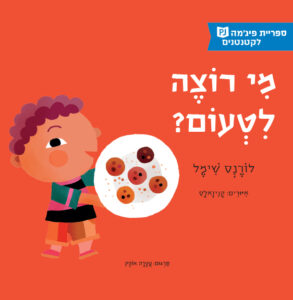
Let’s make some refreshments together!
You too can prepare refreshments together, such as chocolate balls, a plate of fruit, or a sliced cucumber. You can prepare “pretend” refreshments using play dough and offer to the dolls at home.
Game: Grandma had cookies…
Do you know the game “Grandma made porridge”? “The child had cookies” can be played in a similar way, in which the toddler opens her, or his hand, and the parent begins to count: “The little boy/girl had cookies and gave one to Grandma (holding the thumb), and one to Uncle (holding the forefinger) etc. And so you count the fingers by allocating a family member to each one. Who will you give the last cookie to?
Discussion – A story worth gold
The brave stork’s reward was… a story worth gold. Do you have such a family story? You could tell it to your children, and search for other family stories by asking your grandparents and other family members.
What did the stork say?
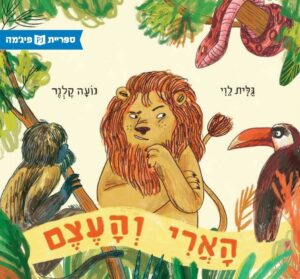
Imagine you were the stork – what would your thoughts be? What would you have said to the lion, and how would you have told the story? Try to tell it from the stork’s perspective. You may also enjoy drawing the story, or making costumes with which to act the story out. How about taking photos of your short play, and printing them out to create a book worth gold.
Brave as a stork or hardworking as an ant?
Animals in fables have human characteristics: the stork is brave, the lion is strong, and the ant is hardworking. Which animal best symbolizes you? Try to think and discover which animal is most similar to you, and write down sentences that characterize you, such as: “I’m as smart as a …”, “I solve problems like a …”, or “I love singing like a …”
A feast
Is the meal prepared by the lion appetizing? It’s time for a feast. You may want to prepare your family’s favorite food, draw animal characters on paper napkins, make a crown for each person sitting at the table, and eat together.
A childhood song – The Little Bunny [HaShafan HaKatan]
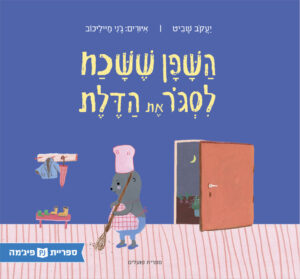
This book was inspired by the well-known children’s song The Little Bunny [HaShafan HaKatan] by Binyamin Caspi. You may want to ask your child which children’s song this story reminds them of, and then sing and dance together.
Do you have any other favorite children’s songs? You could create a family songbook, and select one to sing together from time to time. You too may be inspired to write a story about it.
Where are you in this story?
Reading both words and illustrations – You may enjoy taking turns reading this book to one another: you can read the words to your child, and then have them tell you the story using the illustrations.
Our table – draw an empty table and choose who to invite over: it can be family and friends, real or imaginary, favorite toys, or characters in books. What would you serve your guests? What do you think would happen when they all meet one another?
Inviting people round
Having a friend visit us is exciting. You may want to prepare for the visit together and discuss how to welcome this friend, how to pass the time together when they get here, and what to do if each of you prefers to do something else.
Kind words in our family
The bunny’s friends thank him, and he uses kind words when speaking to them, like “please”, “so glad you came over”, and “bon appetit!”. When you sit together for a family meal, you could take turns saying kind words to each other: the first begins by giving the one on their right a compliment; the second compliments the third, and so on. The compliment can be about something nice they had done, a good quality they have, having behaved pleasantly, or any other positive thing you can think of. If you look for it, you’ll be sure to find it…
What makes one a hero?
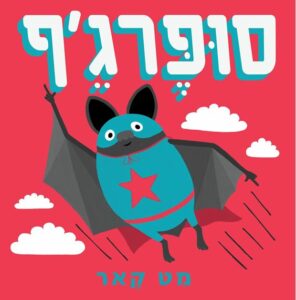
What makes one a hero? You may want to stop reading when Pat realizes he has no special powers. You could discuss Pat’s feelings with your child – what would they have told him right now? What could have comforted him? You may also wish to ask: Is not being a superhero that terrible? What sort of qualities might make one a hero? And who are your heroes?
Uniting and distinguishing:
Uniting and distinguishing: Which qualities do members of your family share, and which make each of you special? What distinguishes your family from others? You could discuss this with your child, and ask them to draw two pictures: a family portrait highlighting common traits, and another emphasizing each family member’s uniqueness.
Make believe:
Make believe: Many children enjoy playing with superhero action figures, and pretending that they too have special powers. You may want to join in on their game, taking an interest in the superpowers possessed by your child’s favorite characters, and letting your imagination run wild. If you also spent time playing superheroes as children, or reading comic books, you could tell your child about your childhood toys, books, and movies, and compare them with today’s superheroes.
Walking in the dark
Walking in the dark: Pat can find his way in the dark. Can you? You may want to turn off all the lights, and walk from one room to the other holding hands. Feel your way around, and rely on your knowledge of your surroundings. After several times, you could allow your child to lead you.
Interesting animals
Interesting animals: You may enjoy reading the fun facts about bats printed on the last page of the book together. Did your child know bats shared these characteristics? You may want to visit a petting zoo, zoo or pet store, look for information online or at the library, and prepare a similar page about a different animal.
Activities You Can Do at Home
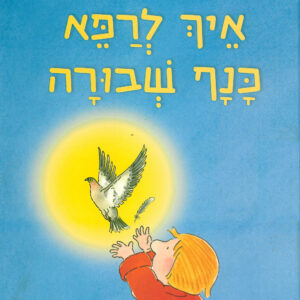
- Your children can “read” the illustrations and tell you the story, using the pictures as a guide. You could ask them: Why do you think the boy is the only one who notices the injured bird?
- Bob Graham added details in his illustrations that do not appear in the text of the story. Try examining the pictures together to find how Bill, and his parents, treat the injured bird. What does each one do in the pictures?
- You might compile a joint list of questions about things you want to know about birds. You can then look up the answers in books or on the Internet, or visit a pet store, an aviary, or a zoo. The people working at these sites will surely be happy to explain to your children what birds eat, how we take care of them, when we need to take them to the vet, and so on.
- Pay special attention to the page in the story where Bill lets the bird go free and fly away. Together with your children, you could imagine how Bill felt as he let the bird go. If the bird could speak, what might she have told her friends once she got better and returned to them? You could even turn this “conversation” between the bird and her friends into a little play, using puppets or stuffed animals.
- How can we help birds? It’s easy to make a bird feeder: take a big empty plastic bottle, rinse it well, and cut a large hole in one side. Devise a way to hang it from a tree branch or deck railing and fill it with cut-up fruit, seeds, and breadcrumbs. You can watch from a distance (quietly!) as the birds come and eat from it.
- It is important to encourage young children to show empathy and compassion for animals—but you should also make clear to them that we don’t always need to inter This is a chance for you to explain to your children that, if they are out walking and see a baby bird or kitten, they shouldn’t touch it as its mother may be nearby and will soon return to take care of it.
Suggested Family Activities
- You can flip through the illustrations with your children and identify the work that the brothers do together. In every home there are tasks that invite collaboration. Which household chores are easier and more pleasant to carry out together?
- There are many verbs that describe the work of the farmer. Do your children know them? You can act out the different actions using pantomime.
- Each of the brothers considers the other’s needs and gives up his share without being asked. Together with your children, you can make an illustrated list of examples where members of your family share and are considerate to one another.
- Like the brothers in the story, you too can prepare a surprise for your children in the middle of the night. Following your example, your children may surprise you too!
- The brothers in the story understand that fair does not always mean equal. How true this is in family life as well! You can demonstrate this principle using clothes: Gather up different pieces of clothing belonging to the members of the family and ask your children to sort them. Would it be fair to give Mommy’s blouse to a child, or Daddy’s slacks to a baby? This can lead into a discussion of the needs of members of your family, and to your assurance that their needs are met, even if they don’t always get exactly the same thing as their siblings.
- “Everyone has a city named Jerusalem” (Natan Yonatan): After reading together the tale of the Temple, you can show your children pictures of Jerusalem (or visit!), sing songs about Jerusalem, and relay to your children stories about “your Jerusalem”.
Family Activities:
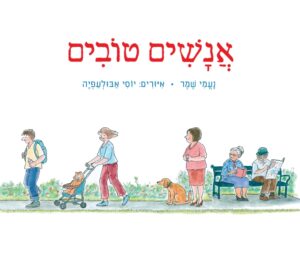
Open your eyes and look around… Good people can be found everywhere, but we don’t always notice them. You can discuss with your children who the “good people” are in your lives and what makes them good. You might want to prepare a booklet and ask your children to draw the good people who surround you: family, friends, neighbors, teachers etc.
Invite your children to take a close look at Yossi Abulafiya’s illustrations of the song. How many “good people” can you find on each page? What are they doing?
Are you acquainted with other songs by Naomi Shemer? Do your children know them as well? This is an opportunity for you to teach your children a new song. Together you can prepare a song book of songs you love, and organize a sing-along with family and friends.
You can create your own special rose-colored binoculars, through which the world looks positive and rosy. Take two empty toilet paper rolls,you’re your child to decorate them and attach them to one another with glue. At one end of the rolls attach pink-colored cellophane wrap, and take a good look around you!
Does your child know the way to kindergarten? Together you can draw a map of the road from your home to the classroom, adding images of “good people” along the way.
You and your children can take a walk in the neighborhood and be “good people” for others! Before setting out, try to think of things good people would do (for example, watering a dried-up plant, feeding crumbs to hungry birds, greeting people with a smile and a warm “shalom!”…)
Who are the “good people” you met today? You may want to initiate a family bedtime tradition of reflecting and remembering all the good people and things you encountered during the day. Be sure to mention ways in which you were “good people” for others as well!
A Good Eye
2000 years ago Rabbi Yochanan Ben Zakkai asked his pupils to suggest what aids a person in walking the proper, righteous path through life. His pupils looked around and saw good and righteous people of different sorts:
[Rabbi Yochanan] said to them: Go and see which is the best trait for a person to acquire. Said Rabbi Eliezer: A good eye. Said Rabbi Joshua: A good friend. Said Rabbi Yossei: A good neighbor. Said Rabbi Shimon: To see what is born [out of ones actions]. Said Rabbi Elazar: A good heart.
Rabbi Eliezer said that the good path is in the eye of the beholder. One who has a good eye sees the good and righteous in others, and acts so himself. Rabbi Joshua and Rabbi Yossei stressed the importance of those who share our path – friends and neighbors. Rabbi Shimon recommended examining one’s actions in light of their future consequences, and Rabbi Elazar said that it all begins with what is in one’s heart.
Naomi Shemer suggests that we open our eyes and see those who share the righteous path, in order to learn from them so that we too can be “good people” on the positive, righteous and pleasant path of life.
Family Activities
Colored words are woven into the text of the story. Show your child the colored words and try to guess why the designer chose these colors. Who do the pink words describe? Which colors depict the words for “cake” and “strawberries”? Ask your child to help “read” the story with you by joining in with the colored words that they can identify.
“How good and pleasant it is for brethren to dwell together” – Sometimes, sitting alongside strangers (on the bus, at the playground, on line at the supermarket) can turn into a pleasant example of “brethren dwelling together”. You can think back to situations when you met new people in such a setting, who helped you pass the time. For instance, perhaps someone helped you lower the stroller down a flight of stairs or offered your child a snack while waiting for the doctor. Perhaps there were children who shared the swings at the playground. All these help illustrate the positive side of “brethren dwelling together”.
The two grandmothers both love Avigail. You might suggest that your child draw a picture of Avigail, surrounded by all those who love her. They can then draw a picture of themselves and all those who love them!
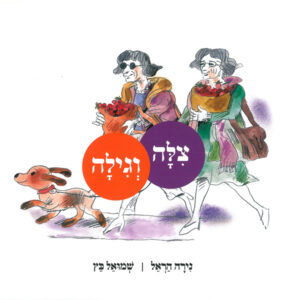
Tsila and Gila’s car goes through tunnels and over bridges. Together with your child, you can create a make-believe track for the car within your home, “set out for your journey” and stop to pick up passengers along the side of the road who need help. Remember: In Tsila and Gila’s car, only the cake is not fastened in with a seat belt. Be sure all your passengers are strapped in when riding in the car!
Does your child like to travel? Ask your child about journeys he or she has taken, real or imagined: Where did they go, who joined them, what happened along the way? We invite you to send your stories and drawings to the Sifriyat Pijama website: www.pjisrael.org.
Did you ever set out for a journey, get lost, and find yourselves in a new and surprising place? This is a good opportunity to tell your children about your adventure. Be sure to describe about any disappointment or frustration your felt when you lost your way, and then the positive experience you had at the end.
“This too is for the best”: A sudden halt brings an end to the comfortable trip. All the drivers and passengers are disappointed with the traffic jam. If you go through the book, you can discover unpleasant situations that turned into happy occurrences.
Not everyone likes changes in plans. Do you have a special way to help yourselves and your child to accept changes? “Chutes and Ladders” is a board game in which surprises can cause set-backs (when going down a chute), but also be pleasing (when climbing up a ladder). You can create your own game “On the way to the birthday party”, along the lines of Chutes and Ladders. The chutes will appear whenever there is a delay in the journey, and the ladders will represent the happy surprises on the way.
One way to provide encouragement when things doing go as expected is to make a “This Too Is For The Best” sign. You can write the proverb and invite your child to decorate it. Be sure to hang the sign in a visible spot in the house, to remind you that even unexpected things can turn out for the best.
The cute puppy found a welcoming home, and Avigail received a perky gift for her birthday! You can make finger puppets of Avigail and the dog: Draw or copy the characters from the book onto a piece of paper, and attach them to your fingers by stapling together the edges of the reverse side of the paper. The puppy can share his adventures in the car with Avigail, and she can tell him how she passed the time while waiting for her grandmothers to arrive.
All’s well that ends well: The granddaughter and her two grandmothers celebrate her birthday with tea and cake (and the puppy enjoys himself too, in his own way). You too can make a small tea party and invite over friends who want to share in experiencing “how good and pleasant it is for brethren to dwell together”. Be sure to sing together in Hebrew “Hineh ma tov u-ma na’im shevet achim gam yachad”.
Family activities:
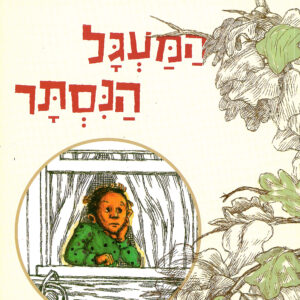
Leaf through the pages with your child and look for instances of giving in the book. Who gives openly and who gives in secret? The title of the Hebrew version of the story is “The Hidden Circle”. Why do you think the author chose this title?
Draw your child’s attention to the items on each page that are filled in with color. Why do you think the illustrator chose to highlight these pictures?
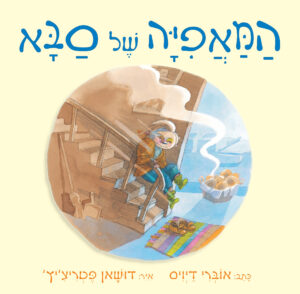
The facial expressions depicted in the illustrations convey the characters’ emotions (e.g. – the face of the child watching the old man sleeping, or the face of the old man eating the muffin). How can we “read” others’ feelings by observing their facial expressions?
You can play the game “Identify the Feeling” with your child. Make an expression that conveys a certain emotion and let your child guess which emotion that is. Then change roles and try guessing the feelings your child is conveying.
Look at the illustration of the old man crumbling a bit of his muffin for the birds. In the Talmud the rabbinical sages say: “Even a poor man who himself survives on charity should give charity” (Gittin, pg. 7b). What is the logic of this commandment?
“A Circle of Friends” is a story about everyday actions that are familiar to all of us. In the book of Deuteronomy (chapter 30, verses 10-14) it is written: “This mitzvah… is not in the heavens… or across the ocean… Rather (it) is very, very close to you, upon your lips and in your heart to perform it”.
In other words, good deeds are within all of our reach. Even young children can perform mitzvot, or good deeds. Take the time to think together with your children about some of the good deeds they have done (and things they would like others to do for them), for example: sharing toys with a friend, helping their siblings or friends at school…
At the end of the book the boy receives a surprising gift that brings him joy. Draw a big, yellow sunflower together. On each petal draw a gift that appears in the story. In your opinion, does the cycle of giving end with the blossoming sunflower outside the boy’s window? Invent together with your child a continuation to the story and illustrate it.
Family Activities:
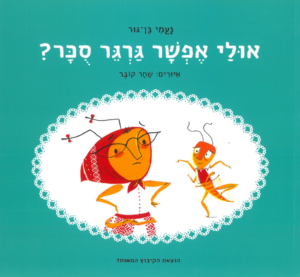
- You might ask your children to flip through the pages and “read” the pictures to you in their own words. See if together you can discover all the things the illustrator added to the written text. Did you or your children find anything funny? Were there objects that your children did not recognize? You can ask them to point out the pictures that show the ant and the cricket helping one another. Then you can draw your own picture of the ant and the cricket, as you imagine them. Does your ant wear eyeglasses too?
- Go to the ant… consider her ways and be wise (Proverbs 6,6): Discuss with your children the characteristics of the ant and the cricket in the story. The ant is industrious and plans ahead, while the cricket sings and dances. After reading the story, you can talk about the different traits and tendencies of everyone in your family and note the distinct contribution of each member.
- Who are your neighbors? Do you help one another? After reading the story, you might think of a small act of kindness that you and your children can do for one of your neighbors. How does it make you feel? Have you, like the ant, ever felt that there are times when “it’s even better to give than to receive”?
- Are you acquainted with Aesop’s fable about the ant and the grasshopper? In that version, the ant refuses the grasshopper’s request for food. You can share the fable with your children and compare it with this story. Do you like one version more than the other? Why?
- “What goes around, comes around”: Sometimes children feel that family life is not fair, when they are asked to help out and their siblings are not. You can discuss how the ant responded to the cricket’s repeated requests for ingredients, and ask them how they think she felt after working hard and saving up all week. It is important to point out that in the end, the ant benefited by helping the cricket. This is often the case in families – there are many opportunities to help others and to be helped, each one according to his or her ability and to the circumstances.
- You too can bake a cake for Shabbat! It is fun to work together in the kitchen, and even more fun to share what you made with neighbors and family! You might want to invite some neighbors or friends over to eat your cake and sing songs with you, just like the ant and the cricket in the story.
Recipe for Orange Cake:
Ingredients:
150 grams butter or margarine
1 cup sugar
4 eggs, lightly beaten
1 tsp vanilla
Grated rind of two oranges
1 cup squeezed orange juice
2 1/2 cups flour
3 tsp baking powder
Powdered sugar for decoration
- Beat together the butter and sugar until smooth and fluffy.
- Add the beaten eggs, vanilla and orange rind and continue mixing.
- Add, alternating liquids with solids, the orange juice, flour and baking powder until smooth.
- Pour the batter into a lightly-greased cake pan and bake at low-medium heat (170 degrees) for 35-45 minutes.
- When completely cool, dust the cake with powdered sugar.
Bon appetite and shabbat shalom!
The Game of Thanks
The Game of Thanks: One player begins a sentence with the words, “I want to say thank you for…”, and tells about something good in his or her life. It may be something that has happened to them, or anything – small or big – that he or she has seen, heard, tasted or smelt. The next player completes the sentence as he or she wishes, and so on. The whole family can play this game at dinner or at bed-time.
Gratitude can be expressed through songs!
Gratitude can be expressed through songs! Sing together songs of thanks that you know, for example: Toda (by Uzi Hitman), Elohim Natan Lecha Bematana (composed by Eitan Masori), Hallujah (preformed by Gali Atari.
Many people help us every day
Many people help us every day: The guard at the entrance to the shopping mall, the cashier at the supermarket, housekeepers, etc. Closer to the children’s lives there are neighbors who play with us in the park, our relatives, kindergarten teachers, and more. Sometimes just saying “thank you” is enough, and sometimes people would enjoy receiving a letter or a drawing. Think of a person you would like to thank. Use the letter or a drawing to describe the good times you have had with this person, times when they helped you, or simply the happiness that they bring to your life.
How does one thank God?
How does one thank God? This question bothers Benny. He chooses to thank God in the synagogue, because he believes it is there that most people talk with God. Like Benny, many young children ask big questions: Does God exist? Where does he live? Will he hear me if I speak to him? Discuss your beliefs with your child.
All’s well that ends well!
All’s well that ends well! At the end of the story, Benny is disappointed to discover that it was the poor man, and not God, who ate the bagels. But Grandfather explains that thanks to Benny, “the world has become a better place… and what better thanks than that can God receive?” Discuss with your child the story’s surprising ending and Grandfather’s words. How can we understand the connection between Benny’s good deed and thanking God? Together with your child, try to remember a time when they did a good deed and helped someone. Link this incident to the story, and think about how your child’s good deed also contributed to making the world a better place.
Bagel-shaped Buns Recipe
Bake “if only we had…” bagel buns together.
This is how you play: “Let’s make bagels! If only we had flour… we would have wonderful bagels”. The child brings the flour and you thank him or her happily, then continue by saying: “If only we had sugar…” and so on. Accept every ingredient (flour, sugar, oil, etc.) into your bowl with happiness and thanks. Bake the buns and give them to people you would like to thank or please.
Ingredients:
2 cups of flour 2 spoons of sugar
1 teaspoon of quick-rising yeast 1 teaspoon of salt
1 cup of water 1 ½ spoons of oil
Instructions:
Mix all the ingredients together until a ball of soft dough is formed. If necessary, add a bit of flour. Set the dough aside and let it rise. Once the dough has doubled in volume, divide it into smaller portions, and form bagel-shaped buns. Brush the buns with an egg, and scatter sesame seeds on top. Let the buns rise again. Bake at 190°c degrees, until golden.
Bon Appétit!
Family Activity
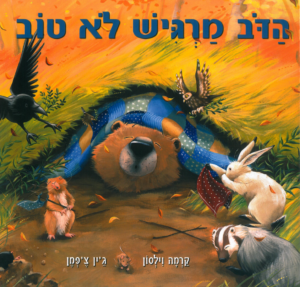
- Bear’s friends try to cheer him up and make him happy. Each one of them does their best. But how do they do it? Pick one animal and focus on its actions throughout the book. What kind of help does this animal give Bear?
- Have you ever visited a sick friend or relative? Did anyone ever visit you when you were not feeling well? How can we cheer up our kindergarten friends when they are sick?
- The badger gives Bear a herbal tea to drink, made from the medicinal herbs picked by Bear’s friends. You can also make a delicious, warm, herbal tea for your family: Put some herbs like mint (nana), rosemary, lemon verbena, or sage in a teapot. Add four cups of hot water and some honey. Pour a cup of tea for every family member and decorate it with a lemon slice.
- Play “make believe sick”: practice the mitzvah of visiting the sick with your family. Let your child take care of you and help you relax. Tell them what helps you when you’re not feeling well. This is a golden opportunity to remind your children that they have the power to heal others!
- At the end of the story, Bear gets better, and finds out that the friends who helped him recover are all sick! How does Bear “know” to take care of his friends, and how does he manage to take care of so many friends at once? Using stuffed animals or dolls, make a small play showing how Bear takes care of his friends.
“You must exercise great caution concerning your lives” Venishmartem meod lenafshotechem
Sickness is a part of life. We get better thanks to the treatment we receive, as well as thanks to our body, which manages to overcome the illness. In the book of Deuteronomy (Devarim), chapter 4 verse 15, it is written: “You must exercise great caution concerning your lives” (venishmartem meod lenafshotechem). This means that we have the responsibility to take care of our body and maintain a healthy lifestyle.
- How do you take care of your body? Discuss: How do you keep the body clean? What kind of food is healthy? How can we use our body to make it stronger? How do we rest to regain energy?
- Bear’s illness is contagious. Try to think how we can be careful to avoid getting infected (for example: washing our hands, not coming to kindergarten when we are sick). What more can we do?
"Oh No!"
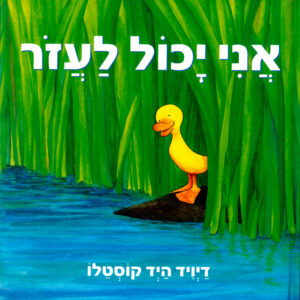
David Hyde Costello chose to describe the distress of the animals in the pictures. You may want to look at the illustrations together, and ask your child to explain the various problems in their own words. You could read the story together, and take turns to say “Oh No!” and explain why the animal is distressed. Each time the other can answer “I can help!” and describe the solution. Don’t forget to thank each other every time!
Acting the Story Out
You can choose puppets or stuffed animals with your child, and use them to act out the story. You may also want to make the animal characters yourselves out of card or cardboard, attach them to popsicle sticks, and put on a play.
A Giving Circle
Your children will probably be delighted to discover that the little duckling who was lost at the beginning of the book was able to help the mighty big elephant! No one is too little to help, and sometimes, the smaller creatures actually have an advantage. You may want to remember a time when your young child helped solve a grown-up’s problem (like getting something that fell behind the sofa, or under the table, out).
Anyone can Help
Every day, all of us, no matter how old we are, could use some help, and also help others. You may want to think together of all the people who help you in your everyday life – siblings, friends, the kindergarten staff, and neighbors. Perhaps you would enjoy establishing a family tradition whereby, at the dinner table, or before bedtime, you each recall the help you extended and received that day.
What Happens at the End of the Story?
You may want to take a look at the last illustration in the book, and try to guess what each animal does in order to help the lost duckling.
Ayelet’s Day Out
Noni and his Mom Walk Home from Kindergarten
Up and Over
Found
Who wants to taste?
The Lion and the Bone
The Bunny who Forgot to Close the Door
Superbat
How to Heal a Broken Wing
The Site of the Temple
Good People
Tsila and Gila
A Circle of Friends
Can you Spare a Spot of Sugar
Bagels From Benny
Bear Feels Sick
I Can Help