סְּפָרִים
Book-Related Family Activities
Thinking Like Micha Ullman
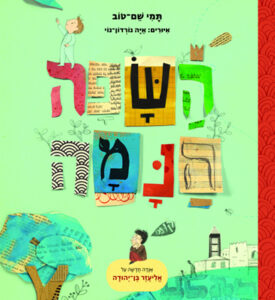
You can ask your children to spread their fingers and look through the spaces between them and then ask them: What can you see in the space between your fingers? Can you imagine that what you see is different than what is actually there? Can you give an example? Have you ever looked at anything – such as the various shapes of clouds, holes in the ground or puddles – and turned it into something else in your mind?
A Game of Lights and Shadows
You can also create lights and shadows. Look for a sun-filled spot, and place various objects there, such as leaves or small toys. You can draw the outlines of their shadows and draw something inside them, or turn their shadows into various things. The shadow of a leaf, for instance, can become a drawing of a dragon.
“It All Begins with a Few Blocks”
Encouraging creative thinking: You can pick up a few stones together, look at them, and imagine what they can become. Next, you can take turns arranging them in any way you like, and use them to create something new
What Things can Become
This book can inspire you to look into the fundamentals that make up the things you know. Pick any object, for instance – a shirt, and research it: What is it made of? (Fabric) And what is that fabric made of? (Cotton), to discover that a cotton wad can be turned into a shirt!
Inspiration
Arts & crafts, inspiration, and other surprises are waiting for you on the Sifriyat Pijama Pinterest page.
One “Language” at Home – Another in Kindergarten
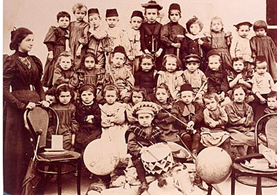
This book exposes children to an exciting period in history, and invites a discussion of their feelings in day-to-day situations. You can discuss with your children and ask: Why was Milka concerned and indecisive on the night before Baron de Rothschild’s visit? What do you think of the choice she made? Are there rules in kindergarten that differ from the ones you have at home too? Which ones?
How Do We Say it in Hebrew?
to the page containing the words that Mr. Yudilovitz, the teacher, sent to his friend, and try to pronounce them, or even use them in a sentence: “Can you pass me the Handtuch, please?” How about thinking together about all the non-Hebrew words we use in our daily lives and what their Hebrew alternatives are? You can try to invent new Hebrew words together too.
Looking for the Donkey
Have you noticed the grey donkey that appears in almost every illustration? The illustrations in this book are full of details, color, and text. You can pause on each page, look at the illustrations, and discover the things that interest you, while searching for the little donkey that accompanies this entire story.
Listen to the Story
Would you like to hear Milka speak Hebrew? Scan the code and listen to this book on the Sifriyat Pijama podcast.
A discussion on choosing and investing
You may want to discuss Cyril and Tevye’s choice: Why do you think they chose not to use all the gold? Did that surprise you? Why, in your opinion, did they decide to invest the gold in schooling?
Illustrations – Where is the goat?
The goat is by Cyril and Tevye’s side throughout the book. You may enjoy looking for the goat in the illustrations: What is it doing? What is its connection to the family? How about trying to tell the story from the goat’s point of view? What happens to it as the book progresses?
A game of treasure hunt
Gather several small gifts that you would like to give your family: A drawing, greeting card, or item. Take turns hiding your gifts and having the rest of your family look for the treasure using clues: “Near and far”, “hot and cold”, or arrows placed around the house.
Listening to a story
האזינו לפס הקול של הספר!
If you scan the QR code, you will be able to hear the soundtrack of the story. You can listen to it together at home, while traveling, or anytime and anywhere you choose.
A discussion on stories that “once were”
Following this book, you could also raise memories and tell stories that “once were” – a childhood story of yours, parents, or one told by Grandma or Grandpa about the old days.
Listening to the story
You could listen to the story together or separately; all you have to do is scan the QR code and… let the magic begin!
Suitable for families of Olim too.
Look how we have grown!
The tree grew, as did Rebecca. And how about you? Perhaps you would enjoy watching videos and looking at photographs to see how both children and parents have grown and changed. You could even discuss the kinds of actions that your children were able or unable to do in the past.
Orange sponge cake
Would you like to bake a cake? All you need are two eggs, one third of a cup of sugar, one third of a cup of oil, half a cup of fresh orange juice, a cup of flour (or substitute) and one teaspoon of baking powder. You could also add the grated zest of half an orange.
Mix all the ingredients in order and place in an oven preheated to 180 degrees Celsius. Bon Appetit!

Discussing – Names and stories
Who likes their name? What is the story behind your family members’ names? Are there other family members who have the same name? or strange names? Are you named after anyone? You may want to do some research among your extended family. Who knows the stories you will uncover…
Observing – Where is Arie?
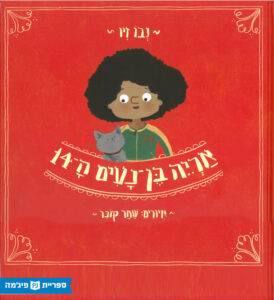
Shahar Kober’s illustrations invite us to follow Arie, and join him as he enters his family story. Can you find Arie in the different pages of the “Book of Aries”?
You may enjoy looking at old family photos of events that happened “once upon a time”: look through the pages of a photo album together, listen to the stories behind the events depicted in them, and choose one photograph you wish you could enter.
Doing some arts & crafts – A family book
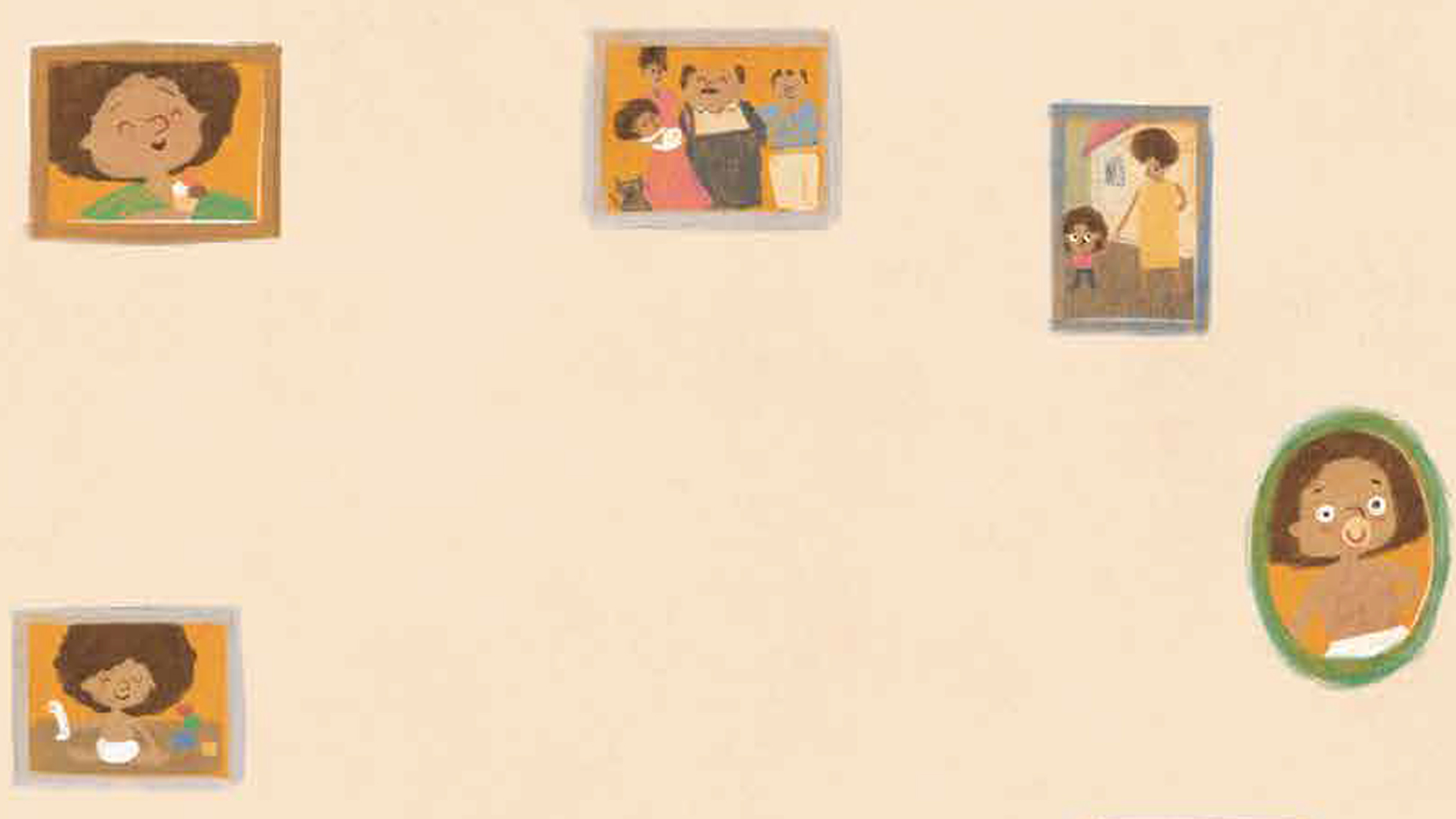
How about creating your own family book, an album that will tell your story and that of your children, just like the Book of Aries in this story. Take a blank notebook, and collect stories from your grandparents, aunts, and uncles. Write down their memories from the time you were babies, funny words you said, or some special behavior. We recommend collecting such stories about both parents and children in your family. You should put in old photos and mementos from kindergarten, daycare, and the time when you were tiny babies.
Proposed Family Activities:
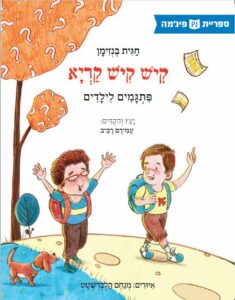
- You may want to look at the table of contents, choose a different idiom each time, and read the story that demonstrates it. Perhaps you could pick your favorite one, tell your child when you use it, and why you are so fond of it. If there is an idiom that your child particularly likes, ask them to tell you when they use it, and why they are so fond of it.
- The illustrations in this book are amusing, as they are a mixture of realistic and imaginary elements. You too could collect your favorite proverbs, illustrate them, and create your own family book of proverbs and idioms.
- How about playing a form of charades? You could each pick an idiom, and act it out. Were others able to guess which one you chose?
- Was your child familiar with the proverbs and idioms in the book before reading it? Do you and your child know any other expressions? Perhaps there are unique ones, whether in Hebrew or other languages, that are used by your family members? You could visit your grandparents, or uncles and aunts, and ask them to teach you a new proverb.
- You may enjoy making up your own idiom. Were you able to come up with one? If so, please send it to us, at [email protected]
“All good things come to an end” – this book celebrates the completion of five years of friendship between your family and PJ Library. We hope you have enjoyed reading the books you had received together, and wish your children many more years of joy reading books!
read this book together
You may want to read this book together, pause, and ask your child to tell you what they think is happening at that point in the story. How far along were you when you figured out where the grandmother and grandson were going, who the people in the black suits were, and what their cases contained?
• The grandmother and grandson in this book are spending time together
The grandmother and grandson in this book are spending time together. A special connection is often forged between children and their grandparents, that is unlike the relationship between parents and children. Can you recall a special time spent with your grandma or grandpa? You may want to share your childhood memories with your child, and discuss their relationship with their grandparents, aunts, or uncles.
playing a game
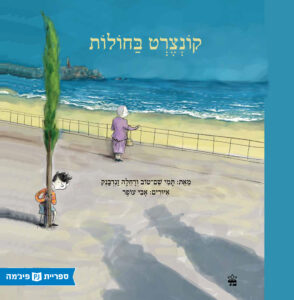
The authors depict the concert in the sand through a detective story, in which the grandmother does not tell her grandson where they are headed. Having read the book together, you may want to suggest playing a game in which your child will take you somewhere without disclosing your destination. Your child can prepare clues along the way, much like a treasure hunt.
What kind of music do you like listening to?
During the first concert, the orchestra played pieces by Schubert, Brahms, Mendelssohn, and others. What kind of music do you like listening to? Does anyone in your family play a musical instrument, or is learning to play one? Having read this book together, you may also enjoy attending a concert together, or even holding one of your own at home. There are many roles to be played at a family concert – musicians, conductor, and audience.
Bronislaw Huberman
Not too many people know the story of Bronislaw Huberman. Numerous men and women have been courageous and done great deeds for which they have not become famous. Perhaps you can think of another historical figure that you have heard about or known personally, whose story you would like to share with your child. You could even make a short storybook about them, and send it to us.
Reading differently:
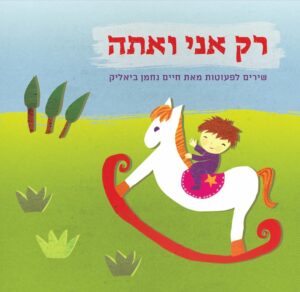
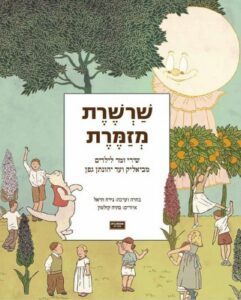
Reading differently: Reading poetry and prose are different experiences. The nursery rhymes in this book are short and catchy, and are accompanied by Shulamit Tzarfati’s joyful and colorful illustrations. You may want to ask your child to leaf through the book, picking a different rhyme each time. As you re-read the book, your child will become familiar with the words, and recite them on their own.
Singing together
Singing together: Some of the nursery rhymes in this book have been put to music. If you do not know the tunes, you could look them up on the internet, listen to them, and sing along with your child. You could also accompany your singing with simple musical instruments: a tambourine, bell, harmonica, or even two wooden spoons.
Putting on a show
Putting on a show: You may want to suggest that your child use some toys and stuffed animals to act their favorite rhymes out. You may also enjoy adding some choreography: riding a broomstick while singing “Parash” [Horseman]; setting up a pots & pans band and dancing around to “Makhelat Nognim” [The Band]; or flying like butterflies in the footsteps of “Haperach Laparpar” [The Flower to the Butterfly].
For the chain continues yet
For the chain continues yet: Do you remember any songs you learned as children? After reading this book, perhaps you could try to remember songs you once knew off by heart, sing them, and introduce them to your children too.
Hayim Nahman Bialik
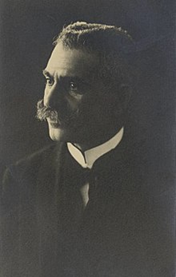
Hayim Nahman Bialik (1873–1934) – Israel’s national poet
Hayim Nahman Bialik, one of Hebrew Literature’s greatest contributors in the Modern Era, has greatly impacted Modern Jewish culture. Bialik wrote stories and poems for both children and adults, many of his publications were translated into various languages, and a fair share of his poems put to music. His lifelong achievement was building a bridge between the Hebrew preserved in Jewish literature for thousands of years, and the language reborn at the turn of the 20th century in Eretz Israel.
Proposed Family Activities:
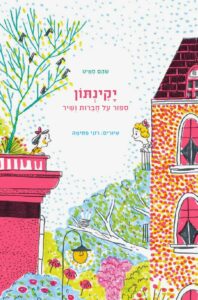
- You may want to sit close together, read the story, and look at the illustrations. Perhaps you could look for indications of the differences between Leah and Rivka’s life stories. After reading the story for the first time, you may enjoy reading or telling the story together, each of you playing a different role: one of you can be in charge of telling Leah’s life story, the other – Rivka’s.
- Leah and Rivka were fluent in many languages, among them music and drawing! Perhaps you could pick one word, an emotion or object, and think of different ways and languages in which to express them – in words, movement, art etc.
- How much does your child know about your own childhood? You may want to set up a time for “getting to know one another session”. You could encourage your child to ask you questions, or prepare a scrapbook together of landmarks in yours and your child’s lives – at home, with the family, in the neighborhood with friends.
- At the basis of Leah and Rivka’s friendship is their love of music and art. Do you also like to sing? Do you happen to play a musical instrument? You may enjoy making a songbook filled with all your favorite songs, and invite your friends and family to a night of song and dance.
- When Leah and Rivka were unable to meet in person, they wrote letters to one another. Perhaps you could suggest that your child pick a friend or family member with whom to correspond. The letters should be handwritten and drawn, and just like old times – put them into envelopes, stick a stamp on, put them in the mailbox, and feel your excitement mount as you wait for a response.
- Do you know any other works by Leah Goldberg? You may want to look for more of her stories at home or the local library: The Absent-Minded Guy from Kfar Azar (Hamefuzar Mikfar Azar), Fibber the Storyteller (Mar Guzmay HaBaday), Wonders and Miracles (Nissim VeNiflaot), or her poetry book, What Do the Does Do? (Ma Osot HaAyalot?)
Family Activities
- Many children like to dress up, and not just on Purim! You may enjoy making costumes using clothes, scarves, and other accessories found at home, and have a family costume party.
- Do you remember any special childhood costumes? Perhaps you also got dressed up as a king or queen? You may want to share those memories with your child. You could look through old photo albums, and be reminded of costumes worn by parents, siblings and children.
- There are many children nowadays who also need Purim costumes. Do you have any costumes you no longer need at home? You could donate them or have a give ‘n’ take second-hand costume fair in your school or neighborhood.
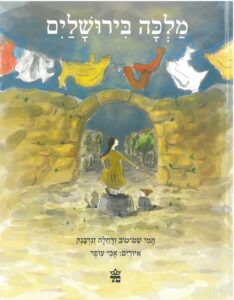
- Malka discovers artists practicing various kinds of art at the Bezalel building: weaving, jewelry-making, and painting. What kind of arts does your child enjoy engaging in? In the story, each painter paints Malka a little differently. You may want to make portraits of your own family members. Do you also find it difficult not to move? Do you recognize yourselves in the portraits you painted?
- You should encourage your child to dream, and dream big! You may want to ask your child what their dreams are, and share with them a dream that you have made come true, or perhaps in one you still hope to make true someday. Perhaps, like Malka and Boris, your dreams will also come true!
- The streets of Israel have undergone many changes since Bezalel Art School was first opened. You may want to look at the illustrations together, and compare them to this day and age: are we still allowed to wander around outside on our own? Do you live in an area where there are still walkways without cars or traffic lights? It would be advisable to speak to your child and emphasize the fact that this story is an imaginary one. You could explain that books, as well as movies, are often unlike reality, and that in truth children must never take a walk with a stranger.
- After you have read the story, you may want to visit a nearby art museum or gallery with your child. You could also go online and look at images from art exhibitions across the globe.
- Bezalel Art School is well-known in Israel today, but few know the name Boris Schatz. Many people have done great things but are not remembered for them. Try to think of a person in history that you have heard of or know about, whose story you would like to share with your child. You could create a short book about this person and send it to us.
Family Activities:
– Have you or your child ever misconstrued certain words in poems or songs, just like Lily did? You may enjoy sharing these amusing memories with one another.
– Lily and her classmates learned this poem by heart. You may also want to try and learn the words to Kan Zippor, Yossi Bakinor, or a poem in English by heart. Did you find memorizing the words difficult? Sometimes it is easier to memorize song lyrics than verses of poetry.
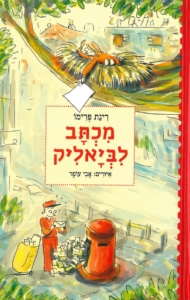
– When Lily does not understand something, she is not ashamed to admit it and asks for help. Perhaps you would like to read the story together and encourage your child to ask about anything that is not clear to them (why does Bialik not reply to Lily himself? What do other difficult words in the poems mean?). Be sure to tell your child never to stop asking questions.
– In this day and age it seems everything is done online, and we rarely write letters anymore. Inspired by Lily’s letter to Bialik, you may want to let your child write a letter and send it by mail. Maybe there is a question your child wants to ask their grandparent, aunt or uncle in a letter, which you can then slip into an addressed envelope, just like Lily did. You may enjoy going to the post box together and putting the letter in. your child will surely get a reply too.
– Nitzan writes the following to Lily: “Whoever reads or hears a poem can decide for themselves what it’s about and what things look like… Think and decide for yourself what the lestoyouwakeit looks like.” You might want to ask your child whether they would have been happy to receive such a response, or what they would have written back to Lily had they received her letter.
– You may enjoy looking at the illustration depicting Lily’s drawing of the poem entitled Yossi Bakinor. Do you find it amusing? (Did you notice the sleepy car?) How would you illustrate this poem? You may want to look for various illustrations of the same poem together, and search for similarities and differences between them.
- Bialik wrote many other children’s poems, such as Rutz Ben Susi, Nad Ned, and Tzilly VeGilly. You may want to look for them at home or in the local library, and read them together. Perhaps you could choose some of the ones your child likes best, have them draw them as they see fit, and create their very own, personally-illustrated Bialik poetry collection.
– Next time you’re in Tel Aviv, you may enjoy visiting Israel’s national poet’s home, Beit Bialik, which has since been converted into a museum. Until then you can go there online, and take a look around Hayim Nahman Bialik’s house. http://www.shimur.org/Bialik
Enjoy reading and discussing the book together!
לילי Hayim Nahman Bialik (1873–1936) כיתתה לומדים לדקלם שיר בעל-פה
National poet and author, Hayim Nahman Bialik, was engaged in a variety of literary practices: he wrote essays, stories, and poems for both children and adults; translated classics into Hebrew; adapted and edited the Aggadah stories found throughout the Talmud, and more. Among his books are Sefer HaAggadah (co-edited with Y.H. Ravnitzky), Vayehi Hayom, and the children’s poetry collection entitled Shirim Ufizmonot Layeladim.
Bialik’s work had formed a bridge between ancient Hebrew, not spoken for thousands of years, and the reborn language that started to be spoken in the Land of Israel during the late 19th century. By doing so, he greatly impacted Jewish modern culture. Although Bialik and his wife bore no children of their own, the national poet wrote many verses for children, of whom he was famously fond.
Family Activities
- You may want to sit on the sofa together and leaf through the book. Do you know all the poems in this collection? Which ones do you and your child like best? Unlike a story, a poetry collection can be read in any order, so you can choose one or two each time, or go back to the same ones over and over again.
- You could read together, sing, and even create dances to the poems in the book. Soon your child will learn them off by heart, and recite or chant them on their own.
- Do the songs in the book remind you of your own childhood? Did you sing different songs growing up? You may want to share those memories with your child. If Hebrew is not your mother tongue, you may enjoy teaching your child songs from a chain of gold reminiscent of a faraway land, those sung to you when you were young, and instill in them your own special family tradition.
- Perhaps you would like to choose one song and ask your child to tell it as if it were a story, adding details, describing the characters’ feelings, and making up their own ending (you may want to try this activity with the song “Gumball seeds”).
- How would you draw a song? Illustrator Batia Kolton added illustrations to the songs. You and your child could also make a scrapbook of your favorite songs.
- You could choose a song you both like and sing it together as a duet – parents sing one line, children sing the next. You could also make illustrations for your favorite song together, or perhaps, even write a song of your own?
Enjoy!
Family Activities
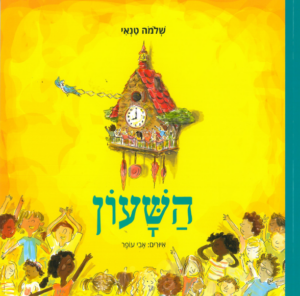
- You may want to flip through the illustrations accompanying the story together, and look for the series of images in which Levin makes a wooden watch for himself. Following the illustration, perhaps you would like to make a “pretend” watch too. Which material would you choose for it? Would you prefer to make a pocket watch, as in the picture, or a wrist watch?
- The watch in the story ticks loudly and is kept in father’s pocket. These days, people wear wrist watches that do not tick at all, and digital clocks on mobile phone screens are prevalent. How many types of clocks and watches does your child know? You can go through each room of the house looking for all the clocks and watches you can find. Perhaps you’d enjoy discussing the various types of clocks and watches with your child – analog, digital, cuckoo, and even the hourglass and sun dial.
- Little Levin longed for a watch or clock of his own and dreamed of owning one. You might talk about your child’s strong desires, anticipation and waiting. You may want to share with your child an incident in which you had longed for something and received it at long last.
- You can make a family clock together. Cut a large circle out of cardboard, write the numbers 1 to 12 to represent the hours, and use a split pin to fasten the clock hands to the center of it. Move the hands to denote daily activities such as when we leave for school in the morning, when we eat dinner, and what time we settle down to bed.
- Have you ever visited the famous clock exhibition at the Museum for Islamic Art in Jerusalem? If feasible you could visit it with your child and view the vast collection of clocks and watches from different periods of time that are on display there.
- Levin Kipnis wrote hundreds of well-beloved children’s poems and stories that form part of Israeli culture. You may wish to look for them at home, in kindergarten, or at the library, and read them together. Some of his poems have been rendered into songs. Do you know the tune composed by Moshe Wilensky for Shaon Ben Hayil? You could sing it with your child.
Things That Aren’t
The Girl From The Golden Sands
Seven Good Years
A Bag of Longing
Arie Ben Naim XXIV
Kish Kish Karya: Proverbs for Children
A Concert in the Sand
Just You and Me: Songs for Toddlers by Bialik
Yakinton: A Story about Friendship and Song
Malka, a Queen in Jerusalem
letter to Bialik
A Singing Chain
The Clock