מִשְׁפָּחָה וּקְהִלָּה
סבא וסבתא

הקשר בין סבא, סבתא ונכדים/ות הוא קשר יקר וחשוב וחיוני לשמור עליו גם מרחוק בין מפגש למפגש. אספנו כמה ספרים וכמה רעיונות לזמן משותף של משחק ויצירה עד המפגש עם סבא וסבתא וגם לרגע של אחרי הנשיקות והחיבוקים.
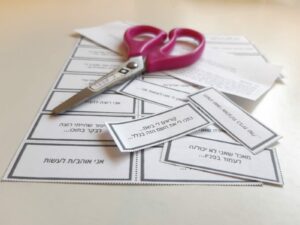
קלפי משחק לעידוד שיחה - היום כשתתקשרו לסבא וסבתא קלפי השיחה האלה יעשו את כל ההבדל!

מנהלים שיחת אלף בית - כל אחד בתורו צריך להמשיך את השיחה עם משפט שמתחיל באות הבאה באלף בית. קל מדי? אפשר להחליט על נושא השיחה: ספרים, מקומות, בעלי חיים ועוד. מתאים לילדי וילדות בית הספר.
סיפור מסביב לתמונה - כל אחד בוחר תצלום של אירוע או מקום אהוב ומספר עליו – מתי התמונה צולמה? איפה הייתי ומה עשיתי? למה אני אוהב/ת את התמונה הזו?
אפשר לבחור תמונה מחוויה משותפת ולהיזכר בה יחד, או לבחור מקום אליו תרצו להגיע יחד.
משחק הניחושים - כל אחד בתורו בוחר חפץ או אדם והצד השני צריך לנחש בעזרת שאלות "כן ולא" על מה או מי הוא חשב. קשה מדי? אפשר לתת רמזים או להציג בפנטומימה.

ממציאים סיפור ביחד - כותבים מילים מכל הסוגים, כל מילה על פתק נפרד. בזמן השיחה המשותפת בוחרים מילה אחת מהערמה ומתחילים לספר סיפור. המילה הנבחרת חייבת להופיע בסיפור. אחרי משפט או שניים התור עובר, מוציאים עוד מילה וממשיכים את הסיפור. פעם הילדים בוחרים מילה ופעם הסבתא או הסבא.
מילים לדוגמה: כלבלב, הפתעה, קפיצה, חבר, טיול, געגוע, סבלנות, צבעוני, שמח, קוביות, גלגלים, מצחיק, פטיש ומסמר, גרביים, עכבר, מיוחד, שאלה… ועוד
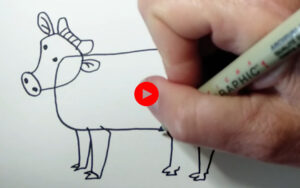
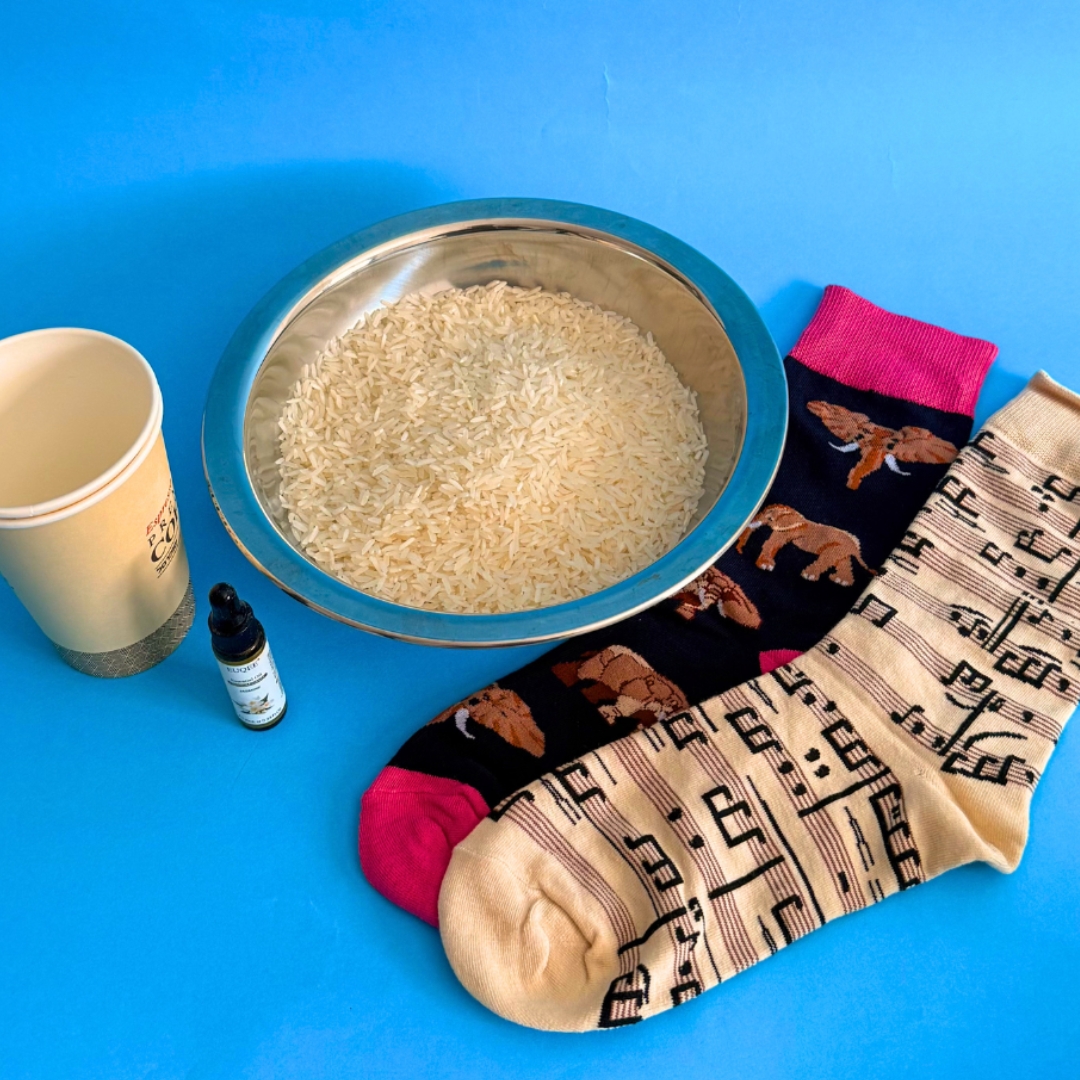
מציירים ביחד - צופים בשיעור באיור עם נעם נדב בוחרים באחת החיות ומציירים. אפשר להתייעץ, להחליט יחד על אופן הצביעה וכמובן להראות אחד לשני את התוצאה. תוכלו גם להמציא סיפור משותף ובו שני הציורים, הוא יכול להיות סיפור בהמשכים אליו תצרפו בכל פמגש עוד ועוד חיות שתציירו יחד!

סְּפָרִים
Book-Related Family Activities
Then and Now
You can share with your children: Which things have changed since you were children? Or since your grandparents were children? What was different about your life growing up? Were some things only allowed if you were a boy or a girl back then too?
Playing Letters
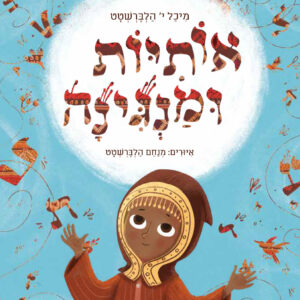
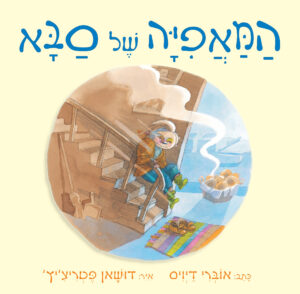
Sa’ada learned how to read while listening to the Hebrew cantillation or te’amim, which teach you how to “sing” a text, and stress certain words. She can inspire you to come up with a unique sound for each letter of your name, and “play” it: You can choose a trilling, low or high note. For the letter Mem you can choose a long note, similar to the one you make when you eat something delicious “mmm”
Making Pita Bread like Grandma Sa’ada
Ingredients
2 cups of flour
1 heaped teaspoon of dry yeast
1 cup of lukewarm water
1 tablespoon of olive oil
1.5 teaspoons of salt
Method
Mix the flour, yeast and salt well in a bowl. Gradually add the water and mix until a soft dough is produced. Add the oil and salt, and knead the dough with your fingers. Cover with a dishtowel. After 10 minutes, separate the dough into 6-7 balls. Using a flour-covered rolling pin, flatten each ball into a pita bread that is approximately 0.5cm thick. Place each pita bread in a very hot frying pan for 2 minutes on each side.
Recognizing Letters
You can look at the illustrations of the melodies that Sa’ada is hearing and recognize the letters curling in the tune. Which letters did you recognize?
Arts & crafts, inspiration and other surprises are waiting for you on the Sifriyat Pijama Pinterest page.
Tips for Family Reading
It’s Reading Time!
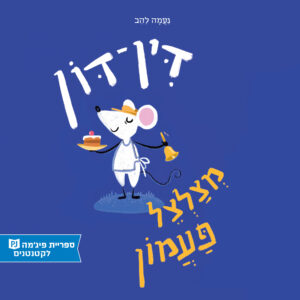
Reading together is an opportunity for bonding quality family time. But sometimes we find it hard to make time for story hour in our fast-paced, demanding lives. But scheduling a set time for reading as part of the family daily routine can help. Just like Grandpa and Little Miss Mouse, you can declare that a specific time in the day is your special time alone, and then find a quiet place that is free of distractions.
Family Giving
What do your family members like to do? You can discuss the things each of you does for others. Who is the family cook? Who makes everyone laugh?
A Family Dinner
Has your family ever tried eating or drinking out of one big bowl? You can make some juice and drink it together using straws just like Grandpa and Little Miss Mouse, or make some pudding, porridge, or salad, and eat it all together or one at a time.
Ding dong, who is coming to visit us?
Take turns hiding behind a curtain or fabric, while the other players say: “Ding dong, who’s there?” Then come out of hiding while making an animal sound so that everyone will have to guess who “has come over to visit us”.
QR Code
Scan the QR code to listen to Guli and the Singing Guitar’s Lisod Im Akhbar (Dining with a Mouse)
Nostalgic Memories
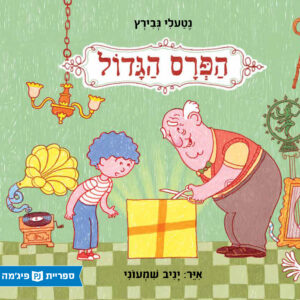
If you look at the illustrations in this book closely, you will be able to find a range of special items, such as a rotary dial telephone, gramophone, and cuckoo clock. This is an opportunity to share stories and memories: Which of these items do your children recognize? And which of them did you have at home, growing up? Are there any nostalgic meaningful items that you or your children are keeping as souvenirs?
Items that Need Someone New
You can go together to the nearest thrift store, walk among the items on display, and see whether you also feel like you are in a ‘treasure cave’. Perhaps you also have some items that would like to have someone new? You can set up a home-based thrift store, and have family members and neighbors ‘buying’ and ‘selling’.
Giving Away Nostalgic Prizes
Imagine an honorary prize for your father for coming up with a funny travel game, or maybe for your grandmother for baking you that surprise birthday cake? You can be inspired by this book to make honorary certificates documenting little moments that carry great meaning. This way, your personal memories will become a bonding family discussion.
The Game of “Dreaming of Being”
Grandpa dreamed of being a singer. What do you dream of being? Each of your family members can mime something they dream of being, and have the other players guess what it is.
Arts & crafts, inspiration, and other surprises are waiting for you on the Sifriyat Pijama Pinterest page.
Thinking Like Micha Ullman
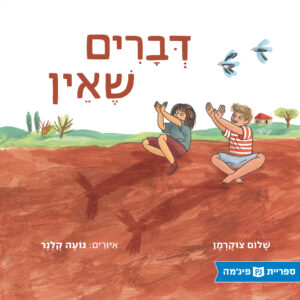
You can ask your children to spread their fingers and look through the spaces between them and then ask them: What can you see in the space between your fingers? Can you imagine that what you see is different than what is actually there? Can you give an example? Have you ever looked at anything – such as the various shapes of clouds, holes in the ground or puddles – and turned it into something else in your mind?
A Game of Lights and Shadows
You can also create lights and shadows. Look for a sun-filled spot, and place various objects there, such as leaves or small toys. You can draw the outlines of their shadows and draw something inside them, or turn their shadows into various things. The shadow of a leaf, for instance, can become a drawing of a dragon.
“It All Begins with a Few Blocks”
Encouraging creative thinking: You can pick up a few stones together, look at them, and imagine what they can become. Next, you can take turns arranging them in any way you like, and use them to create something new
What Things can Become
This book can inspire you to look into the fundamentals that make up the things you know. Pick any object, for instance – a shirt, and research it: What is it made of? (Fabric) And what is that fabric made of? (Cotton), to discover that a cotton wad can be turned into a shirt!
Inspiration
Arts & crafts, inspiration, and other surprises are waiting for you on the Sifriyat Pijama Pinterest page.
Family reading advice – Books everywhere
Like many toddlers, Berale also asks Grandma – “What are we going to do now?”. Among the surprises Grandma keeps in her basket is a book that they can read whenever they want. A book is a world unto itself that can be taken anywhere quite easily. You can also keep a book in your bag, and enjoy it while waiting for a doctor’s appointment, relaxing in the park, or taking a long car ride.
Discussion – Special times with loved ones
You can discuss your toddler’s relationship with Grandpa, Grandma, or other significant family members and ask – What do you enjoy doing together? Are there any special activities that you only do with your grandparents or uncles and aunts? Are there any special items that only they have at home?
A made-up story
Grandma’s stories make Berale laugh because they are made-up, and unusual things can happen in our imaginations. Try making up your own story, like “The Hippo that Fell into a Soup Bowl”, “The Lion Who Was Afraid of Being Left Alone at Night”, or any other idea that comes to mind. You can start with an object you see around you, and take it from there.
Grandma baked a cake…
Do you know the fingerplay that accompanies the nursery rhyme “Round and Round the Garden”? Or the Israeli version “Savta Bishla Dasya” (“Grandma made some porridge”)? You can play a similar game by bending your fingers inwards and leaving your thumb out to create a ‘snail’. Your toddler’s upturned palm can be the bowl. Now say: “Grandma and Berale baked a cake. They added flour, they added sugar, they added eggs…” while touching your toddler’s upturned palm with your thumb as you name each ingredient. You can take turns being Berale and the mixing bowl.
Family reading advice – The recurring phrase
Many books for toddlers have a recurring phrase that helps them follow the storyline and play a part in the reading. To emphasize the recurring phrase while reading this book, you can use a special voice, add a hand gesture, or change your reading pace. When the familiar phrase comes up, your toddlers will be delighted to join you.
Ora Ayal [1946-2011] was a children’s writer and illustrator. She illustrated over 70 books, among them Miriam Roth’s well-known books, as well as writing some herself, such as A Girl Alone and One Dark Night.
Discussion – Who do we love visiting?
Visits are a significant part of a toddler’s world. We visit family and friends, and sometimes, they visit us. You can discuss and ask: Who did we visit? What did we do during our visit? Who shall we invite over to our house?
Who will we meet next?
At the corner of each page there is an illustration that hints at the encounter we will see on the following page. Before you turn the page, you may want to look at the illustrated clue and guess who will be waiting for you on the following page. You can even play with real-life objects: Cover an item almost entirely, and ask your toddler what is hiding under the cover – a teddy-bear? Hat? Or purse?
What is in the illustration?
The final page of the book is a story in itself, containing many illustrated details. You may enjoy looking for the many details in the illustrations that you have come across throughout the book: a dog, girl, hat or flower. You can even try to identify and name the items at Grandma’s house: Where is the kettle? What is hanging on the wall?
A discussion on old wives’ tales
Stories about grandparents’ own childhoods, stories about the items they had that are no longer used, or perhaps some other story? – Following this book, you may want to sit and talk to your grandma or grandpa, and hear stories about the past from them.
Listening to a story
Would you like to hear Grandpa tell this story? Please scan the QR code and listen to this book, with a few exaggerations.
A game of “The best”
Grandpa has the loudest laugh and the most interesting stories, and what are you “best” at? – Take turns talking about yourself, and saying what you do best. Next, take turns talking about the person sitting next to you, and what they’re the best at – but only the good things!
Dancing in a circle
Why is everybody dancing? Because the State of Israel was established, and it’s a great reason to dance! Do you know how old Israel is now? How many years ago was it established?
Perhaps you would also like to dance together to the music, and dedicate a dance to someone or something that has happened.
A little advice for family reading
To make family reading enjoyable, and encourage children to read, we should choose books to which children relate and explore topics in which they are interested. Some prefer a piece of fiction, while others would want to read a story that “once was”. Whatever their favorite book may be, it would encourage them to enjoy books, while helping them to develop their imagination and creativity.
A discussion on belongings and memories
You too could look for items that remind you of past experiences: A family photo, gift you have received, or item associated with an experience you have had. Take turns introducing the object of your choice and sharing a memory relating to it.
Listening to the story
What does Grandpa sound like? Does the machine make sounds? By scanning the QR code you too can listen to the story together or separately.
Building something
Are you interested in making a machine of your own? You can gather some boxes, fabrics, crates and old toys to build your very own machine. You can plan what it would do and look like together, or simply build it and discover its attributes as you go along.
Illustrations – Where are the machines?
Many of the illustrations in this book depict machines. Perhaps you would enjoy leafing through them and finding illustrations of machines and machine parts – Can you tell what each of them does? Perhaps you could be inspired by the part you found to invent a new machine, and imagine what it is capable of doing.
Pinterest
Arts & crafts, songs and other activities are available on the Sifriyat Pijama Pinterest page
A discussion on stories that “once were”
Following this book, you could also raise memories and tell stories that “once were” – a childhood story of yours, parents, or one told by Grandma or Grandpa about the old days.
Listening to the story
You could listen to the story together or separately; all you have to do is scan the QR code and… let the magic begin!
Suitable for families of Olim too.
Look how we have grown!
The tree grew, as did Rebecca. And how about you? Perhaps you would enjoy watching videos and looking at photographs to see how both children and parents have grown and changed. You could even discuss the kinds of actions that your children were able or unable to do in the past.
Orange sponge cake
Would you like to bake a cake? All you need are two eggs, one third of a cup of sugar, one third of a cup of oil, half a cup of fresh orange juice, a cup of flour (or substitute) and one teaspoon of baking powder. You could also add the grated zest of half an orange.
Mix all the ingredients in order and place in an oven preheated to 180 degrees Celsius. Bon Appetit!

Reading Together
It is worth sharing the reading of the story with the toddlers: Where is the key? What do you do with the string, and what are the crumbs for? What surprise is hiding in the small pocket?
Guessing Game
Hide an object in a garment pocket and let the toddler guess what you hid with the sense of touch. You can provide clues, reveal a fraction of the object, and eventually disclose the item and demonstrate what it is used for.
Doing Things Together in the Family
Grandfather and the child are talking, sowing seeds, and feeding the rabbit. What do toddlers love to do with adults in the family? With grandparents and other family members?
What Goes with What?
“A key in order to open”; “A ticket to ride the train”; and what is a basket for? Or a spoon? You can walk around the house and choose items, then talk and check together what they are called and what they are used for. Matching Game –What Belongs to What – is waiting for you when you scan the code:
Pinterest – Crafts, songs and other activities on the “Grandpa’s Pockets” book page in Sifriyat Pijama on Pinterest
Discussion
The family in this book is rushing to make the train and celebrate Grandpa Dov’s birthday, and yet its members remember to be considerate toward others, and care for animals and the environment. Perhaps you would like to try and discuss what being considerate means – how would you like others to be considerate of you? Who could you offer to help in your immediate surroundings or family? Which actions can you take to make the older members of your family happy?
Playing "fast or slow?"
You may enjoy playing a game called “fast or slow”: take turns to choose a certain action and tell the other players to perform it quickly or slowly. For instance, clap your hands… quickly, and now… slowly; sing a song extra slowly, and then super-fast! After you’ve played, you may want to discuss and discover what you enjoyed doing quickly, and what was more fun to do slowly.
Hidden illustrations
The illustrations in this book are extremely detailed. How about choosing your favorite page, and looking for the tiny details in it? Perhaps you could take turns to ask each other whether you can spot a particular detail in the drawing: Where’s Grandpa Dov’s gift? Where’s the football? Who can find the teddy bear?
Types of…
This book specifies types of plants, toys, cats, and musical instruments. Perhaps it can inspire you to take turns choosing a subject, and having the other players list as many items associated with it as they can. You could choose topics such as clothing, friends’ names, types of toys or musical instruments.
Discussion
You may want to discuss and share what you enjoy doing with grandma, grandpa, or other family members, and have the parents talk about their own childhood experiences. You could even do stuff remotely and still feel close: some suggestions for activities that bring you closer while being carried out from afar can found in the “granny’s stories” section on the PJLibrary website.
What do we see in the illustration?
You could check out the drawings on the aprons at the end of the book, and even create your own “family doodle”, with each member of your family adding to the artwork. When you’re done, you can look together to find out whether any shapes of objects or characters are hiding in the doodle you made.
Illustrations – look for me
Look at the illustrations together and find out what the cat does on each page or where there are strawberries. You could search for certain items, or choose a color and look for details painted in that particular color in all the illustrations.
What did you do today?
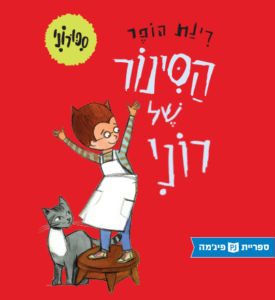
Paint stains on palms, sand in shoes, or food stains on clothes are all indications of what your child did in kindergarten today. Together, you could look at the traces left by their action-packed day. Can you, parents, use the signs to try and guess what your child has done today, and discuss their experiences with them?
Pinterest – Suggestions for arts & crafts, games, doodles and strawberry growing are available on the Ronnie’s Stories: Ronnie’s Apron page on the PJLibrary Pinterest.
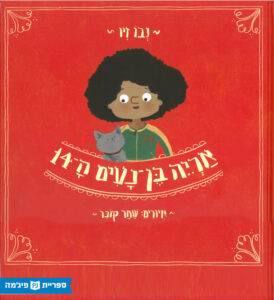
Discussing – Names and stories
Who likes their name? What is the story behind your family members’ names? Are there other family members who have the same name? or strange names? Are you named after anyone? You may want to do some research among your extended family. Who knows the stories you will uncover…
Observing – Where is Arie?
Shahar Kober’s illustrations invite us to follow Arie, and join him as he enters his family story. Can you find Arie in the different pages of the “Book of Aries”?
You may enjoy looking at old family photos of events that happened “once upon a time”: look through the pages of a photo album together, listen to the stories behind the events depicted in them, and choose one photograph you wish you could enter.
Doing some arts & crafts – A family book
How about creating your own family book, an album that will tell your story and that of your children, just like the Book of Aries in this story. Take a blank notebook, and collect stories from your grandparents, aunts, and uncles. Write down their memories from the time you were babies, funny words you said, or some special behavior. We recommend collecting such stories about both parents and children in your family. You should put in old photos and mementos from kindergarten, daycare, and the time when you were tiny babies.
read this book together
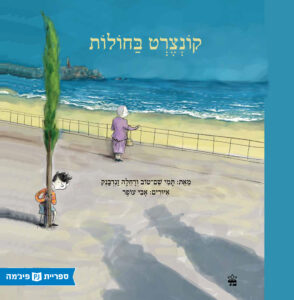
You may want to read this book together, pause, and ask your child to tell you what they think is happening at that point in the story. How far along were you when you figured out where the grandmother and grandson were going, who the people in the black suits were, and what their cases contained?
• The grandmother and grandson in this book are spending time together
The grandmother and grandson in this book are spending time together. A special connection is often forged between children and their grandparents, that is unlike the relationship between parents and children. Can you recall a special time spent with your grandma or grandpa? You may want to share your childhood memories with your child, and discuss their relationship with their grandparents, aunts, or uncles.
playing a game
The authors depict the concert in the sand through a detective story, in which the grandmother does not tell her grandson where they are headed. Having read the book together, you may want to suggest playing a game in which your child will take you somewhere without disclosing your destination. Your child can prepare clues along the way, much like a treasure hunt.
What kind of music do you like listening to?
During the first concert, the orchestra played pieces by Schubert, Brahms, Mendelssohn, and others. What kind of music do you like listening to? Does anyone in your family play a musical instrument, or is learning to play one? Having read this book together, you may also enjoy attending a concert together, or even holding one of your own at home. There are many roles to be played at a family concert – musicians, conductor, and audience.
Bronislaw Huberman
Not too many people know the story of Bronislaw Huberman. Numerous men and women have been courageous and done great deeds for which they have not become famous. Perhaps you can think of another historical figure that you have heard about or known personally, whose story you would like to share with your child. You could even make a short storybook about them, and send it to us.
Proposed Family Activities:
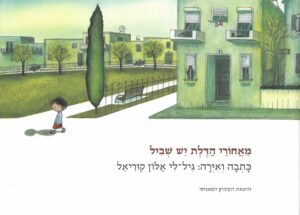
- You may like to read the story together, look closely at the illustrations, and pay attention to all the little details they provide. You may enjoy finding the father and dog who are accompanying the little boy on every page. Did you find any of the illustrations amusing? Did you guess where the little boy was headed?
- Just around the corner from Grandma’s house, the little boy starts counting to ten. You may enjoy searching for the digits the illustrator hid among the pages. Did you notice a match between the number of items in the illustration and the number the boy says? Can you count how many pigtails the little girl has? Or how many birds she feeds? And how many cats are being sold?
- In the illustration depicting grandma’s house, what do we see as the door opens? What and who are waiting for the little boy? You could ask your child what they think the little boy will be doing while at his grandmother’s house. What would he eat? What and who would he play with? You may want to use puppets to act out the encounter between the boy and his grandmother, and add another page or two to the story.
- Perhaps you would enjoy going for a walk outside your own home and taking a fresh look around: what does your own front door look like? And the handle? Do you also have a road behind your door? Go outside, stand still for a minute and listen. Can you hear the cars going past? Birds tweet, or cats meow? What do you smell? Who do you see? You could also play a guessing game, taking turns to describe a sight or sound encountered on the way, while the other tries to guess what it is.
- On the final page of the book is a heart-shaped map of the route from the little boy’s house to his grandmother’s. Perhaps you would also enjoy drawing such a map, be it heart-shaped or otherwise, of the way from your house to kindergarten.
- Sometimes we cannot walk to our grandmother’s house, to a close relative or much-loved friend, because they live too far away. How, then, do we keep in touch with them? You may want to think together of ways of keeping in touch – telephone calls, sending photos or videos, letters and greeting cards.
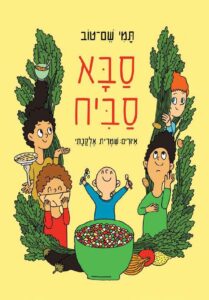
Did you know where the name Sabich originated before reading this story?
What do you know about your own family members’ names? Are they biblical? Are any of you named after a relative? Perhaps, like Sabba Sabich, your name or your child’s comes from a foreign language? You may want to discuss your names, their origin and meaning together, and tell your child what made you choose their name for them. Perhaps your child would enjoy making a decorated sign with their name on it, and hang it on their bedroom door.
Sabba Sabich came to Israel from Iraq. Where did your family come from?
How long has your family been living in Israel? Which country did it come from? Perhaps you could make a world map, and draw arrows on it denoting the path travelled by your family until their arrival in Israel. You may wish to share your own immigration stories with your child, or those of their grandparents. What did you like about the country you came from? What do you like about Israel? What sort of hardships and successes did you experience? Has any member of your family changed their name upon arrival in Israel?
Sabba Sabich says each community brought with it "a language, songs, names, and traditions"
You may want to teach your child a few words in the language spoken by their grandparents. Together you could recollect special customs and songs, which you could teach and sing with your child. They could also read this book with older members of the family, such as uncles, aunts, or grandparents. Perhaps by doing so they will be told more family stories they had not heard before.
Do you make Sabich for breakfast?
Pizza, falafel, kreplach, Jahnun... Which dishes are typical of your community? You may enjoy preparing a special meal together consisting of dishes typical to your family’s place of origin. You could teach your child how to make traditional food, and even create a family cookbook.
Keren and Or in making Sabich together!
Ingredients for home-made Sabich
- Hard-boiled eggs
- Sliced, fried eggplant
- Finely chopped salad
- Pitta bread
- Hot sauce (Schug), Amchur (Amba) (optional)
- Hummus
- Tahini
Method:
Peel the eggs (ask your child to look for the description in the book!), place one pitta bread on a plate and put hummus on it, with or without hot sauce (schug) or amchur (amba). Add the eggplant, sliced egg, and salad.
Season with salt and pepper, and put a spoonful of tahini on top.
Bon Appetit!
Enjoy reading and discussing the book together!
Family Activities:
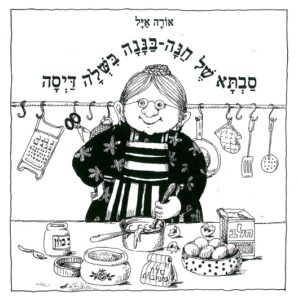
- If you carefully follow the text and illustrations of the story, you will surely note the different paths taken by the words and the pictures. Read the story again with your child. Each time you arrive at the sentence “Meanwhile, Hannah Banana rushed on her way…” ask your children to describe what they see in the picture. Is Hannah Banana really rushing? What does she do and whom does she meet along the way to Granny’s house?
- Did you notice the cat who accompanies Hannah Banana on her way to Granny’s house? You can ask your child to point out the cat on each page, and ask them how they think Granny will greet him when he arrives at her house.
- You can play the finger game “One Little Piggy” with your child. According to the story, who “had none” at the end of the rhyme?
- Hannah Banana’s Granny Cooked Porridge is actually two stories that happen at the same time. You can act out the stories with your child. First ask your child to be Hannah Banana on her way to grandmother’s house, while you pretend to be Granny. Then you can change roles. If other family members or friends are with you, they can be included in the skit as well and take on the roles of the neighbors.
- “To each his own”: At the end of the story we discover that Hannah Banana doesn’t even like porridge! You can ask your children if they believe this, and discuss which foods they like in particular and what they don’t really like.
- You can explain to your children that “Hannah Banana” is a nickname. Do your children have a nickname or a special name that only some people use when addressing them? If so, do they like their nickname?
Here is a simple recipe for delicious, sweet porridge:
Ingredients: 1 cup water, 2 cups milk, 3-4 tablespoons semolina, 3 tablespoons sugar, cinnamon, butter
Preparation: Cook the water, milk, semolina and sugar over a low flame, stirring constantly. Bring to a boil. The porridge is ready when the mixture is boiling and the semolina is cooked. Sprinkle with cinnamon and add a dab of butter. Bon Appetite!
Family Activities:
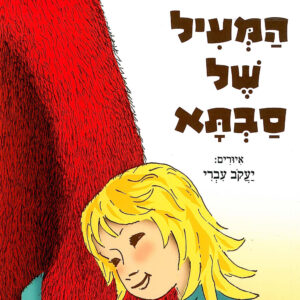
- Ruthi proclaims that “there’s no other coat like this in the world!” You may ask your children what it is that makes Grandmother’s coat so special. Ask them to describe the coat in their own words. Don’t forget to note the soft material and the surprise-laden pockets! Do you have special clothes or objects that help you feel better? This is an opportunity to remind children of blankets, stuffed animals or a special cloth that help them feel calm in times of distress.
- Dressing up in costume is a wonderful way to foster one’s imagination. You can provide old clothes, hats and other props to encourage your children’s make-believe play. You may dress up in a big old coat and, adding a few other relevant props, can act out the story together.
- Many of us have childhood memories connected to touch. Do you too have a distant recollection of a special piece of clothing? You can share this childhood memory with your child and tell them about the special connection you had with the clothing, or with your grandparents, aunts or uncles.
- The “It’s Like” game: The author Miriam Roth compares the feel of Grandmother’s coat with the fur of a cat. You can make up a word game to play with your children: Place objects made from different materials – e.g., metal, plastic, cloth, etc. – into a large bag. One by one, each player removes an object from the bag and describes the object declaring “It’s soft like…”, “It’s cold like…”, “It’s coarse like…”
- Ask your child to show you the picture depicting Ruthi sick in bed. You can ask them how they feel when they’re sick. What helps us feel better? Do you have any special “family remedies” that were passed down from generation to generation? You can ask a grandparent, aunt or uncle what they recommend to overcome a sad mood or a mild cold.
-
If your child has a grandparent, aunt or adult friend who lives nearby, reading the story together could be a special treat for both of them, and lead to closer relations between the generations.
Miriam Roth
Miriam Roth (1910-2005) was a well-known children’s author and educator. In 1998 she won the UNICEF Smile Award for her book “A Tale of Five Balloons”, and in 2002 was awarded the prestigious Bialik award for literature. Roth’s books include Israeli children’s classics such as “Tiras Cham”, “Maaseh shel Hamisha Balonim”, and “Habayit shel Yael”.
Family Activities
Colored words are woven into the text of the story. Show your child the colored words and try to guess why the designer chose these colors. Who do the pink words describe? Which colors depict the words for “cake” and “strawberries”? Ask your child to help “read” the story with you by joining in with the colored words that they can identify.
“How good and pleasant it is for brethren to dwell together” – Sometimes, sitting alongside strangers (on the bus, at the playground, on line at the supermarket) can turn into a pleasant example of “brethren dwelling together”. You can think back to situations when you met new people in such a setting, who helped you pass the time. For instance, perhaps someone helped you lower the stroller down a flight of stairs or offered your child a snack while waiting for the doctor. Perhaps there were children who shared the swings at the playground. All these help illustrate the positive side of “brethren dwelling together”.
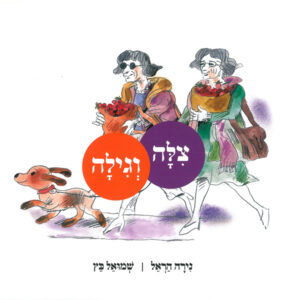
The two grandmothers both love Avigail. You might suggest that your child draw a picture of Avigail, surrounded by all those who love her. They can then draw a picture of themselves and all those who love them!
Tsila and Gila’s car goes through tunnels and over bridges. Together with your child, you can create a make-believe track for the car within your home, “set out for your journey” and stop to pick up passengers along the side of the road who need help. Remember: In Tsila and Gila’s car, only the cake is not fastened in with a seat belt. Be sure all your passengers are strapped in when riding in the car!
Does your child like to travel? Ask your child about journeys he or she has taken, real or imagined: Where did they go, who joined them, what happened along the way? We invite you to send your stories and drawings to the Sifriyat Pijama website: www.pjisrael.org.
Did you ever set out for a journey, get lost, and find yourselves in a new and surprising place? This is a good opportunity to tell your children about your adventure. Be sure to describe about any disappointment or frustration your felt when you lost your way, and then the positive experience you had at the end.
“This too is for the best”: A sudden halt brings an end to the comfortable trip. All the drivers and passengers are disappointed with the traffic jam. If you go through the book, you can discover unpleasant situations that turned into happy occurrences.
Not everyone likes changes in plans. Do you have a special way to help yourselves and your child to accept changes? “Chutes and Ladders” is a board game in which surprises can cause set-backs (when going down a chute), but also be pleasing (when climbing up a ladder). You can create your own game “On the way to the birthday party”, along the lines of Chutes and Ladders. The chutes will appear whenever there is a delay in the journey, and the ladders will represent the happy surprises on the way.
One way to provide encouragement when things doing go as expected is to make a “This Too Is For The Best” sign. You can write the proverb and invite your child to decorate it. Be sure to hang the sign in a visible spot in the house, to remind you that even unexpected things can turn out for the best.
The cute puppy found a welcoming home, and Avigail received a perky gift for her birthday! You can make finger puppets of Avigail and the dog: Draw or copy the characters from the book onto a piece of paper, and attach them to your fingers by stapling together the edges of the reverse side of the paper. The puppy can share his adventures in the car with Avigail, and she can tell him how she passed the time while waiting for her grandmothers to arrive.
All’s well that ends well: The granddaughter and her two grandmothers celebrate her birthday with tea and cake (and the puppy enjoys himself too, in his own way). You too can make a small tea party and invite over friends who want to share in experiencing “how good and pleasant it is for brethren to dwell together”. Be sure to sing together in Hebrew “Hineh ma tov u-ma na’im shevet achim gam yachad”.
The Game of Thanks
The Game of Thanks: One player begins a sentence with the words, “I want to say thank you for…”, and tells about something good in his or her life. It may be something that has happened to them, or anything – small or big – that he or she has seen, heard, tasted or smelt. The next player completes the sentence as he or she wishes, and so on. The whole family can play this game at dinner or at bed-time.
Gratitude can be expressed through songs!
Gratitude can be expressed through songs! Sing together songs of thanks that you know, for example: Toda (by Uzi Hitman), Elohim Natan Lecha Bematana (composed by Eitan Masori), Hallujah (preformed by Gali Atari.
Many people help us every day
Many people help us every day: The guard at the entrance to the shopping mall, the cashier at the supermarket, housekeepers, etc. Closer to the children’s lives there are neighbors who play with us in the park, our relatives, kindergarten teachers, and more. Sometimes just saying “thank you” is enough, and sometimes people would enjoy receiving a letter or a drawing. Think of a person you would like to thank. Use the letter or a drawing to describe the good times you have had with this person, times when they helped you, or simply the happiness that they bring to your life.
How does one thank God?
How does one thank God? This question bothers Benny. He chooses to thank God in the synagogue, because he believes it is there that most people talk with God. Like Benny, many young children ask big questions: Does God exist? Where does he live? Will he hear me if I speak to him? Discuss your beliefs with your child.
All’s well that ends well!
All’s well that ends well! At the end of the story, Benny is disappointed to discover that it was the poor man, and not God, who ate the bagels. But Grandfather explains that thanks to Benny, “the world has become a better place… and what better thanks than that can God receive?” Discuss with your child the story’s surprising ending and Grandfather’s words. How can we understand the connection between Benny’s good deed and thanking God? Together with your child, try to remember a time when they did a good deed and helped someone. Link this incident to the story, and think about how your child’s good deed also contributed to making the world a better place.
Bagel-shaped Buns Recipe
Bake “if only we had…” bagel buns together.
This is how you play: “Let’s make bagels! If only we had flour… we would have wonderful bagels”. The child brings the flour and you thank him or her happily, then continue by saying: “If only we had sugar…” and so on. Accept every ingredient (flour, sugar, oil, etc.) into your bowl with happiness and thanks. Bake the buns and give them to people you would like to thank or please.
Ingredients:
2 cups of flour 2 spoons of sugar
1 teaspoon of quick-rising yeast 1 teaspoon of salt
1 cup of water 1 ½ spoons of oil
Instructions:
Mix all the ingredients together until a ball of soft dough is formed. If necessary, add a bit of flour. Set the dough aside and let it rise. Once the dough has doubled in volume, divide it into smaller portions, and form bagel-shaped buns. Brush the buns with an egg, and scatter sesame seeds on top. Let the buns rise again. Bake at 190°c degrees, until golden.
Bon Appétit!
Activities to do at home
- At the start of the story, Grandpa is sad and lonely, but the guests who come to visit him cheer him up. Are your children always happy when their friends visit? Discuss what gives them pleasure and what might be hard for them whenthey entertain guests.
- “A Person’s giving eases his way” – Grandpa’s circle of happiness grows wider and wider as each guest arrives. Even the illustrations in this book bring this point home. Together with your child, you can leaf through the pages of the book and notice how the small circle grows—and how, at the end of the story, it shrinks back down to its original size.
- Turn the story into a play, using toys and dolls. Together with your children, decide which doll will play Grandpa and which dolls will play the guests who come to visit. Tell the story in your own words. You can also continue the story yourselves, imagining what happens after the guests say good-bye to Grandpa and return home.
- Grandpa enjoys a visit from his grandchildren: “For no particular reason, on a weekday, my granddaughter comes over to eat.” Talk with your children about who visits your family, and what you like to do together with them. Do you have set times for such visits, or special customs for entertainingguests? Maybe there’s a special dish you serve to your guests, fancy plates and glasses you use, or a designated room you use to entertain your visitors?
- Many children love to help preparefor entertaining guests. You can work together on hand-made invitations, fold napkins for the table, or draw a welcome sign for the front door.
- Hospitality in Abraham’s tent: After reading the book, you could tell your children the biblical story of Abraham and then suggest they make their own “tent” by spreading a blanket over some chairs. They can sit in the tent and receive their friends as their guests—playing together and serving them a snack they’ve prepared themselves.
- Just like Grandpa in the story, you too can make soup and serve it to your guests. Maybe your children will also want to invite some of their friends who haven’t visited your home before?
Grandpa’s Soup Recipe:
Ingredients:
2 large onions, chopped
3-4 cloves garlic, mashed
4 carrots
3 squash (zucchini or marrow)
Vegetable oil
3 potatoes
2 cups cubed pumpkin
1 bunch of celery
1 bunch of parsley or coriander
Salt, pepper, turmeric
Directions:
- Saute the onion and garlic in a pot with a littleoil on medium low heat until golden.
- Cut the squash, potatoes, carrots, and pumpkin into cubes and add to the pot. Stir.
- Chop the parsley (or coriander) and the celery and add them to the pot. Stir.
- Add seasonings and stir.Continue stirring until all the vegetables have been cooked and softened a bit.
- Add boiling water – twice the volume of the vegetables – and cook till the vegetables are completely soft.
- Taste, adjust seasonings, and serve.
Bon Appetit – Bete’avon!
Family Activities
You may want to look at the illustrations that accompany the story together, and notice the many details that are not specified in the text. What do you think of Bonny’s ideas and Pop’s inventions?
You could invent, plan and build your own “magnificent tree” using building blocks or Lego, or various objects around the house or yard. Are “all sorts of things jutting out” of your work too? Send us a picture of your magnificent tree, we’d be happy to post it on our website.
Bonny and Pop realized that birds were attracted to trees and looked for an idea that would encourage the birds to visit them. The story may inspire you to make a bird feeder together: rinse a large, empty bottle thoroughly, cut a large opening out on one end of it, hang it in the balcony or on a nearby tree, and fill it up with pieces of cut fruit, seeds and breadcrumbs. Follow the birds, watching quietly from afar as they approach the bird feeder and eat from it.
“Bonny and Pop always had lots of ideas…” Little children often have big ideas and original thoughts. You may want to tell your child about some important inventors, in Israel and around the world, and remind them that they too were once children, brimming with ideas. Together you could think of a situation in your own lives that you’d like to change, and make suggestions. Are your ideas implementable?
“Just as their faces are not identical to one another, so their opinions are not identical to one another” (according to the Midrash on the Book of Numbers, chapter 21): family members and friends do not always think or act the same way, and sometimes differences in style and character can bother us. You may want to remind each other of each of your family members’ special talent and inclinations, and make note of the unique contribution each one makes.
Does your child have a special connection with a grandparent, aunt or uncle, like Bonny does? You may want to sit your child down with a beloved family member and invite them to engage in an activity that requires cooperation, such as putting together a jigsaw puzzle, or even baking a cake. How well did they work together? Did they have similar ideas or different ones? Remember, none of this matters, as long as we have fun spending time together!
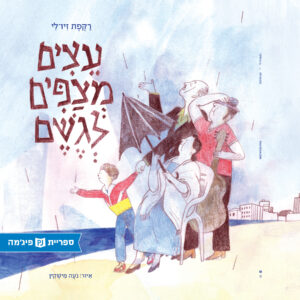
Letters and Melody
The Dinner Bell
The Grand Prize
Things That Aren’t
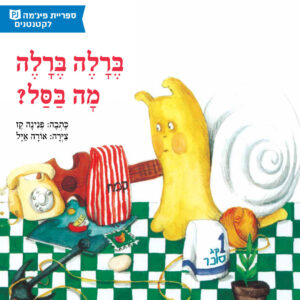
Berale Berale What’s in the Basket?
One Bright Morning
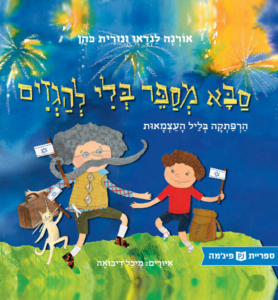
Grandpa Tells an Unexaggerated Story
The Machine
A Bag of Longing
Grandpa’s Pockets – For Families
Hurry Up!
Ronnie’s Stories: Ronnie’s Apron
Arie Ben Naim XXIV
A Concert in the Sand
Behind the Door
Sabba Sabich
Hannah Banana’s Granny Cooked Porridge
Grandmother’s Coat
Tsila and Gila
Bagels From Benny
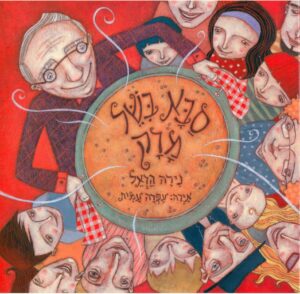
Grandpa Made Soup
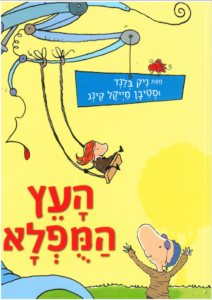
The Magnificent Tree