כבוד הדדי הוא היחס אשר נעניק לסביבה והסביבה תעניק לנו. איזה יחס נרצה לקבל מאחרים? ואיזה יחס אנחנו מעניקים למי שסביבנו? סיפורים על כבוד, על כבוד בין חברים ועל כיבוד הזולת, יכולים להעמיק שיח רגשי בנושאים אלו, ולפתוח פתח לחוויות משותפות וללמידה חברתית.
What gives you pleasure for free? – You may want to take a look at the illustration in which the wise man presents all the good things in our world that are given to us for free, and share your opinion of them with one another – Do you also enjoy them? And which other things that are given for free do you like?
A girl and boy appear in many of the illustrations in this book. You may enjoy looking for them as you leaf through it, and thinking of reasons why the illustrator chose to add them to the illustrations together.
Would you like to make challah? A recipe is waiting for you on the final pages of this book. Bon Appetit and enjoy the wonderful aroma that will fill your home.
Have you ever wanted to do something and had someone interrupt you? how did it make you feel? What did you do and say? This book offers the opportunity to discuss these kinds of situations, as well as some good-spirited solutions.
Someone snatched something from me, took something I wanted, interrupted me, bothered me – what do I do? You could think of positive responses together, like using the word “please”, or explaining what bothered you. How about making a paper die and writing all kinds of positive responses on each side, perhaps adding an illustration that depicts the written text? That way, whenever you come up against a problem, you could always throw the die and see what it suggests that you do in response.
Various animals appear in this book: Which one meows? Which one lays eggs? And which one lives in the shed? Let’s find out! One of the players picks an animal, and the rest of the family has to guess which animal they picked by posing questions, and getting hints, such as “the animal I picked meows”, “the animal I picked lives in a pen”. Keep adding more clues until your family has guessed which animal was chosen.
You could act the story out using clothes, hats, accessories, or stuffed animals. You could make the sounds made by the animals, show how each one responds upon encountering the elephant, or be the elephant sleeping on the path.
You are welcome to leaf through the book, and look at Lena Guberman’s unique illustrations closely. Make sure you read the words and signs in the illustrations too! Has anything about the illustrations made you laugh? They are all made of colorful fabrics, thread, and wool. Perhaps you would also like to look for a piece of cloth or an old sock, cut it up, glue or sew it together, to make your own special artwork.
You may want to discuss the Haruvis’ demand for quiet, and their neighbors’ responses with your child. Have you ever been asked to change your habits in order to be more considerate of others, such as family members or neighbors? Did that request seem reasonable or over the top? Having read the story together, you may be reminded of your own neighbors. Who have you not seen in a while, and would like to invite over to your house?
Perhaps you would like to take a walk around the neighborhood. What does it look like? Who are your neighbors, and do you know them all? Do you spend time together, or help each other out? You may want to draw or make a model of your neighborhood together, and add those who live in each apartment or house.
Would you like to play “silence”? You’re welcome to whisper to one another, play in silence, walk on tiptoes, eat quietly, and even try to laugh without making a sound. Would you have passed the Haruvis’ “quiet neighbor test”?
You may enjoy discussing the following with your family or sharing it with your neighbors: Does anything require improvement or repair in your shared space? You could initiate some neighborhood activities, such as decorating the shared stairwell, planting a community garden, or helping one another in your community. Put together an action plan, and get started.
Laughter is an easy and fun way of coping, it makes you happy, and can even be contagious. Perhaps you would like to try laughing while making every possible sound: Hoo hoo hoo, Ho ho ho, Ha ha ha, He he he, Hee hee hee. Start laughing and change sounds each time. Did your laughter “roll and tickle”? Did it lift your mood?
It all began with a misunderstanding and hurt feelings, and then “Now you’ll see what’s going to happen!” After reading the story together you may discuss intentions and misunderstandings among friends, and share experiences with one another.
Like Kramer the cat, we all feel big at times and small at other times. You can ask your children when they feel big and when they feel small, and talk about the advantages and disadvantages of each.
“Scratches, bites, jumps and somersaults” – that’s how the author Meir Shalev describes cat games. You can flip through the book, select one of the animals and act out that animal’s movements.
Kramer is very fearful of the large animals he meets in the forest. This can be an opportunity to discuss with your children caution and safety rules, fears, and ways to overcome fear.
Kramer’s friends teach him an important lesson in friendship: A good friend is one who knows how to forgive and to apologize. You can look for the illustration where Kramer’s friends meet him in the forest, and note the expressions on their faces.
Yossi Abulafia’s rich illustrations depict an array of animals – some domestic, others wild. You can look at the illustrations with your child and see how many of the animals you recognize. Does your child know all the animals’ names? Which of them can be found near your house? You can go for a hike. Which animals, large and small, do you meet on the way?
You can act out the story using stuffed animals and toys. Allow your children to select the dolls to represent Kramer, his friends from the garden and the forest animals. The animals can be happy, be afraid, play together and quarrel – and, in the end, make amends and apologize.
After reading the book together you can look at the picture of Kramer sleeping in his bed, choose a doll or stuffed animal and guide it to sleep by reading a “Sifriyat Pijama”
bedtime story.
“Who is respected? Those who respect their fellow creatures” (Pirkei Avot 4:1).The wedding guests learn an important lesson from Marco about treating people with respect. In keeping with the saying “Don’t judge a book by its cover,” you could talk with your children about external and internal qualities. Together, you might discuss traits and characteristics of the different members of your family, emphasizing the importance of treating every person with respect regardless of how he or she looks or is dressed.
You might flip through the book together and compare the illustrations where Marco is simply dressed to those where he is wearing his elegant silk coat. Does “Marco remain Marco”?
While reading the story, you could linger over the page where Marco “feeds” his coat food from the wedding feast. Does this illustration make your children laugh? Do you find it funny? You could ask your children why they think Marco decided to put food in his coat pockets.
The story describes how the Jews of North Africa used to celebrate joyful life cycle occasions. You could talk with your children about weddings and other celebrations in your community today. How do you dress for them? What foods do you eat? Are there any special songs and dances associated with these events? Have your children ever taken part in a wedding or other life cycle celebration? See if you can find photographs from past happy occasions, and recall details from a wedding or other celebration in which you took part.
You could dramatize the tale using puppets or stuffed animals, or put on a skit based on the story. Make sure to find appropriate costumes: some ragged outfits, dark make-up, fancy wedding clothes, an elegant coat, and so on.
“When you eat the labor of your hands, you will be happy and it will be well with you” (Psalm 128:2). Marco works as a coal-seller—a job that barely paid enough to eat, and one that no longer exists. You could tell your children about coal, how people used to heat their homes with it, and how the job of coal-seller was regarded in society. Then you can ask your children what jobs or professions they know. If you like, you could tell them about the work that you do. What do you love about your work? What gives you satisfaction?
You might ask your children to flip through the pages and “read” the pictures to you in their own words. See if together you can discover all the things the illustrator added to the written text. Did you or your children find anything funny? Were there objects that your children did not recognize? You can ask them to point out the pictures that show the ant and the cricket helping one another. Then you can draw your own picture of the ant and the cricket, as you imagine them. Does your ant wear eyeglasses too?
Go to the ant… consider her ways and be wise (Proverbs 6,6): Discuss with your children the characteristics of the ant and the cricket in the story. The ant is industrious and plans ahead, while the cricket sings and dances. After reading the story, you can talk about the different traits and tendencies of everyone in your family and note the distinct contribution of each member.
Who are your neighbors? Do you help one another? After reading the story, you might think of a small act of kindness that you and your children can do for one of your neighbors. How does it make you feel? Have you, like the ant, ever felt that there are times when “it’s even better to give than to receive”?
Are you acquainted with Aesop’s fable about the ant and the grasshopper? In that version, the ant refuses the grasshopper’s request for food. You can share the fable with your children and compare it with this story. Do you like one version more than the other? Why?
“What goes around, comes around”: Sometimes children feel that family life is not fair, when they are asked to help out and their siblings are not. You can discuss how the ant responded to the cricket’s repeated requests for ingredients, and ask them how they think she felt after working hard and saving up all week. It is important to point out that in the end, the ant benefited by helping the cricket. This is often the case in families – there are many opportunities to help others and to be helped, each one according to his or her ability and to the circumstances.
You too can bake a cake for Shabbat! It is fun to work together in the kitchen, and even more fun to share what you made with neighbors and family! You might want to invite some neighbors or friends over to eat your cake and sing songs with you, just like the ant and the cricket in the story.



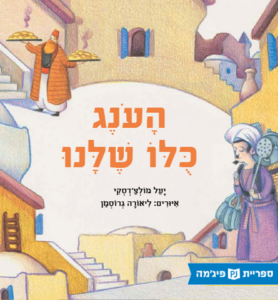 The Peddler and the Baker (Literally in Hebrew: Pleasure’s All Ours)
 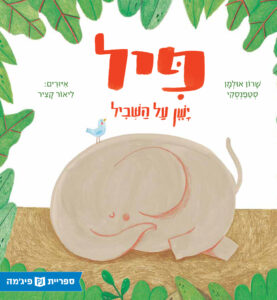 Elephant on the Path
 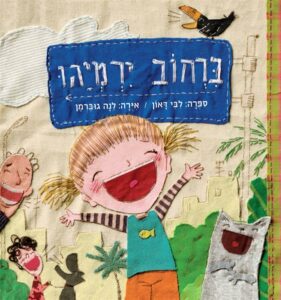 Yirmiyahu Street
 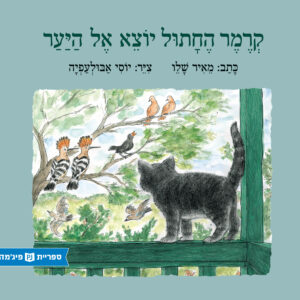 Kramer the Cat Goes into the Forest
 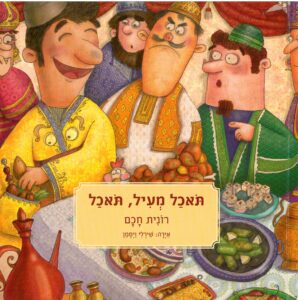 Eat, Coat, Eat!
 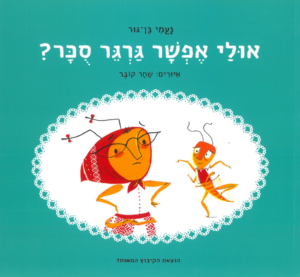 Can you Spare a Spot of Sugar
  שִׂיחָה
 שֵׁמַע
 יְצִירָה
 בִּשּׁוּל
 סִרְטוֹנִים
 שִׁלּוּב הַסֵּפֶר
 מִשְׂחָק
 הַעֲשָׁרָה
 הַמְחָשָׁה
 הַשְׁרָאָה
 קְרִיאָה
 לָצֵאת הַחוּצָה
 כְּלָלִי