ילדים ומבוגרים רבים מטפחים אוספים שונים. אוספים מעניקים ביטחון, ומפתחים את העולם הפנימי האישי. תחביבים מרחיבים אופקים ומסייעים לגבש את הזהות האישית. קיבצנו עבורכם ספרים שעוסקים באוספים ובתחביבים, שאהובים כל כך על ילדים ומעשירים את החיים בשמחה ובסקרנות.
Parents may want to share the stories they liked while growing up: Was there a particular story you enjoyed hearing over and over again? Who was your favorite protagonist? You could ask your child which stories they like. Are they fictional or true stories?
When do the illustrations tell the story of Leo and Mr. Zinger, and when do they complement the story the two of them made up? You may enjoy taking a look at the illustrations together, noticing the various styles, and thinking of ways of discerning what the illustrations refer to, and what they are telling us.
Which stories are hidden in the hats you own? how about choosing one of your favorite hats and telling the story that is hiding in it: one player looks into the hat and starts inventing a story. After one or two sentences, they pause, and the next player picks up the story, and so on, until all players have added their part to it. Bashevis Singer could serve as a source of inspiration for telling a family story that has been passed down in your family.
Would you like to play a game? Perhaps you would enjoy writing the names of your favorite characters from books on pieces of paper, and taking turns wearing a hat bearing the name of the character. Whoever wears the hat does not see the name written on the piece of paper attached to it, and must guess who it is using questions, such as: Is it a fictional character? Is it an animal?
One could collect leaves, seashells, stones, napkins, marbles, dolls, or even… words. Do you, parents, also have similar collections, or had them when you were younger? You are more than welcome to tell your child about them, and invite them to take a look around them to see what else they could collect. You could start working on a brand new, joint collection right now!
A tin box, kettle, crate or shoebox could each become a home for beloved items. You could decorate your container of choice with newspaper cuttings, buttons, leaves, seashells, colorful sand, or any other suitable material that you may find at home or outdoors. Are you done? Is your container ready? Now’s the time to fill it up with treasures.
One leaf looks like a feather, some stones look like eggs, and what shape is a pinecone? You may enjoy collecting leaves, stones, pinecones, or anything else you find around you, and… play: Take turns picking an item, and having the other players name objects to which it is similar.
What’s new in your surroundings? Perhaps you could go outside and take a fresh look at the environment: Which animals will you come across? What colors and shapes are the leaves? What is happening up above in the sky, or down below on the ground? You may enjoy creating your own path, take a walk on it from time to time, and check what has remained the same, and what has changed.
Annabelle was a happy child. What, do you think, made her happy? How do you feel when you give to others? Can you think of something like Annabelle’s yarn – things you can give others many times over?
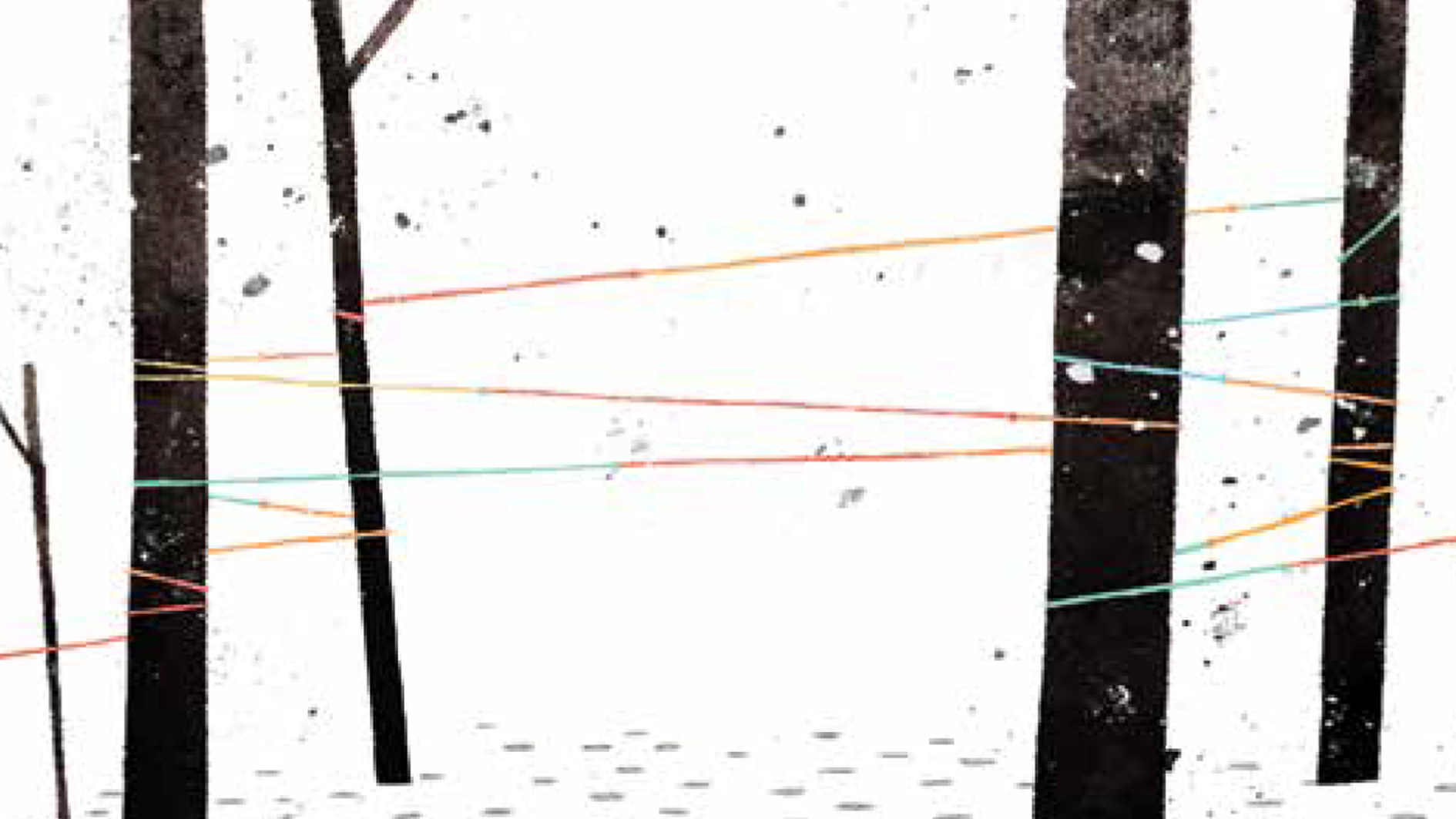
Yarn can be used to create a track for a single-rule game “Don’t touch the yarn!”. How do you play? Tie lots of pieces of rope, string and lace together to create long “yarn”, and wind it round the furniture and other objects in the room. Create an obstacle course that players must follow without touching the yarn: you can jump over it, crawl under it, or choose any creative way to avoid it, as long as you don’t touch it!
Annabelle knit more and more colorful clothes that made all her townspeople happy. Like her, you too could create your very own attire as a family fashion statement. Think of the kind of special piece of clothing you would like to make: Should it be a certain color shirt? An interesting brooch? A bracelet, adorned hat, special socks, or other item of clothing your entire family agrees on?
Annabelle loves knitting. Are there any kinds of arts or crafts that both you and your child enjoy doing? Perhaps o
ne of you loves to cook, while the other is a plasticine sculptor? You may enjoy asking each family member what kind of art or craft they like to engage in, and suggest joining then to gain some hands-on experience.
Suggestions for arts & crafts activities using yarn can be found on our website and the PJLibrary Pinterest page.
You may want to leaf through the book and look at the illustrations together. What can you see out of Shusha’s bedroom window? What can you see out of your child’s bedroom window?
Shusha dreams of being a famous painter. Perhaps you could discuss each of your family members’ talents and dreams.
Shusha has the best time at her grandmother’s. what does your child enjoy doing with their grandparents or uncles and aunts? You may enjoy discussing the uniqueness of their relationship with each member of your extended family, and plan the next time you all get together.
Drawing on walls, as Shusha does, is usually prohibited. You could, however, put a large sheet of paper up on a wall or door to draw on. Perhaps you could add details over time to gradually create your very own family wall painting.
Shusha waves, and the sheep follows suit. You may want to use chalk to outline your child’s shadow in your backyard or on the sidewalk, and return an hour later to the same exact spot, to see how their shadow grows longer and moves in tandem with the sun.
Shusha sees a black sheep in her shadow. Perhaps you could turn off the main lights, and turn on a small lamp to check what kind of shadows form on the walls when we put our fingers or various items between the small light and the wall.
How about visiting an art exhibition at a gallery or museum with your child? Discover which paintings you like best, and whether you and your child have similar taste. You could even pick one or two of your favorite pieces, and learn some fun facts about the artists that painted them.
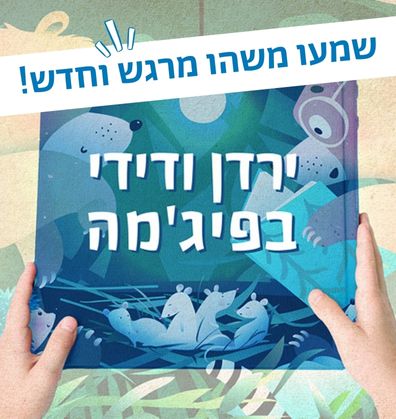
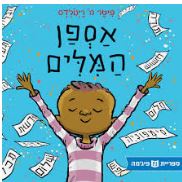
You may want to leaf through the book together, and notice the combinations of words and illustrations. Is your child familiar with many of the words comprising Jim’s collection?
Perhaps you could open a dictionary, or go to Milog at milog.co.il, to show your child just how rich the Hebrew language is. You could even create a family dictionary: decorate a special notebook, adding new and interesting words to it each time. Your child could illustrate the dictionary too.
You may want to ask your child why they think Jim chose to empty his collection into the wind. Is there anything that makes you particularly happy that you would like to share with others?
Like Jim, many children enjoy collecting things – pebbles, cards, special napkins from cafes. Did you have a collection as a young child? Share those memories with your child, they may inspire them to continue the family tradition, or start a collection of their own.
Words are a great way of expressing our feelings. Perhaps you could make notes, write your feelings on them, add a drawing, and stick them on your fridge, front door, or headboard. These notes may be used when we want to express our feelings and cannot seem to find the right words to do so.
Do you remember any words your child mispronounced when they were just learning to speak? If so, share them with your child, and write them down so that you will never forget.
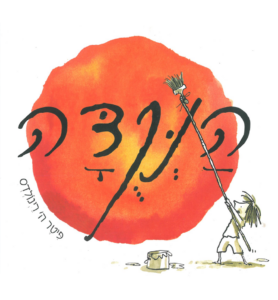
You may want to discuss Amalya’s “magical secret”, which helped her believe in her drawing ability. What made her believe in herself, and how did she help the boy she met at the exhibition believe in his own talent? What do you think happened after the boy signed his drawing? You could try to continue the story.
This story demonstrates the power of encouraging words of reassurance. You could announce the launce of a “pep talk campaign” at home: cut out notes of various colors and sizes, and have all family members write encouraging words and phrases on them. Hang the notes in various places around the house: on the fridge; on the bathroom mirror; in your schoolbag; under your pillow… When your self-esteem drops and fear takes over, all you have to do is look up and remember that a team of cheerleaders is behind each and every one of us.
Every painting starts with a dot: You may want to take a sheet of paper and crayons, and make a joint drawing – the parent starts with a dot, and the child adds another detail, followed by the parent, and so on. At the end of this exercise you will get a shared drawing that each of you made a small contribution towards, which began with a single dot.
Every work of art, be it as small as a dot, can grow and evolve into an entire exhibition. You may enjoy taking your child to an exhibition at a gallery, theater, or museum. Perhaps you could pick a piece your child especially likes, and try to think which point the artist started from, and what they were trying to express.
Amalya’s teacher tells her to “just make a mark, and see what happens”. You may want to remind one another of your child’s or your own achievements that once seemed impossible. How did you overcome the difficulties along the way? Did anyone encourage you to get there? You could tell your child about a person that encouraged you to believe in yourself.
Every mountain climb begins with a single step. What sort of capabilities and talents would you like to develop? Is there a member of your family who can help you get there? What are you able to teach others? Who can you encourage?
To learn more about The Dot and author Peter H. Reynolds, and for more activity ideas, please visit www.peterhreynolds.com/dot



 Mr. Zinger’s Hat
 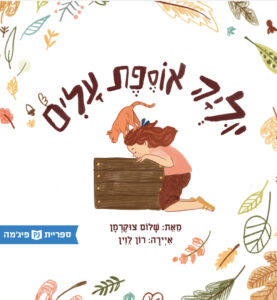 Julia and the Leaves
 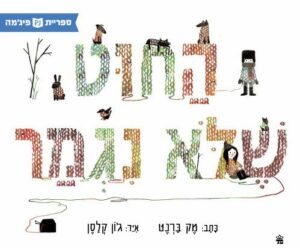 Extra Yarn
 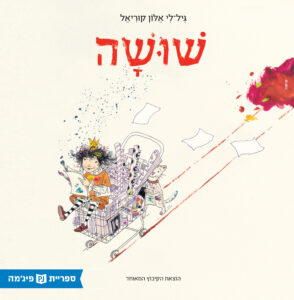 Shusha
  The Word Collector
  The Dot
  שִׂיחָה
 הַשְׁרָאָה
 מִשְׂחָק
 סִרְטוֹנִים
 יְצִירָה
 לָצֵאת הַחוּצָה
 כְּלָלִי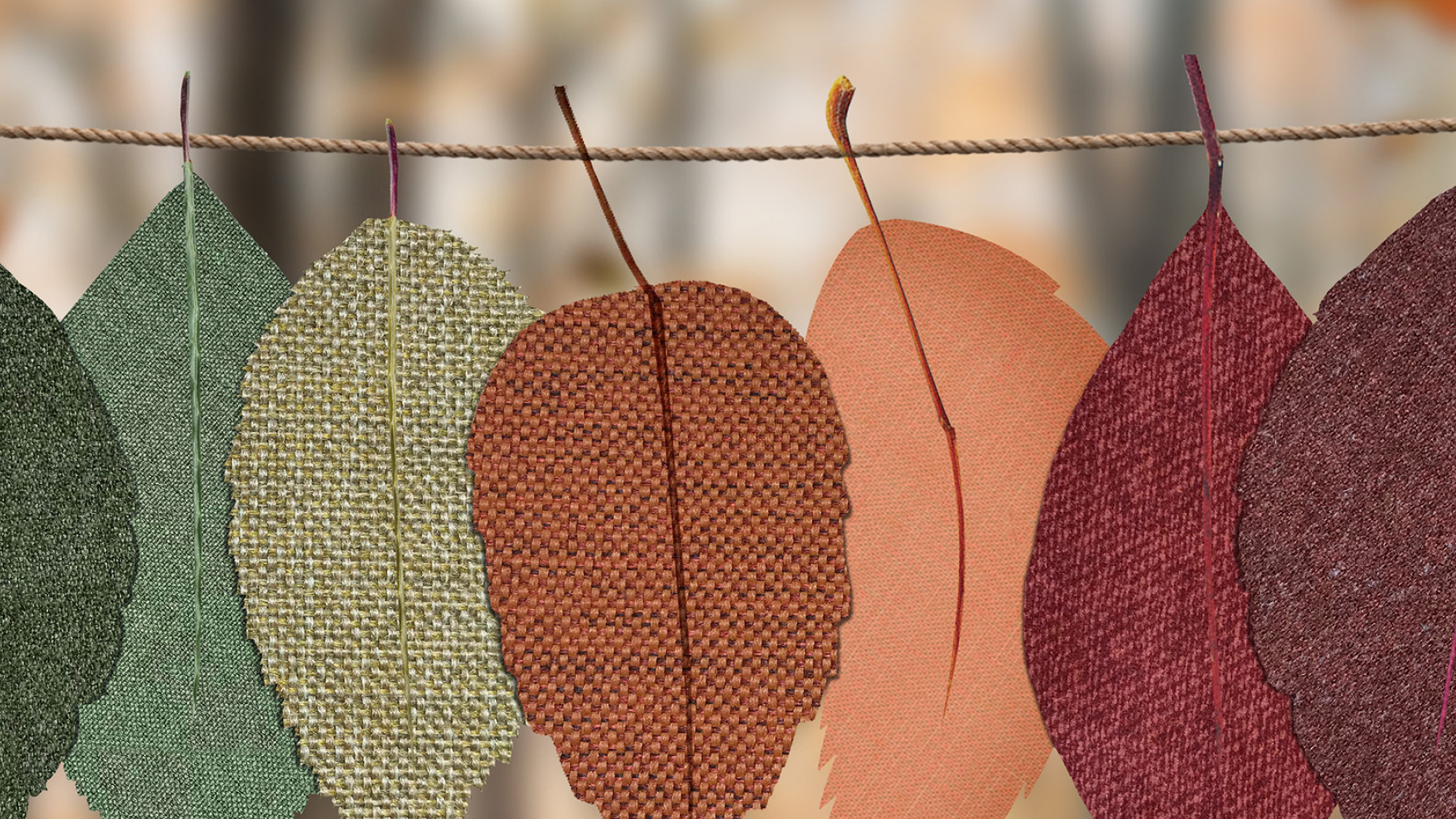




 – suggestions for game cards and arts & crafts can be found on the PJLibrary Pinterest page.