סְּפָרִים
Book-Related Family Activities
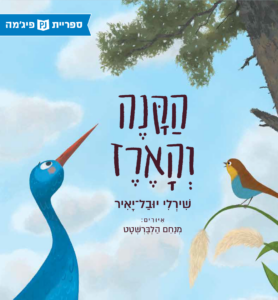
A discussion on reeds and cedars
You may enjoy discussing flexibility and stability in life. You may want to share examples from everyday life. Situations in which we behave like cedars, rooted in our positions, or situations in which we are agile, changing our behavior or opinion. What happens when we realize that our desires cannot be met as we expected them to be?
An exercise in physical flexibility
You may enjoy sitting opposite one another, inhaling and lifting your arms up at your sides until they are straight up. Next, exhale while lowering your arms until they reach out in front of you. We recommend doing some short exercises each time and gradually add more. Enjoy!
A game of reed-cedar
What’s the opposite of reed? Cedar! And what’s the opposite of hot? Cold! And the opposite of old? Young! What’s the oppostive of…flexible? stable? sour? baby? Take turns saying a word and having the other players come up with its antonym. By the way, what’s the opposite of… opposite?
Discussing – Giving love
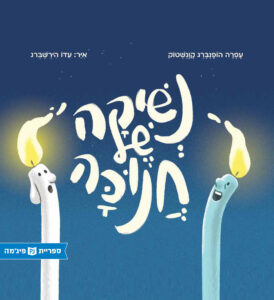
The Shamash understands that a flame is endless, much like love. What do you think? Can love keep growing like a flame, even after some of it has been given to others? Do we have enough love for all those we care about?
Inspiration – From one generation to another
The story of Hanukkah is passed down from one generation to the next. Do you have stories, songs, or recipes that are passed down in your family? After lighting the Hanukkah candles, you may want to tell your child how you celebrated Hanukkah when you were growing up, and add stories you heard from your own family. How about singing a good old family song, or preparing some food for all of you to enjoy?
Playing – Passing the love around
As you light the Hanukkah candles, watch how they pass the flame from one to the other. Just like the Menorah candles, you could pass the love around in your family: stand in a row, and pass round the love “flame” by giving each other hugs and kisses, or saying something nice. You could go round several times, if you wish, finding new ways of expressing love and passing it round to different family members each time.
Moving – The candle race
This game is similar to a relay race, only instead of passing a baton to the next runner, you pass a candle: each time one of your family members runs with the candle to a set point, where another family member is waiting to receive the candle and run on to the next spot. You may want to create a circular route where you play round and round, or one with a start and finish line. Did you manage to pass the candle on? Good job! Afterwards, you can pass round some cushions and drinks, and rest together.
Doing some arts & crafts – A de-light-ful greeting card
Hanukkah provides us with a wonderful opportunity to bring joy and light into our loved ones, neighbors, and family’s hearts: you may want to make a greeting card in the shape of a candle in which to write a heartwarming greeting that will light up your holiday and that of its recipient.
Who was Rabbi Akiva?
Rabbi Akiva, one of the greatest Jewish Rabbis, lived in Eretz Israel between 50 and 137 CE, from the destruction of the Second Temple to the Bar Kokhba revolt. He partook in the writing of the Mishna and in forming Halacha, and was the spiritual leader of the Bar Kokhba revolt. Many legends and stories have been written about Rabbi Akiva, and numerous sayings attributed to him. One of his most famous statements are: “Amar Rabbi Akiva: ‘Veahavta lereacha Kamocha – zeh klal gadol baTorah (And Rabbi Akiva said: ‘Love thy neighbor’ – that is a major rule of the Torah”) (Bereshit Rabba, 24:8). Rabbi Akiva started out as a shepherd, and only began to study Torah at the age of forty. His life story, like that of many leaders and sages, teaches us that Torah and knowledge are available to all of us, at any time.
Proposed Family Activities:
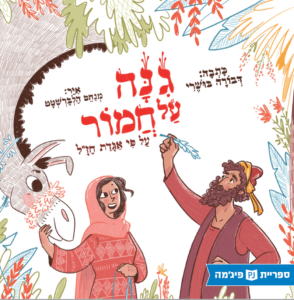
- You may want to ask your child to look for the illustration of the donkey with the garden on its back. If that donkey could speak, what would it say? How does it feel, and what does it think? Perhaps you could make up a dialog between Rachel and the donkey. Suggest that your child choose one of the characters, and share an imaginary conversation with each other in which Rachel and the donkey express their feelings and intentions.
- Have you ever avoided learning something in a new area because you were too embarrassed to do so? Perhaps you too have learned something at an older age, such as a new language, learning to play a musical instrument, or a new profession? You may want to share those experiences with your child. You could even ask them to teach you something that they can do well. Or how about going somewhere together and learning something new? Because the bashful cannot learn!
- Rachel plants a garden on the donkey’s back. You may enjoy finding an old pair of shoes, a teapot or an old hat, filling them with soil together with your child, and planting a garden of your own.
- Many stories have been written about Rachel and Rabbi Akiva. You may want to look for more tales about these exemplary characters at home, the library, or online, in order to become better acquainted with them. If you are familiar with the tune of this song, you could sing together: “Amar Rabbi Akiva: ‘Veahavta lereacha Kamocha – zeh klal gadol baTorah (And Rabbi Akiva said: ‘Love thy neighbor’ – that is a major rule of the Torah”).
בדיוק אותו דבר – דתיה בן דור – מתוך "פרפר נחמד"
בדיוק אותו דבר – דתיה בן דור – מתוך “פרפר נחמד”
הכנת קיפוד מנייר – סרטון הוראות הכנה
A recipe for Tali's Grandma's apple pie
Ingredients
2 eggs, whisked
2 apples, peeled and diced
2 tablespoons of brown sugar
1 tablespoon of cinnamon powder
I cup of self-raising flower (or 1 cup of regular flour and a teaspoon of baking powder)
2/3 cup of white sugar
½ cup of oil
A pinch of salt
Method
Pre-heat the oven to 180 degrees.
Mix the diced apples with the cinnamon and brown sugar.
Whisk the eggs and white sugar together, and add the rest of the ingredients.
Mix the batter well.
Bake for 30-40 minutes until the pie is firm and golden.
Serve hot next to a scoop of vanilla ice cream.
Proposed Family Activities:
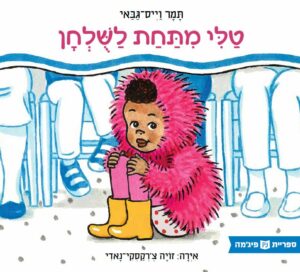
- You may want to look at the illustrations closely together. You could ask your child to pick a character, and tell the story from his/her perspective.
- Perhaps you could ask your child what Shira did by joining Tali under the table. You could share ideas for ways out of situations in which you feel angry, sad, or upset. You may want to share an experience in which you helped cheer someone up.
- It is not always easy to discern how others are feeling. You may enjoy standing with your child in front of the mirror, taking turns to make faces, as the other guesses which emotion those faces are designed to convey.
מה עשתה שירה
אפשר לשאול את ילדיכם מה עשתה שירה כשהיא הצטרפה לטלי מתחת לשולחן. אפשר גם לשתף זה את זה בשאלה מה עוזר לכל אחד מכם לצאת ממצבי כעס, עצב או עצבנות. תוכלו להיזכר בפעם שעזרתם למישהו ושיפרתם את מצב הרוח שלו.
לא תמיד קל לזהות את הרגשות של האחר
לא תמיד קל לזהות את הרגשות של האחר. תוכלו לעמוד עם ילדיכם מול המראה, כל אחד בתורו יעשה פרצוף מול המראה, והשני ינסה לנחש איזה רגש הוא מביע.
האזינו לסיפור "החוצה"
הימים האלו עכשיו הם ימים לא רגילים, ובימים כאלה סיפורים יכולים לשמח, לרגש, אפילו להצחיק. אנו מזמינים אתכם/ן להאזין להקלטה הקסומה של הספר “החוצה”, מאת: רינת פרימו | איורים: איתי רייכרט | ידיעות ספרים.
האם יצליח אבא ללמד את איתמר שגם המסדרון, חדר המדרגות ואפילו הרחוב הם שלו? האזינו לסיפור וגלו!
יוצרים ומגישים: ירדן בר כוכבא – הלפרין ודידי שחר
מוזיקה ונגינה: טל בלכרוביץ’
פתיח ההסכת ולחן השיר בסיפור “החוצה”: דידי שחר
Proposed Family Activities:
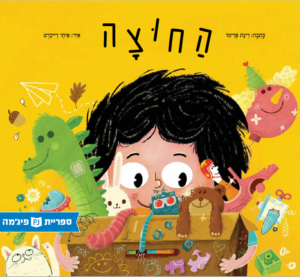
- You may want to lead through this book, and look at the illustrations together. You could ask your child to tell you the story in their own words based on the sequence of illustrations.
- Perhaps you could ask your child for their opinion as to why Itamar’s father tells him that the corridor, stairwell, and street belong to him too.
- Perhaps you would enjoy taking a walk in the neighborhood, and discovering the buildings, roads, and landscape near your home. Does anything in the shared spaces need improving or cleaning? Perhaps you could initiate a local activity, such as tidying up and decorating the stairwell in your building, or setting up a community garden.
- Your child can join Itamar by tidying up their room, and sorting through their toys. Perhaps you will find long-forgotten “treasures”! You may want to decide what to keep and what to throw out, or donate to others, together. You can also try to fix broken toys, or think of ways to recycle some items, and use them in a new way.
- Do you also have some broken crayons you were thinking of throwing out? They can be recycled! Sort them into similar shades, peel off their paper labels, and place them into a paper or silicone baking tray. Bake at a low heat until the crayons melt, cool the mixture, take out of the baking tray, and enjoy your new, multi-colored crayons!
Proposed Family Activities:
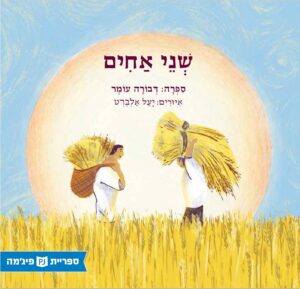
- You may want to leaf through the book and look for all the activities that the brothers do together. Perhaps your child can think with you about all the things around the house that are easier and more fun to do together by joining forces.
- There are many words in Hebrew that describe farming. Does your child know the names of all the different actions? You could look at the illustrations depicting farming activities in the book, and try to do the same using hand gestures.
- Each of the brothers is considerate of the other, and gives up his share without ever having been asked to do so. You may enjoy making an illustrated list together of examples of actions that show how each of you has conceded and helped members of your family.
- Like the brothers in this book, you too can make a heartwarming surprise for your child during the night, to which they will open their eyes in the morning. Afterwards, your child may surprise you too!
- The brothers in this story understand that dividing things up equally is not always the fairest method, and therefore each of them wishes to give up some of his share for his brother. You may want to discuss the different needs of your own family members, and promise your child that even when they do not get exactly the same things as their siblings, they too will always get what they need.
- “Each of us has a city called Jerusalem” (Natan Yonatan): the book informs us that the Temple in Jerusalem was built on the exact spot where the two brothers met. Having read this story, you may want to look for pictures of Jerusalem together, sing songs about the city, and tell your children about “your Jerusalem”.
Proposed Family Activities:
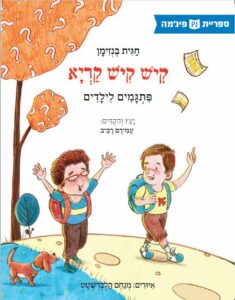
- You may want to look at the table of contents, choose a different idiom each time, and read the story that demonstrates it. Perhaps you could pick your favorite one, tell your child when you use it, and why you are so fond of it. If there is an idiom that your child particularly likes, ask them to tell you when they use it, and why they are so fond of it.
- The illustrations in this book are amusing, as they are a mixture of realistic and imaginary elements. You too could collect your favorite proverbs, illustrate them, and create your own family book of proverbs and idioms.
- How about playing a form of charades? You could each pick an idiom, and act it out. Were others able to guess which one you chose?
- Was your child familiar with the proverbs and idioms in the book before reading it? Do you and your child know any other expressions? Perhaps there are unique ones, whether in Hebrew or other languages, that are used by your family members? You could visit your grandparents, or uncles and aunts, and ask them to teach you a new proverb.
- You may enjoy making up your own idiom. Were you able to come up with one? If so, please send it to us, at [email protected]
“All good things come to an end” – this book celebrates the completion of five years of friendship between your family and PJ Library. We hope you have enjoyed reading the books you had received together, and wish your children many more years of joy reading books!
Proposed Family Activities:
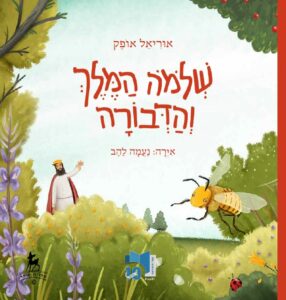
- You may enjoy looking at the illustrations together. The bee appears on every page (sometimes it is hidden). You could try to follow it, and tell the story from her perspective. Can you identify the various gifts that the Queen of Sheba brings King Solomon? What kinds of gifts can one bring a king? Does he need them?
- You may want to look for the illustration in which King Solomon lets the bee go. Perhaps you could ask your child: Why is he laughing? Does he truly believe a small bee could ever help him?
- You could pretend to be bees yourselves. Let your child be the bee, and pretend to be its fellow bee. Fly together and buzz to one another – your child will tell you all about the bee’s encounter with the king, and you can react to the story.
- “Wise is he who learns from all men”: you may want to ask your child what makes one wise, what wisdom is, and what King Solomon learned from the little bee. Perhaps you could tell your child something they did not know, and ask them to enlighten you with their knowledge!
- Perhaps you could discuss the skills and contributions made by each member of your family. Together, try to remember times when your child was particularly helpful. Even the youngest members have their “hour”, in which they help and contribute to the greater good.
- The Queen of Sheba came to Jerusalem to ask King Solomon riddles and test his wisdom. Do you know any riddles? You can put them to your child, or invent some new ones together.
- This story is based on a tale about King Solomon, “the wisest man who ever lived”. Do you know any other stories about King Solomon? Perhaps you could share them with your child.
Family reading tips
Adrianus (Hadrian) was a Roman emperor from 117 to 138. The Roman empire thrived under his reign. Adrianus suppressed the Bar Kokhba revolt and enacted regulations against the Jewish people. In the Talmudic legends (Midrashim) he is described as a wise and well-educated emperor, but also as being cruel. He is often cited as the main cause of the destruction of Judea.
Basket full of gifts
Special gifts are passed through generations: a family story, a tasty recipe or a unique holiday tradition. What important gift did you receive from your parents, grandparents or other family members?
Past to future
Take a look around the house: What items can you find that were made in the past? Can you find things that were created recently which can be used by future generations? Maybe a new building being built, a playground, a school or a grove?
Make a family album
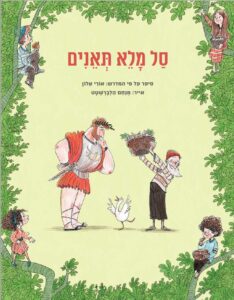
The old man in the story left figs for future generations, and we are left with the story. Why not create a family album with family photos and stories. You can add photos from trips or special occasions, and share stories of things you experienced.
Find more arts and craft projects, songs and other activities on Sifriyat Sifriyat Pijama Library’s Pinterest page.
The Family Ship
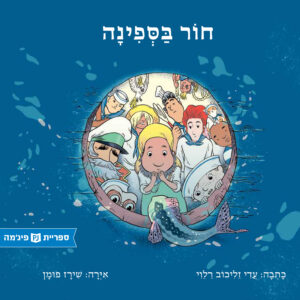
You can look at the illustrations together, ask and share: Is anything other than the rope tying the sailors to one another? Just like on the ship – what connects members of our household to one another? How do you view the role played by each member? How can each of them contribute to the family “ship”?
An Illustration in Gestures
A funny chef arranging strawberries on a cake, or a fisherman trying to walk with his leg stuck in a bucket – the illustrations in this book are full of interesting details. You can select one amusing illustration at a time, describe it in your own words, and try to convey what it portrays using gestures.
We Are all One Ship
Stand in a row holding hands with some friends or family members. Now try to walk a pre-determined course, such as from the living room to the bedroom. You can add some “waves” – meaning obstacles that you need to climb over or crawl under without letting go of each other’s hands. What will happen if someone let’s go? Will the “ship” be able to sail?
Experiment
You can give a demonstration of a “hole in the ship” using a bucket full of water and a cardboard cup or bowl. Your bucket will be the great big sea, while your cup or bowl will be the ship – sail your ship and watch it float on the water. What will happen if you make a hole at the bottom of it? Try it and find out!
Arts & crafts, inspirations, and other surprises can be found on the Sifriyat Pijama Pinterest page.
Family Activities
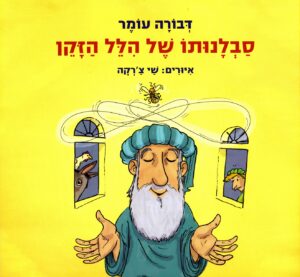
- Notice the fly in the illustrations that accompany the story: It, too, tries to irritate, and usually, it succeeds. Try to tell the story with your children from the fly’s vantage point.
- In order to shake Hillel out of his tranquility the man chose to approach him at a very inconvenient time of day: just before the start of the Sabbath. Are there times when it is not advisable to ask your children questions or to request something of them? Do your children know when it is not advisable to ask you questions?
- You can act out the story with your children. You can wrap the head of “Hillel” with a large towel, and add a tub and bath accessories. The “friend” can look for Hillel, call out to him and make up strange questions of his own. You are invited to photograph your skit and send the pictures to the Sifriyat Pijama website: pj.crunchcart.com/.
- In the story a man approaches Hillel and attempts to provoke him. Coping with provocation is a task required of almost all young children. The story about Hillel may present an opportunity for family discussion on the topic of teasing and provocation, and an invitation for your children to describe how they know when one child is trying to provoke another, and what one can do when this happens.
- You can make your own bubble bath: Take some old soap and shred it with a grater into a bowl. Add warm water and whip it with a mixer until you get thick suds. You can add a few drops of food coloring to the suds. The children will enjoy bathing with the special suds they made with you!
- Hillel was an exemplary figure who knew how to control his anger. What helps us overcome our anger? You can prepare a “Hillel doll” with your children. The children can ask for advice from the doll and tell it what helps them get over their anger. Make the doll from an old sock, on which you can draw a mouth, glue two eyes, and add white hair from cotton wool. You can even make a hat for the doll. Place your hand inside the sock, and have the doll answer the children’s or parents’ questions and make up new stories. This is also an opportunity for you to share with your children ways that help you cope with anger when it arises.
Activities You Can Do at Home
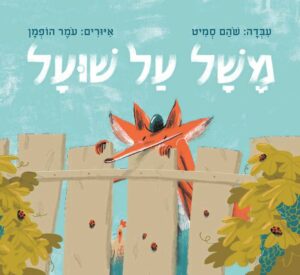
- Discuss together the fox’s behavior: do you think it paid off? Was there some other course of action he might have taken, without going hungry and getting so thin — twice?
- Flip through the book and ask your children to tell you the fable using only the pictures as a guide. Pay special attention to the details the illustrator added – for example, what is the fox dreaming about? What other animals appear in the pictures but not in the story?
- The fox really wanted those grapes and was willing to go to tremendous lengths in order to reach them. You might talk with your children about something they might really want, and about what sort of effort they’d be willing to invest to obtain it. Do you know any other fables? The original story appeared in Midrash Kohelet Rabbah, and was included in Haim Nachman Bialik’s Book of Legends, which anthologized hundreds of fables from the Talmud and Midrash. You can find lots more fables and stories of our sages online: in Hebrew at http://agadastories.org , and in English at http://www.chabad.org/library/article_cdo/aid/112670/jewish/Fables-Parables.htm.
- The fox “stars” in many tales and fables. You might discuss with your children the fox’s sly and clever nature. Do you know any other stories featuring a fox (for example, “The Fox and the Chickens” by Haim N. Bialik, or other fox fables)?
- Your children may act out the story using a doll or stuffed animal. When the skit is finished, you can offer both actors and audience bunches of grapes for refreshment!
Suggested Family Activities
- You can flip through the illustrations with your children and identify the work that the brothers do together. In every home there are tasks that invite collaboration. Which household chores are easier and more pleasant to carry out together?
- There are many verbs that describe the work of the farmer. Do your children know them? You can act out the different actions using pantomime.
- Each of the brothers considers the other’s needs and gives up his share without being asked. Together with your children, you can make an illustrated list of examples where members of your family share and are considerate to one another.
- Like the brothers in the story, you too can prepare a surprise for your children in the middle of the night. Following your example, your children may surprise you too!
- The brothers in the story understand that fair does not always mean equal. How true this is in family life as well! You can demonstrate this principle using clothes: Gather up different pieces of clothing belonging to the members of the family and ask your children to sort them. Would it be fair to give Mommy’s blouse to a child, or Daddy’s slacks to a baby? This can lead into a discussion of the needs of members of your family, and to your assurance that their needs are met, even if they don’t always get exactly the same thing as their siblings.
- “Everyone has a city named Jerusalem” (Natan Yonatan): After reading together the tale of the Temple, you can show your children pictures of Jerusalem (or visit!), sing songs about Jerusalem, and relay to your children stories about “your Jerusalem”.
Family Activities
- Each family has its own “special spice” that adds flavor and fragrance and distinguishes it from others. Following the story you are invited to discuss your family’s Shabbat with your children. You may prepare an “Our Family Shabbat” album of photographs and drawings, in which you note all the people and activities that make your Shabbat special.
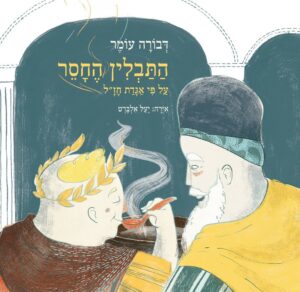
- Look at the illustrations together with your child. Can you find the horse and the goat? You can ask your child: What are they doing on each page? The animals’ facial expressions give us a sense of what the might be thinking. If the animals could talk, what do you think they would have to say about the “missing spice”?
- You can draw your child’s attention to the clothes and landscape depicted in the illustrations that are characteristic of the time of the Mishna in the Land of Israel. Ask your child to compare Rabbi Yehuda Hanassi’s clothing with that of Antoninus the Roman. Using the story as inspiration, you and your child can dress up, set a festive table and act out the plot of the story.
- “Spice and Spirit”: You can mix together different spices for use at Havdalah or as potpourri to add a pleasant scent to your closets. Invite your child to select the spices (for example, cinnamon, cloves, peppermint…). Carefully pour the spices into a small bag, tie the ends, decorate and take a whiff!
- Do you, like Rabbi Yehuda Hanassi, welcome company on Shabbat? Many children enjoy taking part in the preparations for hosting others in their home. Young children can participate by preparing a “Welcome!” sign to be posted on the door, helping set the table, assisting in the kitchen or decorating each guest’s setting at the table with a special piece of their artwork.
- Rabbi Yehuda Hanassi lived in the Galilee, in the area of Tzipori and Bet She’arim. You can learn more about these sites on the internet, show your child pictures of archaeological findings, and take a “virtual trip” to the nature reserves in these places. And if you’re lucky – you may even visit there as a family!
Suggested Family Activities
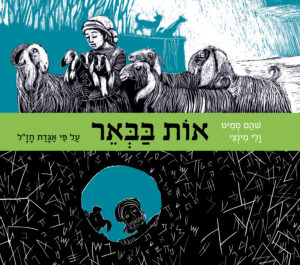
- Look through the illustrations accompanying the story, and note the many things Akiva the shepherd knew before he learned to read and write. Then you can remind your children of the many things they know and can do.
- Many Jewish leaders started out as shepherds. You can discuss with your children the tasks involved in shepherding and consider the attributes that characterize a good shepherd. You might ask your child what it is in the essence of the shepherd’s work that helped Rabbi Akiva become a wise teacher and great Jewish leader.
- “One who is shy does not learn” (Avot 2,5): When Akiva saw the signs on the walls of the well and did not know how they were created, he went to the beit midrash (Jewish study hall) for answers. Where do you and your children seek answers to your questions? Are there things that your children know and you don’t? Don’t be shy – ask them!
- You can prepare a clay or Play-Do model of the well with your children. Using a knife or toothpick, you can make signs in the sides of the well – just like in the story.
- Many young children have heard of Rabbi Akiva and his wife Rachel from stories and songs. You can share other tales of Rabbi Akiva with each other and, if you know the tune, sing together “Rabbi Akiva said: Love your fellow as yourself”.
Who was Rabbi Akiva?
Rabbi Akiva, one of the most important sages in Jewish tradition, lived in the land of Israel between the years 17-137 CE. He played a role in editing the Mishna and in designing Halacha, and was the spiritual leader of the Bar-Kochva uprising against the Romans. Many stories and tales were written about Rabbi Akiva, and well-known sayings are attributed to him. One of his more famous sayings is “Rabbi Akiva said: ‘Love your fellow as yourself’: This is a great principle of the Torah” (Breishit Rabba 24,8). According to tradition, Rabbi Akiva was the son of converts and did not learn Torah until he was an adult. The story of his life, like that of other leaders and wise people in Jewish tradition, emphasizes that the Torah is accessible to everyone, even those who didn’t have the opportunity to study when they were young.
The source of the tale about Rabbi Akiva can be found in Avot D’Rabbi Natan 6,2.
Family Activities
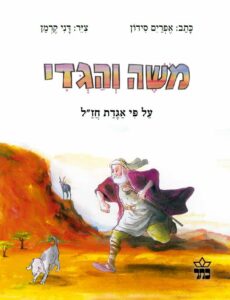
- Have your children “read” the pictures and tell you the story, using the illustrations as their guide. You could pay particular attention to Moses’ facial expressions, and ask your children why they think he didn’t give up on one little kid, despite the fact that he had an entire large flock with plenty of goats?
- Even young children can be “big” and responsible! Help your children recall occasions when they were helpful to other children or small animals. Point out that even small, seemingly unimportant acts of kindness can be very meaningful for those in need; they also serve as a personal example for the entire “flock.” Afterwards, you could draw a picture together depicting one of the times when your children helped others.
- The story of Moses and the kid takes place in a desert. Are your children familiar with desert life – the different kinds of flora and fauna, the wells and oases, etc.? Have you ever visited a desert? Or perhaps you live in a desert area? You might go on a field trip, and compare the climate and scenery on your trip to that in the story.
- Look for the illustration that shows Moses carrying the little kid on his shoulders. Ask your children if they ever felt so tired that they asked to be picked up. Children often ask to be carried, even after they are big enough to walk on their own. You could discuss the times you carried them and the times they were able to walk independently. You could play piggy-back around the house, pretending to be Moses with the little kid.
- Many of our leaders started out as shepherds. Discuss the work that a shepherd does, and the qualities that go into making a shepherd. You could think together about how working as a shepherd helped Moses, when the time came, to lead the Israelites in the wilderness. Try to recall other shepherd-leaders in Jewish tradition (for example, King David and Rabbi Akiva).
- Moses struggles to catch up with the fleet-footed little kid. You could play “catch” together. First, you might play the role of Moses and call to the kid, “Little kid, stop. Little kid, come back!” while your children play the kid that “runs faster and faster.” Then switch roles. Who ran faster – you, or your children?
- What other stories and tales about Moses do your children know? After reading this book, you could tell the story of the Exodus from Egypt and the Israelites’ wanderings in the wilderness, and talk about the figure of Moses.
Family Activities
- Stage a family play based on the story. Find simple props at home (sheets and scarves can be used to improvise costumes for Noah and his family; dolls, puppets, and stuffed animals can stand in for the various kinds of animals) and try to imagine the sights, sounds, and smells in the background. Think of ways you could represent the stormy sea, and what might serve as your ark?
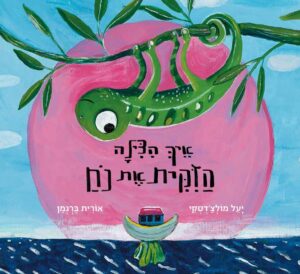
- The illustrations that accompany this story add a lot of details that aren’t in the text. Examine the pictures and see if you can identify the different creatures. Can your children name them all? You could divide them up into “family groups” (birds, insects, etc.).What animals do your children know that do not appear in the story? Do your children know how to assign these animals, too, to their “family groups”?
- Noah is concerned about all the creatures on the ark and devotes himself to their care. Talk with your children about the proper way to treat animals, and discuss what “proper care” entails. Take this book with you when you visit a zoo or nature center, and see if you and your children can locate there some of the animals that appear in the book. Some zoos and nature centers let you watch while they feed the animals; others even permit you and your children to participate in the feeding. Do your children know what each type of animal eats, which animals they are allowed to feed, and what food they should be fed? After this visit, you could talk about the differences between domestic pets and wild animals, how we handle animals in captivity, and other related topics.
- “To each his own.” Noah feeds each animal the kind of food that’s appropriate for its species, and he tries very hard to figure out which food will suit the chameleons. Do all the members of your family like to eat the same things? Or do you, like Noah, prepare special foods for different family members, based on individual preferences, allergies, or ages? You could discuss food preferences with your children and see which foods everyone in the family likes, and which are enjoyed only by individual family members.
- Make a model ark out of a shoe box. Ask your children to decorate the model ark as imagination dictates; then put in dolls and either Lego or game pieces to represent Noah, his family, and the various animals.
- This story is based on a Midrash, which in turn was based on the Biblical account of Noah. You could talk about Noah’s character with your children, and retell the story of Noah and the flood. If you know any other Midrashic tales about Noah and the ark, you could share those with your children as well.
Have fun reading and talking about this story!
The Story of Noah and the Chameleon appears in Gemara, Tractate Sanhedrin 108:42
“It is written, ‘After their kinds they went forth from the ark.’ Now, how were you situated?” — He replied. ‘We had much trouble in the ark. The animals which are usually fed by day we fed by day; and those normally fed by night, we fed by night. But my father [Noah] did not know what food the chameleon ate. One day he was sitting and cutting up a pomegranate, when a worm fell out of it, which it [the chameleon] consumed. From then onward, he mashed up bran for it, and when it became wormy, the chameleon devoured it.’
Family Activities
The characters described in the stories are often referred to as Our Rabbis, or in Hebrew, Hazal, which is an acronym for Hakhameinu Zikhronam Livrakha – Our Sages of Blessed Memory. After you have read the stories together, you may want to talk about sages and wisdom with your child. How do we classify a person as a “sage”? Who do we define as sages these days? Are we aware of different kinds of wisdom?
Were you already familiar with some of the stories included in this book?
Were you already familiar with some of the stories included in this book? Perhaps you heard them as children, and would like to share with your child who told you these stories, and what you learned from them. Did you enjoy the stories?
Some stories have several versions
Some stories have several versions. Are you familiar with any other version of the stories included in this book (found in Sefer HaAggadah, the Talmud or other sources)? You may want to look for these stories together, and compare them.
The legends of Our Rabbis and Midrashim
The legends of Our Rabbis and Midrashim have been passed down by Jewish communities from one generation to the next, whether in written form or orally. Do you have a story in your family that you heard from your grandfather or grandmother, one that has been passed down throughout the generations? You could continue this generation chain by telling it to your child.
You could ask your child which of the stories included in this book was their favorite
You could ask your child which of the stories included in this book was their favorite. You may want to think of its significance in this day and age together. Which character do you identify with? How would you have reacted in a similar situation?
You may want to choose one of the stories and act it out
You may want to choose one of the stories and act it out. You could even look around the house for relevant costumes and accessories (fabrics, capes, pitchers, etc.).
Do you know any other story told about the characters featured in this book?
Do you know any other story told about the characters featured in this book? This is a wonderful opportunity to equip your child with sayings and proverbs, as well as additional Hazal stories, and throw a “Proverbs and Stories of the Past” event. You may find the Aggadah stories for kids website helpful, or the full version of Shoham Smit’s book, A Treasury of Hebrew Legends for Children. You could also use other Hazal story collections, such as Yocheved Segal’s series entitled Ko Asu Hakhameinu, or Uri Orbach’s Hakhameinu Leyameinu.
Family Activities
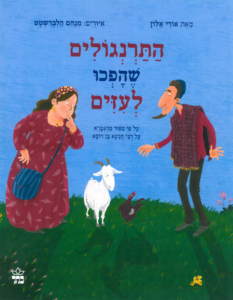
- You may want to look at the lovely illustrations by Menachem Halberstadt together, and ask your child to tell the story in their own words. We do not know what Rabbi Hanina Ben Dossa looked like, but we can imagine the lifestyle of his time and the Galilean landscape. Perhaps you would enjoy searching for clues about his time and place in the illustrations.
- Menachem Halberstadt added amusing details in his illustrations that are not mentioned in the text. You may want to look for the illustration of all the chickens in the yard. What are they doing? Did you find anything about this illustration funny?
- In the story, Rabbi Hanina describes the rooster and hen using signs: the rooster was black with a white spot, and the hen was white with gold dots. You may want to play the guessing game: one of you thinks of an object in the room and describes it using signs, and the other has to guess which object it is. Did you guess right?
- Have you or your child ever lost something dear? Was it found? Try to recall together the feeling you had when you discovered the item had been lost, or found.
- How can we refrain from losing things we hold dear? You may want to let your child think of ideas to help them keep track of their property, and share some of your techniques and practices with them. You may also like to teach your child where items found are taken today (for instance the police station, or the “lost and found” in public places).
- Perhaps you would enjoy playing “Where’s the lost chicken?”: place the palm of your hand on a sheet of paper so your thumb is separate from the other fingers. Draw around your hand – the thumb will be the chicken’s head, and the fingers will be its wings. Add feet, a cockscomb and beak, and cut out the chicken. One of the participants hides the chicken, and the others have to find it. The one who hid it can help the others find the lost chicken by saying “hot” or “cold” as they get nearer and further away from its hiding place.
Who was Rabbi Hanina Ben Dossa?
Rabbi Hanina Ben Dossa was a Tanna – a scholar from the time of the Mishna – who lived in the Galilee some 2000 years ago. He was an incredible man, and many tales are told of his modesty and special qualities. Although Rabbi Hanina and his family lived in extreme poverty, he was not tempted to take anything that did not belong to him, and was very careful about returning any lost property to its rightful owners. The writer Ori Elon based his adaptation of the story of Rabbi Hanina and the lost rooster and hen on the following short story found in the Talmud, in the Tractate of Taanit, page 25a:
Once it happened that a man passed by Rabbi Hanina’s house and left hens there and the wife of Rabbi Hanina Ben Dossa found them. Her husband, however, forbade her to eat of their eggs. As the eggs and the chickens increased in number he was very troubled by them and he therefore sold them and with the proceeds he purchased goats. One day the man who lost the hens passed by [the house] again and said to his companion: “Here I left my hens”. Rabbi Hanina overhearing this asked him: “Have you any sign [by which to identify them]?” He replied: “Yes”. He gave him the sign and took away the goats.
looking at the illustrations together
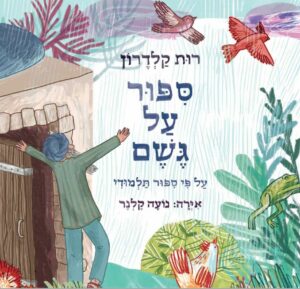
You may enjoy looking at the illustrations together and asking your child to tell the story in their own words. How do the various animals respond to the rain? How has the illustrator chosen to depict the rain and wind? We don’t know what Rabbi Hanina Ben Dossa looked like, but we can imagine how he lived his life in those days, and what the Galilean landscape was like. Try to look for signs of the place and time in the various pictures.
dress up as the different characters and act out
You may want to dress up as the different characters and act out the story to your friends and family. Using facial expressions and hand gestures, you could imagine how grateful the birds and animals were for the rain, and how sorry they were when it stopped.
discuss the things that did not exist
Following the story, perhaps you would like to discuss the things that did not exist during the time of the Talmud, and make our winters easier, such as umbrellas, electric heating, and so on.
Do you like the rain
Do you like the rain and look forward to it? Perhaps you would like to discuss fun things to do in winter, and how the rain affects the flora and fauna. Have you ever had to cancel a planned trip or outdoor activity because of the weather? You may want to remind each other of such incidents.
"The whole world is at ease but Hanina is in distress?"
“The whole world is at ease but Hanina is in distress?”: What makes us happy does not necessarily make others happy. You may want to discuss clashing desires within the family, and the ways to cope with them.
ideas for rainy day playtime and entertainment
Perhaps you would enjoy making a box of ideas for rainy day playtime and entertainment. Ask your child to decorate an empty shoebox. In it you can keep little surprises such as stickers, crayons, marbles, soap bubble dispensers, and colorful notes with ideas for family activities on rainy days (word puzzles, reading, cooking and baking, and so on). Stow the box away, and only open it when it rains outside!
Who was Rabbi Hanina Ben Dossa?
Rabbi Hanina Ben Dossa was a Tanna – a Mishnaic sage – who lived in the Galilee some 2000 years ago. He was a wonderful man, and many tales describe his special qualities. Ruth Calderon, the author, based this story of Rabbi Hanina and the rain on the following short excerpt found on page 24b of the tractate of Taanit in the Babylonian Talmud:
חנינא בן דוסא הוה קא אזיל באורחא
Rabbi Hanina Ben Dossa was journeying on the road
אתא מיטרא
it began to rain
אמר לפניו: רבונו של עולם, כל העולם כולו בנחת וחנינא בצער?
He exclaimed: Master of the Universe, the whole world is at ease, but Hanina is in distress?
פסק מיטרא
the rain ceased
כי מטא לביתיה
When he reached home
אמר לפניו: רבונו של עולם! כל העולם בצער וחנינא בנחת?
he exclaimed: Master of the Universe, the whole world is in distress and Hanina is at ease?
אתא מיטרא
It began to rain
Family Activities
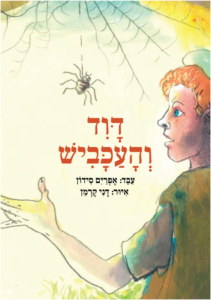
- You may enjoy looking through Danny Kerman’s illustrations throughout the book together. Can your child tell you the storyline just by looking at the series of illustrations?
- As a young boy, David enjoyed going for walks and getting to know the various creatures, as well as finding out their contribution to the You could go for a walk around the neighborhood with your child, look around and enjoy your surroundings, while asking each other questions such as: how do the trees, flowers, clouds, and creatures we see on the way contribute to our world?
- You may enjoy playing the game called “We need you in the world”: each player in turn names an object or animal, and together all players try to give as many reasons as possible for its necessity in the world.
- Have your children ever seen cobwebs? You could look for them in stairwells, neglected corners, and storage areas. You could also look for the spider, and perhaps even see how it spins its web!
- Using string or wool, you may want to make your own cobweb. In nature, cobwebs are white. What color would you like yours to be?
- This story is based on a tale about David as a young boy, before he became King of Israel. Do you know any other stories about King David? You may want to share them with your child.
The Reed and the Cedar
A Hanukkah Kiss
A Garden on a Donkey
Tali is under the Table
Out
Two Brothers and the Temple Site
Kish Kish Karya: Proverbs for Children
King Solomon and the Bee
A Basket Full of Figs
A Hole in the Boat
The Patience of Hillel the Elder
Vineyard
The Site of the Temple
The Missing Spice
Signs in the Well – Based on a Talmudic tale
Moses and the Baby Goat
How the Chameleon Saved Noah
A Treasury of Hebrew Legends for Children
The Chickens Who Became Goats
A Story about Rain
King David and the Spider